
Omar Khayyam: Persian mathematician, astronomer and poet (1048–1131)
Omar Khayyam (1048–1131) was a Persian polymath whose work spanned algebra, geometry and calendar reform; he is also known for quatrain poetry popularized in the West by Edward FitzGerald.
Omar Khayyam is remembered both as a rigorous scholar of the medieval Islamic world and as the author of short reflective poems. His name appears in Persian script in many modern sources as the Persian form. He was born in or near Nishapur in Khorasan in 1048 (date often cited as 1048, sometimes given specifically as May 18) and died in 1131 (often given as 1131, sometimes cited as December 4). He is generally described as a Persian figure who combined the roles of mathematician, astronomer and poet during the Seljuk period.
Image gallery
10 Images
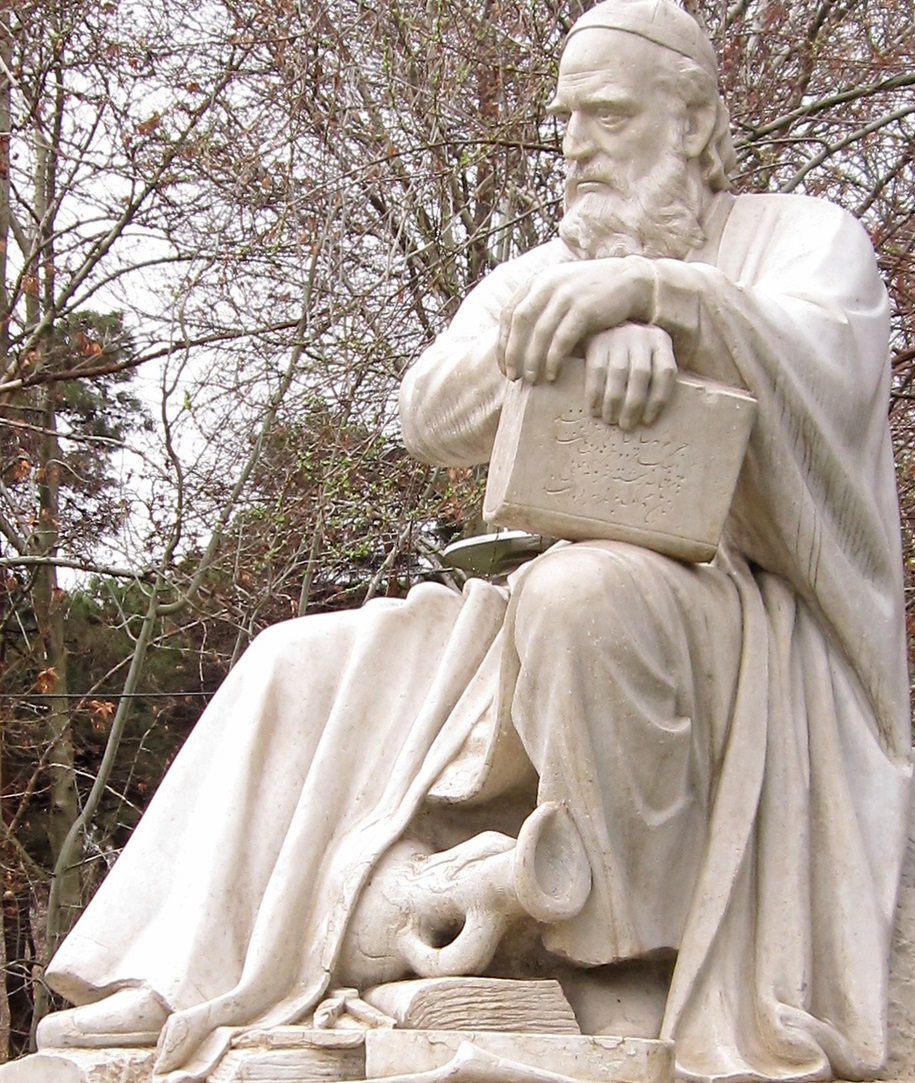


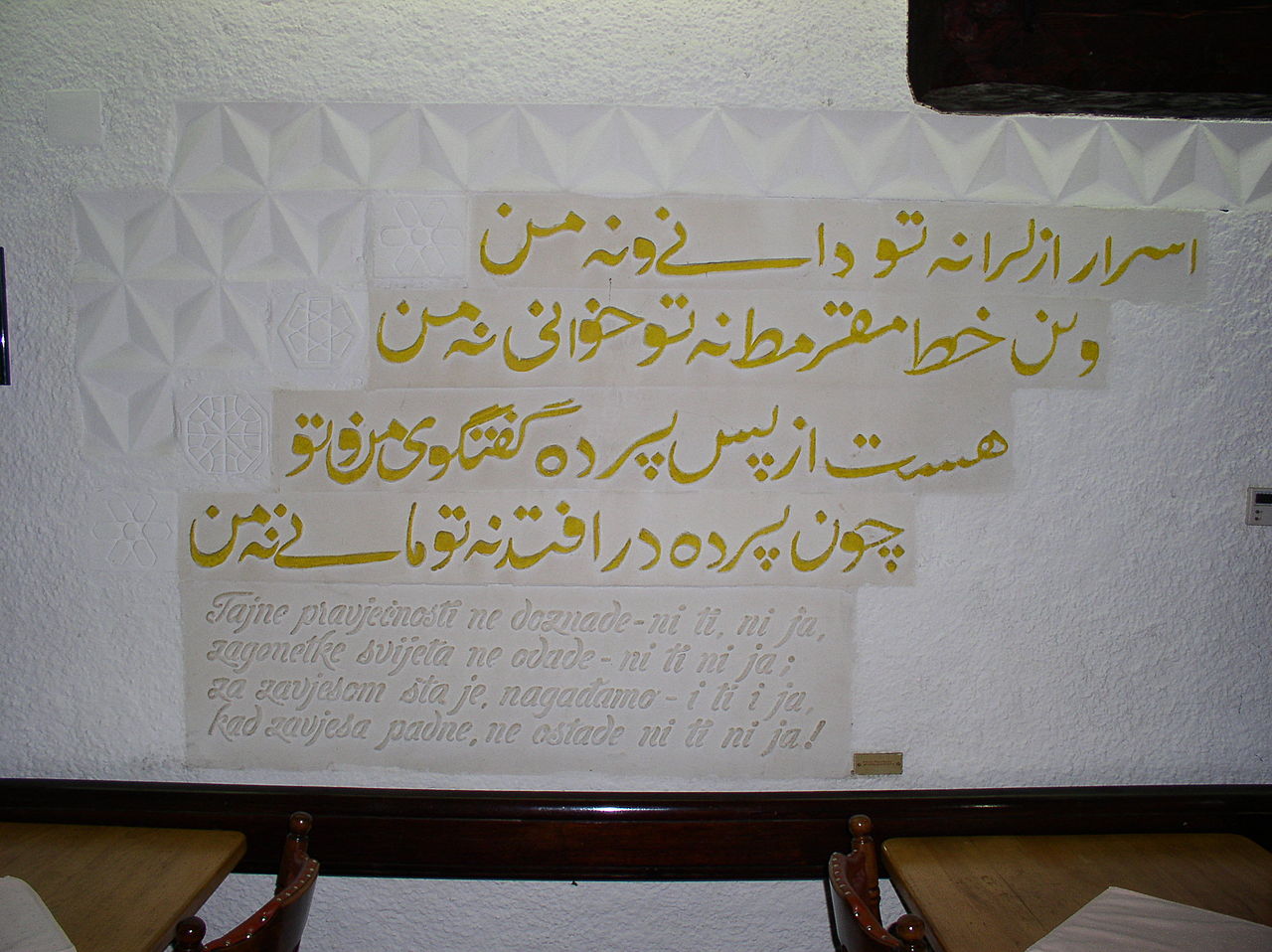


Work and characteristics
Khayyam's scientific writing is practical and geometrical. In algebra he analyzed polynomial equations and provided geometric methods to solve some cubic equations by intersecting conic sections. He examined the logical status of Euclid's fifth postulate and offered commentary and attempted reductions that contributed to later thinking about the parallel axiom; modern accounts often refer to his work in relation to the parallel axiom. He also used binomial-type expansions in computational contexts, a step sometimes linked to early forms of the binomial theorem. His surviving mathematical treatises show an emphasis on constructive demonstration and clear classification of problems.
Astronomy and the calendar
As an astronomer and timekeeper, Khayyam participated in technical efforts to improve the civil calendar. Under the Seljuk ruler Malik-Shah, a panel of astronomers produced a reformed calendar that reduced accumulated error and set leap rules; Khayyam is frequently listed among its principal architects. That reform produced a year length and an intercalation scheme that rivals the accuracy of later medieval calendars and influenced regional timekeeping and administration.
Poetry, themes and reception
Separately from his technical output, Khayyam composed quatrains (rubáiyát) that express skepticism, reflection on mortality, and a preference for sensuous immediacy. Many of the short poems survive in manuscript anthologies, but their attribution and arrangement vary. In the English-speaking world he is best known through Edward FitzGerald's 1859 rendering, which interpreted and popularized a selection of quatrains and shaped Khayyam's image as a skeptical, wine-drinking philosopher-poet. Scholars caution that FitzGerald's version is a Victorian-era adaptation and not a literal translation; the original Persian quatrains are more varied in tone and subject.
Contributions and distinctions
- Mathematics: classification of cubic equations and geometric solution methods.
- Foundations: critical commentary on Euclid's fifth postulate and geometric reasoning.
- Astronomy: participation in calendar reform and practical observational work.
- Literature: a corpus of rubáiyát that influenced later poetry and translation traditions.
Khayyam's career illustrates the medieval combination of technical scholarship and literary expression. Modern studies treat him as a multi-faceted figure whose scientific contributions stand independently of the later poetic mythologizing. For further reading on aspects of his life and works see standard histories and editions that discuss his mathematical treatises, astronomical roles, and the manuscript tradition of the quatrains; summaries and translations appear in many languages and online resources (context on his cultural origin, notes on philosophical outlook). Other reference points and editions may be found via major library catalogues and critical studies (Persian name and variants, specific birth date references, death date notes, alternative chronologies, national context, mathematical listings, astronomical records, poetic collections, discussions of the parallel axiom, manuscript evidence, year references).
Author
AlegsaOnline.com Omar Khayyam: Persian mathematician, astronomer and poet (1048–1131) Leandro Alegsa
URL: https://en.alegsaonline.com/art/127907