
Bobby Moore — England captain and defender (1941–1993)
English defender Bobby Moore captained England to the 1966 World Cup, starred for West Ham United, earned a then-record 108 caps, and is widely regarded as one of football's greatest defenders.
Robert Frederick "Bobby" Moore (12 April 1941 – 24 February 1993) was an English footballer best known for captaining the England national side to victory in the 1966 FIFA World Cup. Moore combined tactical intelligence with calmness under pressure, qualities that defined his reputation at club and international level. He remains a central figure in England's football history and is often cited in discussions of the game's greatest defenders.
Image gallery
10 Images



Club career
Moore spent the bulk of his professional career with West Ham United, where his reading of the game and composure on the ball helped the club compete strongly in domestic and European competitions. Later in his career he moved on to other teams, including a spell at Fulham and brief periods playing abroad. His club performances earned him widespread respect and made him a key figure for selection to the national side.
International career and 1966
Between 1962 and 1973 Moore made 108 appearances for England, a national record at the time. He was England's captain when the team won the 1966 World Cup, an achievement that remains the high point of English football. Moore's leadership was noted for its understated authority: he marshalled a defense with a combination of positional awareness and precise tackling rather than relying on aggression.
Style and characteristics
- Anticipation: Moore read opponents' moves and often intercepted danger before it developed.
- Composure: He rarely panicked with the ball and preferred accurate passing to rushed clearances.
- Leadership: His captaincy was marked by steady example rather than vocal command.
These traits made Moore a model defender whose approach influenced subsequent generations. Analysts and former players have praised his balance of technique and tactical intelligence, and he is frequently included in lists of the sport's all-time great defenders.
Later life, legacy and death
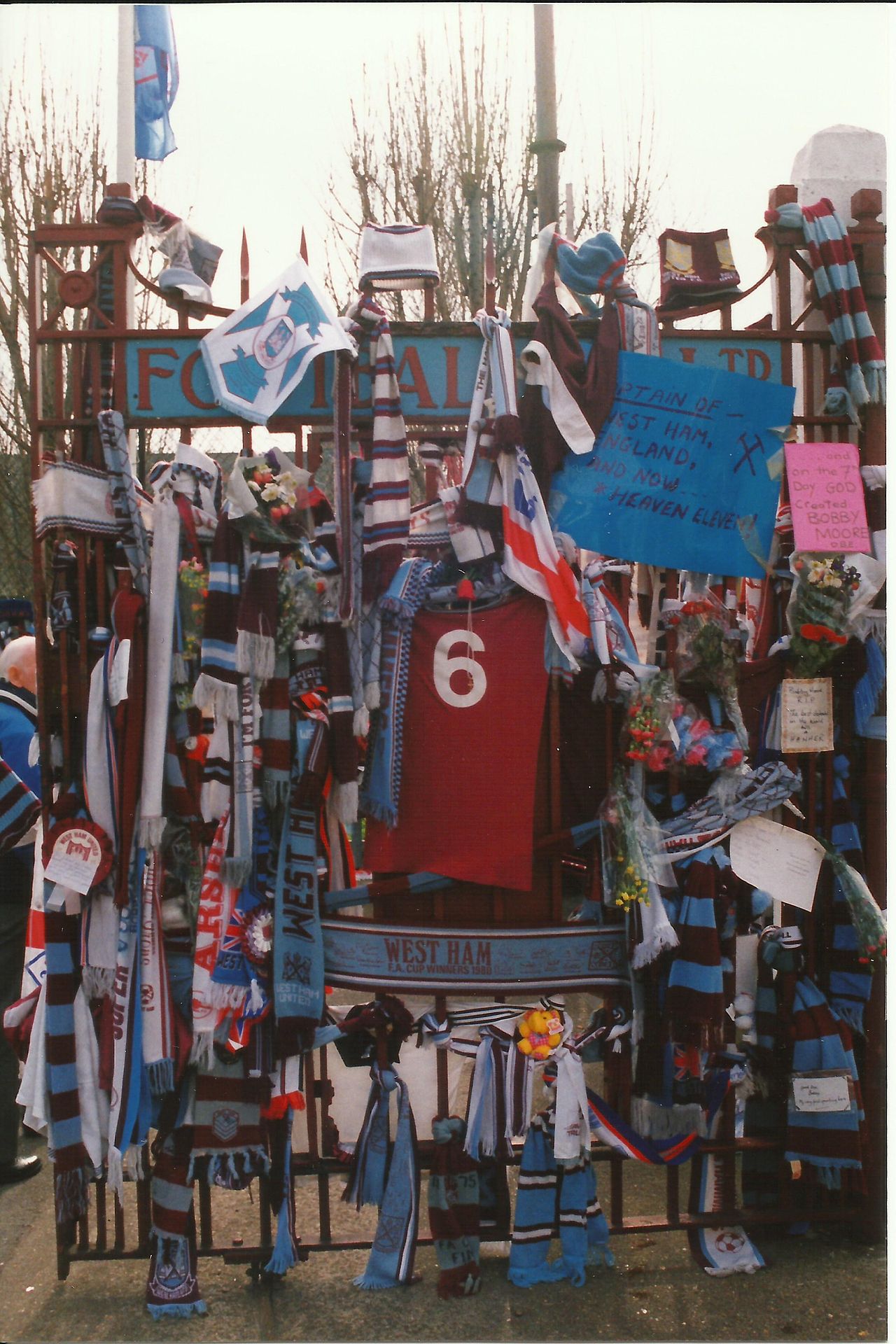
After retiring from top-level play Moore remained prominent in the public eye through coaching, public appearances and involvement with charities connected to the game. He was admired both for his sporting achievements and for the dignity he brought to the captain's armband. In 1993 he died from colorectal cancer in London; reports and obituaries at the time noted the widespread respect in which he was held. Memorials and tributes have continued: fans, clubs and national institutions mark his contribution to football and to English sporting culture.
For further reading and archival material see club histories and national team records, as well as biographies that document Moore's life on and off the pitch: career statistics, biographical summaries, and curated exhibits preserved by clubs and national associations (collections, memorials). Additional resources and articles are available through sports libraries and dedicated football history projects (player profiles, match archives).
Related articles
Author
AlegsaOnline.com Bobby Moore — England captain and defender (1941–1993) Leandro Alegsa
URL: https://en.alegsaonline.com/art/12559
Sources
- bobbymoore.co.uk : bobbymoore.co.uk/index.php/Quotes.html
- national-football-teams.com : "Bobby Moore"
- rsssf.com : "Robert Frederick Chelsea "Bobby" Moore - International Appearances"