
Boethius: Roman philosopher and transmitter of classical learning
Anicius Manlius Severinus Boethius (c. 477–524) was a Roman aristocrat, philosopher and translator whose Consolation of Philosophy shaped medieval thought and preserved ancient learning.
Anicius Manlius Severinus Boethius (c. 477–524) was a Roman aristocrat, statesman and philosopher who became one of the principal bridges between classical antiquity and the medieval Latin West. Born into the influential Anicia family, Boethius combined public office and scholarly work in an era of political change following the collapse of the Western Roman Empire.
Image gallery
10 Images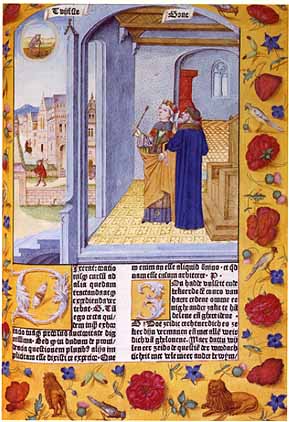



Life and political career
Boethius held high office under the Ostrogothic kingdom and served as consul in 510 during the rule of the Ostrogoths. Suspicion and factional conflict marked his later years. Alleged to have conspired with the Byzantine Empire, he was arrested by decree of King Theodoric the Great, imprisoned and ultimately executed. It was while confined that he composed his best-known work.
Consolation of Philosophy and themes
Boethius's Consolation of Philosophy, written in prison, blends prose and verse in a dialogue with Philosophy personified. The work reflects on fortune, happiness, providence, free will and the problem of evil. Its accessible style and universal questions made it one of the most widely read texts in the Middle Ages, frequently copied, commented on and translated into vernacular languages.
Scholarly contributions and works
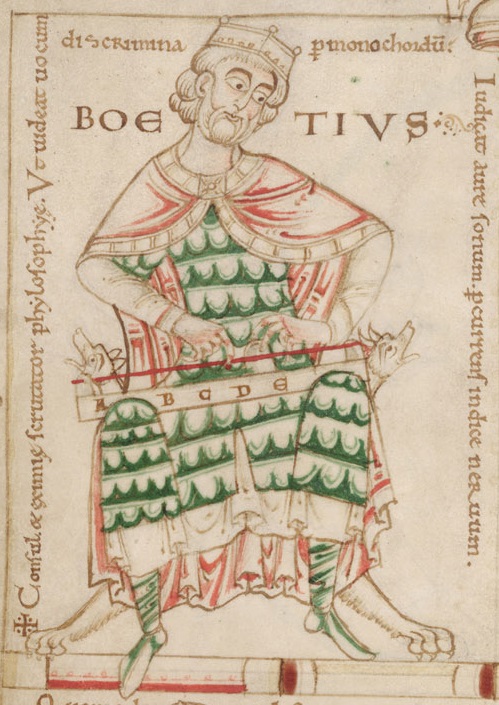
Beyond the Consolation, Boethius produced translations and commentaries that helped transmit Greek logic and science to later Europe. He rendered important works by Porphyry and Aristotle into Latin and wrote treatises on logic, arithmetic and music—most notably a handbook on musical theory—and composed theological writings. These efforts established a foundation for scholastic study and preserved elements of ancient learning for medieval schools.
Legacy and influence
For centuries Boethius shaped education, philosophy and theology. His Consolation served as a standard text for moral reflection, and his logical and musical writings informed the medieval curriculum. Poets, theologians and philosophers from the late antique period through the Renaissance consulted and adapted his ideas. Because of these connections between classical sources and medieval thought, Boethius is often remembered as a pivotal transmitter of classical heritage.
Notable works
- Consolation of Philosophy — prison dialogue on fortune and happiness.
- Latin translations and commentaries on Porphyry and Aristotle — foundational for medieval logic.
- Treatises on arithmetic, music and theology — used in teaching and scholarship.
Boethius's life combines political prominence and tragic downfall with enduring intellectual achievement; his writings continued to shape Western thought long after his death, securing his place in the history of philosophy and education.

Text editions and translations
Collections
- Claudio Moreschini (ed.): Boethius: De consolatione philosophiae, opuscula theologica. 2nd edition, Saur, Munich 2005, ISBN 3-598-71278-2 (critical edition of the Consolatio philosophiae and the five theological treatises).
- Gottfried Friedlein (ed.): Anicii Manlii Torquati Severini Boetii de institutione arithmetica libri duo, de institutione musica libri quinque. Minerva, Frankfurt am Main 1966 (reprint of the Leipzig 1867 edition; still to be used for De institutione musica, obsolete for De institutione arithmetica).
- Hans-Ulrich Wöhler: Texte zum Universalienstreit. Band 1: Vom Ausgang der Antike bis zur Frühscholastik. Akademie Verlag, Berlin 1992, ISBN 3-05-001792-9 (contains partial translations of six logical and theological works of Boethius).
philosophical consolation
- Ludwig Bieler (ed.): Anicii Manlii Severini Boethii Philosophiae Consolatio. 2nd edition, Brepols, Turnhout 1984, ISBN 978-2-503-00941-4 (Corpus Christianorum. Series Latina. Vol. 94) (critical edition).
- Ernst Gegenschatz, Olof Gigon (eds.): Boethius: Trost der Philosophie. Consolatio philosophiae. 6th edition, Artemis & Winkler, Düsseldorf et al. 2002, ISBN 3-7608-1662-2 (uncritical edition with German translation).
- Ernst Neitzke (ed.): Boethius: Trost der Philosophie. Insel Verlag, Frankfurt am Main 1997, ISBN 3-458-32915-3 (uncritical edition with German translation).
Old High German translation
- Evelyn Scherabon Firchow (ed.): Notker der Deutsche von St. Gallen: Latin Text and Old High German Translation of the Consolation of Philosophy (De consolatione Philosophiae) by Anicius Manlius Severinus Boethius. 3 vols., Olms, Hildesheim 2003, ISBN 3-487-11811-4.
Medieval English translations
- Malcolm Godden, Susan Irvine (eds.): The Old English Boethius. An Edition of the Old English Versions of Boethius's De Consolatione Philosophiae. 2 vols, Oxford University Press, Oxford 2009, ISBN 978-0-19-925966-3.
- Tim William Machan (ed.): Chaucer's Boece. A Critical Edition Based on Cambridge University Library, MS Ii.3.21, ff. 9r-180v. Winter, Heidelberg 2008, ISBN 978-3-8253-5432-9.
Medieval French translations
- Isabelle Bétemps et al. (eds.): La Consolation de la Philosophie de Boèce dans une traduction attribuée à Jean de Meun d'après le manuscrit Leber 817 de la Bibliothèque Municipale de Rouen. Université de Rouen, Rouen 2004, ISBN 2-87775-380-8.
- Glynnis M. Cropp (ed.): Le Livre de Boece de Consolacion. Droz, Geneva 2006, ISBN 2-600-01028-9 (critical edition).
- Rolf Schroth (ed.): Eine altfranzösische Übersetzung der consolatio philosophiae des Boethius (Handschrift Troyes Nr. 898). Edition and commentary. Peter Lang, Frankfurt am Main 1976, ISBN 3-261-01845-3.
Medieval Greek translation
- Manolis Papathomopoulos (ed.): Anicii Manlii Severini Boethii De consolatione philosophiae. Traduction grecque de Maxime Planude. The Academy of Athens, Athens 1999, ISBN 2-7116-8333-8 (critical edition).
Medieval Hebrew translation
- Sergio Joseph Sierra (ed.): Boezio: De Consolatione Philosophiae. Traduzione ebraica di ʿAzaria ben R. Joseph Ibn Abba Mari detto Bonafoux Bonfil Astruc 5183-1423. Turin u. a. 1967.
Medieval Italian translation
- Helmuth-Wilhelm Heinz (ed.): Grazia di Meo, Il libro di Boeçio de chonsolazione (1343). Peter Lang, Frankfurt am Main 1984, ISBN 3-8204-7325-4.
Logic
Translations of Boethius
- Lorenzo Minio-Paluello (ed.): Aristoteles Latinus. Vol. I 1-5: Categoriae vel praedicamenta. Desclée de Brouwer, Bruges et al. 1961 (contains the Categories translation of Boethius).
- Lorenzo Minio-Paluello (ed.): Aristoteles Latinus. Vol. I 6-7: Categoriarum supplementa: Porphyrii isagoge, translatio Boethii, et anonymi fragmentum vulgo vocatum "Liber sex principiorum". Desclée de Brouwer, Bruges et al. 1966 (contains the isagoge translation of Boethius).
- Lorenzo Minio-Paluello (ed.): Aristoteles Latinus. Vol. II 1-2: De interpretatione vel periermenias: translatio Boethii, specimina translationum recentiorum. Desclée de Brouwer, Bruges and Paris 1965 (contains Boethius' translation of De interpretatione).
- Lorenzo Minio-Paluello (ed.): Aristoteles Latinus. Vol. III 1-4: Analytica priora: translatio Boethii (recensiones duae), translatio anonyma, Pseudo-Philoponi aliorumque scholia, specimina translationum recentiorum. Desclée de Brouwer, Bruges et al. 1962 (contains pp. 1-191 the two versions of Boethius' translation of the Analytica priora; the scholia edited pp. 293-372 are also by Boethius).
- Lorenzo Minio-Paluello (ed.): Aristoteles Latinus. Vol. V 1-3: Topica: translatio Boethii, fragmentum recensionis alterius, et translatio anonyma. Brill, Leiden 1969 (contains Boethius' translation of the Topics).
- Bernard G. Dod (ed.): Aristoteles Latinus. Vol. VI 1-3: De sophisticis elenchis: translatio Boethii, fragmenta translationis Iacobi, et recensio Guillelmi de Moerbeke. Brill, Leiden 1975 (contains Boethius' translation of the Sophistici elenchi).
Comments
- Samuel Brandt (ed.): Anicii Manlii Severini Boethii in isagogen Porphyrii commenta. Johnson Reprint Corporation, New York 1966 (reprint of the Vienna 1906 edition; critical edition of both isagoge commentaries).
- Karl Meiser (ed.): Anicii Manlii Severini Boethii commentarii in librum Aristotelis ΠΕΡΙ ΕΡΜΗΝΕΙΑΣ. Parts 1 and 2, Teubner, Leipzig 1877-1880 (reprinted by Garland Publishing, New York 1987, ISBN 0-8240-6904-8; critical edition of both commentaries on De interpretatione).
- Andrew Smith: Boethius: On Aristotle, On Interpretation 1-3. Bloomsbury, London 2014, ISBN 978-1-4725-5789-6 (English translation).
- David Blank, Norman Kretzmann (eds.): Ammonius: On Aristotle On Interpretation 9, with Boethius: On Aristotle On Interpretation 9, first and second commentaries. Duckworth, London 1998, ISBN 0-7156-2691-4 (contains pp. 129-191 an English translation of excerpts from the two commentaries on De interpretatione on logical determinism).
- Jacques Paul Migne (ed.): Anicii Manlii Severini Boetii in categorias Aristotelis libri quatuor. In: Patrologia Latina. Vol. 64, Paris 1891, Sp. 159-294 (uncritical edition).
- Pierre Hadot (ed.): Un fragment du commentaire perdu de Boèce sur les Catégories d'Aristote dans le Codex Bernsis 363. In: Archives d'Histoire Doctrinale et Littéraire du Moyen Age. Vol. 26 (= année 34), 1959, ISSN 0373-5478, pp. 11-27 (critical edition of the commentary fragment pp. 12-14).
- Johann Caspar von Orelli, Johann Georg Baiter (eds.): Anicii Manlii Severini Boethii commentarii in Ciceronis topica. In: Johann Caspar von Orelli, Johann Georg Baiter (eds.): M. Tullii Ciceronis opera quae supersunt omnia ac deperditorum fragmenta. Vol. 5, Part 1: M. Tullii Ciceronis scholiastae. Orell Füssli, Zurich 1833, pp. 269-395 (still the authoritative critical edition of the commentary on Cicero's Topica).
- Jacques Paul Migne (ed.): Anicii Manlii Severini Boetii in topica Ciceronis commentariorum libri sex. In: Patrologia Latina. Vol. 64, Paris 1891, Sp. 1039-1174 (uncritical edition).
- Alfredo Severiano Quevedo Perdomo (ed.): A Critical Edition of Boethius' Commentary on Cicero's Topica, Book I. Dissertation Saint Louis 1963.
- Eleonore Stump: Boethius's In Ciceronis Topica. Cornell University Press, Ithaca and London 1988, ISBN 0-8014-2017-2 (English translation).
Textbooks
- John Magee (ed.): Anicii Manlii Severini Boethii De divisione liber. Brill, Leiden 1998, ISBN 90-04-10873-4 (critical edition with English translation and commentary).
- Dimitrios Z. Nikitas (ed.): Boethius' De topicis differentiis and the Byzantine reception of this work. The Academy of Athens, Athens 1990, ISBN 2-7116-9701-0 (critical edition of Boethius' De topicis differentiis and two Byzantine translations of this work).
- Luca Obertello (ed.): A. M. Severino Boezio: De hypotheticis syllogismis. Paideia, Brescia 1969 (critical edition with introduction, commentary and Italian translation).
- Eleonore Stump: Boethius's De topicis differentiis. Cornell University Press, Ithaca et al. 1978, ISBN 0-8014-1067-3 (English translation).
- Christina Thomsen Thörnqvist (ed.): Anicii Manlii Severini Boethii De syllogismo categorico. Acta Universitatis Gothoburgensis, Gothenburg 2008, ISBN 978-91-7346-611-0 (critical edition with English translation).
- Christina Thomsen Thörnqvist (ed.): Anicii Manlii Severini Boethii Introductio ad syllogismos categoricos. Acta Universitatis Gothoburgensis, Gothenburg 2008, ISBN 978-91-7346-612-7 (critical edition with commentary).
Medieval translations
- James C. King (ed.): Notker der Deutsche: Boethius' Bearbeitung der "Categoriae" des Aristoteles. Niemeyer, Tübingen 1972, ISBN 3-484-20057-X.
- James C. King (ed.): Notker der Deutsche: Boethius' Bearbeitung von Aristoteles' Schrift "De Interpretatione". Niemeyer, Tübingen 1975, ISBN 3-484-20089-8.
- Dimitrios Z. Nikitas (ed.): A Byzantine Translation of Boethius' "De hypotheticis syllogismis". Vandenhoeck & Ruprecht, Göttingen 1982, ISBN 3-525-25165-3 (critical edition).
Music Theory
- Calvin M. Bower, Claude V. Palisca: Anicius Manlius Severinus Boethius: Fundamentals of Music. Yale University Press, New Haven 1989, ISBN 0-300-03943-3 (English translation of De institutione musica).
- Christian Meyer (ed.): Boèce: Traité de la musique. Brepols, Turnhout 2004, ISBN 2-503-51741-2 (uncritical edition of De institutione musica with French translation).
Mathematics
- Henri Oosthout, Jean Schilling (eds.): Anicii Manlii Severini Boethii De arithmetica. Brepols, Turnhout 1999, ISBN 2-503-00943-3 (critical edition).
- Jean-Yves Guillaumin (ed.): Boèce: Institution Arithmétique. Les Belles Lettres, Paris 1995, ISBN 2-251-01390-3 (critical edition with French translation).
- Michael Masi: Boethian Number Theory. A translation of the De Institutione Arithmetica. Rodopi, Amsterdam 1983, ISBN 90-6203-785-2.
- Menso Folkerts (ed.): "Boethius" Geometry II. A mathematical textbook of the Middle Ages. Franz Steiner Verlag, Wiesbaden 1970, pp. 69-82, 173-217 (Latin excerpts from Euclid's Elements, presumably from a lost work of Boethius).
Theology
- Michael Elsässer (ed.): Anicius Manlius Severinus Boethius: Die Theologischen Traktate. Meiner, Hamburg 1988, ISBN 3-7873-0724-9 (uncritical edition with German translation).
Related articles
Author
AlegsaOnline.com Boethius: Roman philosopher and transmitter of classical learning Leandro Alegsa
URL: https://en.alegsaonline.com/art/12669