
Bob "Daddy-O" Wade: Texas Pop Artist and Maker of Giant Icons
Bob "Daddy-O" Wade (1943–2019) was an American artist known for outsized sculptures of Texan symbols, hand-tinted photo canvases, and his role in the 1970s Texas Cosmic Cowboy cultural scene.
Overview
Bob "Daddy-O" Wade (January 6, 1943 – December 23, 2019) was an American visual artist from Austin, Texas who became widely known for creating outsized, often whimsical sculptures and for experimenting with hand‑tinted photographic canvases. His work treated familiar Texan imagery—cowboy boots, longhorns, reptiles and other vernacular symbols—as subjects for enlargement, satire and public display. He was a visible presence in Austin's arts community and helped shape a regional aesthetic tied to the 1970s Texas Cosmic Cowboy scene. Austin, Texas
Image gallery
1 Image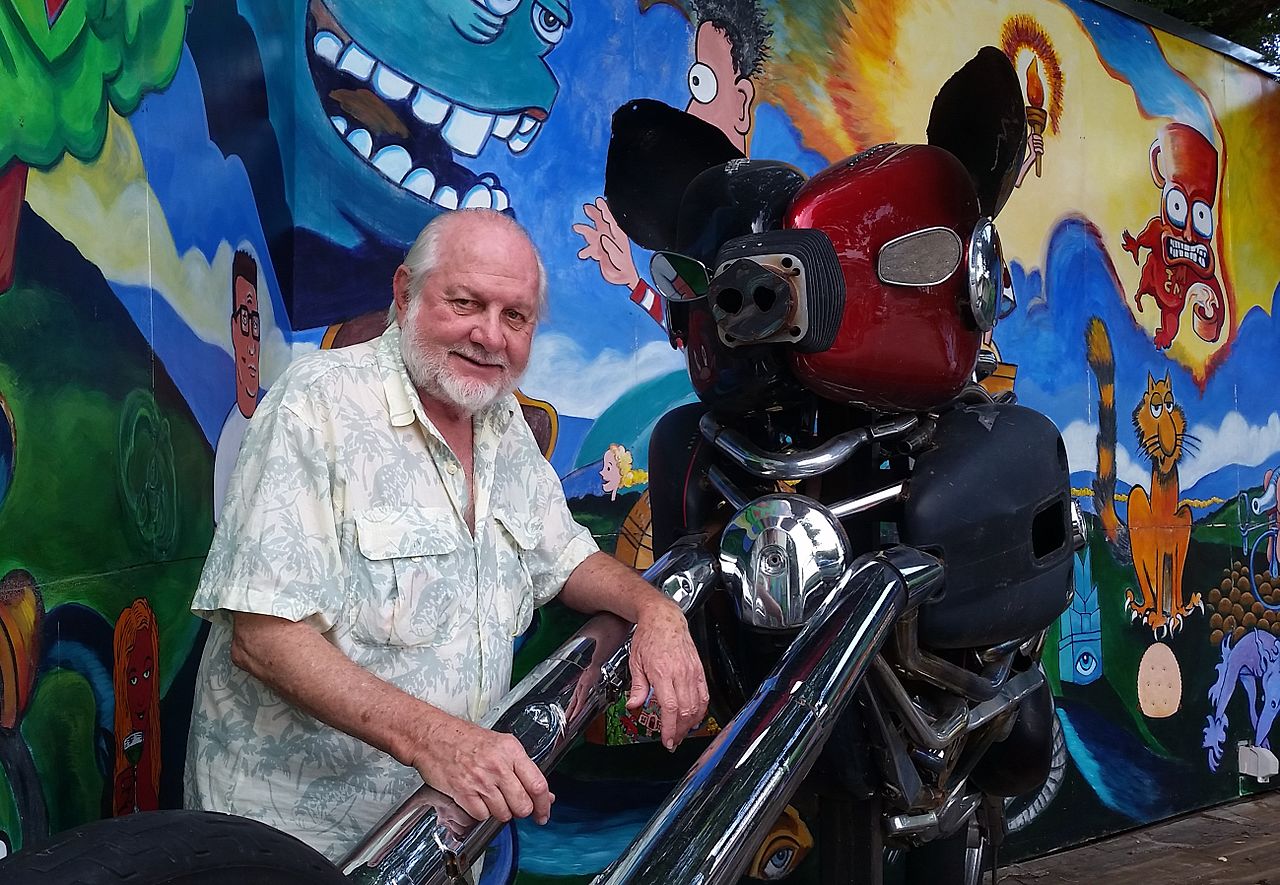
Artistic approach and materials
Wade's practice blended elements of folk art, pop art and roadside spectacle. He worked with materials and techniques borrowed from commercial fabrication as well as studio sculpture: welded metal armatures, fiberglass, painted surfaces, and found or repurposed parts were common in his three‑dimensional pieces. These construction methods allowed his work to survive outdoors and to function as urban markers or promotional landmarks as well as gallery objects.
In his photographic work Wade enlarged vintage black‑and‑white photographs and transferred them to large canvases, then applied hand‑tinting and painted treatments. These pieces emphasized colorization and texture, inviting viewers to reconsider archival images through the lens of nostalgia and theatrical display.
Notable works and public presence
Wade is best remembered for his monumental public pieces that placed Texas iconography into new contexts. Among the most widely seen was a 40‑foot iguana nicknamed "Iggy," installed on the roof of the Lone Star Cafe in New York City from 1978 to 1989. That installation brought a distinctly Texan form of roadside art into a major metropolitan setting and illustrated Wade's interest in site, scale and spectacle. Iggy on the Lone Star Cafe
Beyond the iguana, Wade produced oversized boots, horns and other emblematic forms that functioned as both humorous commentary and civic ornament. His pieces frequently crossed between private commissions, commercial signage and museum exhibition, a permeability that became a hallmark of his career.
Exhibitions and reception
Wade's work was shown in galleries and museums and was the subject of local retrospectives that examined his role in Texas popular culture. In the fall of 2009 the South Austin Museum of Popular Culture mounted an exhibition that highlighted his long involvement in Austin's visual life and his connections to music, performance and local commerce. Critics and audiences responded variously, with some celebrating the affectionate, campy qualities of his imagery and others noting its deliberate flirtation with kitsch.
Legacy and influence
Wade's career helped broaden conversations about the boundary between art and advertisement, between high art and vernacular practice. By enlarging everyday symbols and presenting them in public settings, he encouraged viewers to consider how identity, place and popular taste are constructed and displayed. His work influenced subsequent generations of artists working with scale, public sculpture and cultural iconography, particularly within Texas.
Later life and death
Wade continued to live and work in Texas for most of his life, remaining involved in local arts activities and public projects. He died in Austin on December 23, 2019, of cardiac arrest at the age of 76. Details of his passing prompted renewed attention to his contributions as a maker of large‑scale public art and a chronicler of a distinctive regional visual language.
Key characteristics
- Transformed vernacular Texan imagery into monumental, public sculptures.
- Blended studio methods with commercial fabrication to produce durable, theatrical works.
- Experimented with photo transfer and hand‑tinting to reinterpret archival photographs at large scale.
- Operated at the intersection of popular culture, regional identity and contemporary art.
Related articles
Author
AlegsaOnline.com Bob "Daddy-O" Wade: Texas Pop Artist and Maker of Giant Icons Leandro Alegsa
URL: https://en.alegsaonline.com/art/12532
Sources
- sightlinesmag.org : sightlinesmag.org/bob-daddy-o-wade-1943-2019
- southaustincenter.org : SouthPop
- dallasnews.com : Bob ‘Daddy-O’ Wade, artist who sculpted Lower Greenville’s Tango Frogs, dies at 76