
BMT Broadway Line (New York City Subway)
A major BMT trunk in Manhattan carrying the N, Q, R and W services along the Broadway corridor; an important Midtown–Lower Manhattan route noted for its sunflower yellow map color and heavy ridership.
Overview
The BMT Broadway Line is a primary trunk of the New York City transit network, running beneath Broadway through Manhattan and providing high‑capacity service for commuters and visitors. Four regular services — the N, Q, R and W — operate over portions of the corridor; combined weekday ridership on those services has been reported in the hundreds of thousands. The line is part of the New York City Subway system and is identified on transit maps by the sunflower yellow route color used for Broadway services.
Image gallery
5 Images


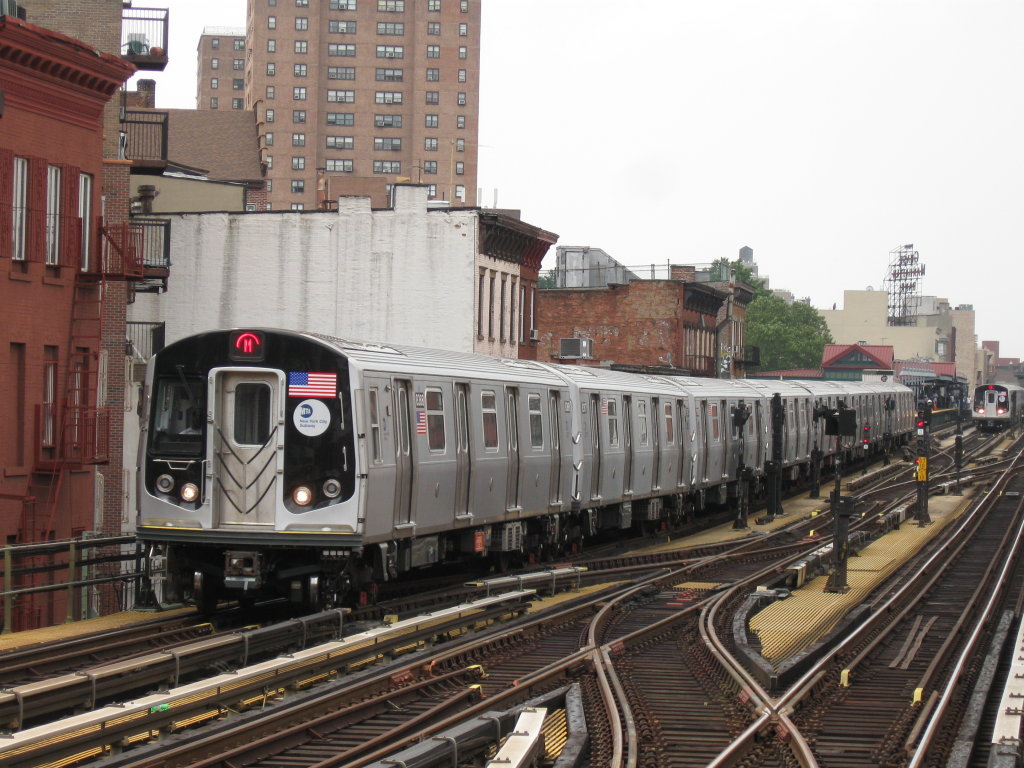
Route and physical characteristics
The Broadway Line follows a largely north–south alignment along Broadway through Midtown and Lower Manhattan and includes multiple track pairs that allow both express and local operations. It connects Manhattan with Brooklyn and, via the Montague Street Tunnel and the Manhattan Bridge, with Brooklyn and parts of Queens. Station spacing, track layout and tunnel construction vary along the route because the line was built in phases and altered over time to meet changing demands.
History and development
Most of the Broadway Line was built during the early 20th century as part of the rapid expansion of the BMT division under large municipal and private construction programs. Opened in stages, the corridor has seen subsequent modernization, signal upgrades and periodic reconstruction related to bridge work and system improvements. These changes reflect both evolving operating practices and the need to accommodate heavy passenger volumes in Midtown and the Theater District.
Services and operations
Operational patterns on the Broadway Line include a mix of express and local services, with routings that change by time of day and for operational reasons. Trains using the corridor extend beyond Manhattan into outlying boroughs, and the line is scheduled and staffed to handle dense peak flows. It is managed within the BMT division of the broader system and coordinates signaling, crew assignments and maintenance to preserve reliable service.
Importance and uses
The Broadway Line serves dense commercial, entertainment and business districts, making it vital for commuters, shoppers and tourists. Its central alignment and multiple transfer opportunities to other subway corridors make it a frequent choice for cross‑Manhattan travel and for access to destinations in Brooklyn and Queens. Periodic service adjustments, renovations and accessibility projects reflect ongoing efforts to maintain functionality for a high‑use urban transit corridor.
Notable facts and distinctions
- Shared by four named services (N, Q, R, W), which use the sunflower yellow color on maps and signage.
- Built in stages in the early 20th century and upgraded repeatedly to meet modern operating standards.
- Connects with other major corridors and uses both river crossings and bridge links to reach Brooklyn and Queens.
Related articles
Author
AlegsaOnline.com BMT Broadway Line (New York City Subway) Leandro Alegsa
URL: https://en.alegsaonline.com/art/12433