
Blue Valentine (2010 film)
Blue Valentine (2010) is a romantic drama directed by Derek Cianfrance, starring Ryan Gosling and Michelle Williams. It alternates between courtship and collapse, noted for intimate performances and a contested NC-17 rating.
Blue Valentine is a 2010 romantic drama film directed by Derek Cianfrance that examines the arc of a modern relationship. Starring Ryan Gosling and Michelle Williams, the movie contrasts the euphoric early days of a couple's courtship with the painful disintegration of their marriage years later. The storytelling deliberately shifts between past and present to reveal how intimacy and resentment develop over time. For a general overview, see the film entry.
Image gallery
1 Image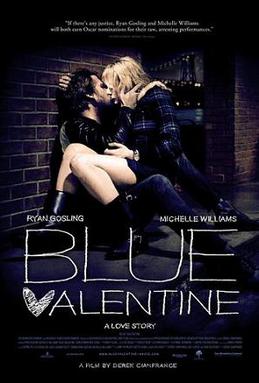
Structure and style
The film uses a nonlinear narrative and restrained, naturalistic performances to create a sense of immediacy. Scenes of tenderness are set against confrontations and quiet indifference, framed with handheld camerawork and close-ups that emphasize the actors' expressions. Much of the emotional weight rests on the leads' chemistry and minimalist dialogue. For discussion of its dramatic approach, consult critical analysis.
Production and release
Made as an independent production on a modest budget, the movie first circulated at film festivals and found attention for its uncompromising tone. Its initial rating was NC-17 because of explicit material; after an appeal process the rating was changed to R, allowing wider theatrical release. Coverage of the rating dispute can be found at rating records and the appeals detail is summarized at the appeal report.
Cast and performances
Ryan Gosling and Michelle Williams received particular praise for portraying a couple whose bond shifts from passionate to strained. Reviewers highlighted the intimacy of their scenes and the film's willingness to show small, realistic moments rather than melodramatic gestures. Biographical and filmography notes on the cast are available via Michelle Williams and Ryan Gosling.
Reception and significance
Critics generally responded positively to the movie's honesty and the two leads' performances, though audiences were divided by its bleak outlook and frank content. It is often cited as an example of contemporary realist romantic drama and used in discussions about on-screen intimacy, ratings, and indie filmmaking. For festival history and release chronology, see release notes.
Notable facts
- The film intercuts scenes of a couple at different life stages to show change and continuity.
- It prompted debate over the MPAA rating system and the treatment of sexual content in drama.
- It has been the subject of academic and popular commentary about relationships and realism; selected essays are collected at further reading.
Taken together, Blue Valentine is remembered for its raw depiction of love's beginnings and endings, and for performances that invite empathy without offering easy answers. Its influence persists in debates about cinematic portrayal of intimacy and the line between art-house frankness and mainstream accessibility.
Related articles
Author
AlegsaOnline.com Blue Valentine (2010 film) Leandro Alegsa
URL: https://en.alegsaonline.com/art/12383