
Blue Velvet (1986 film) — David Lynch’s provocative mystery
David Lynch’s 1986 film Blue Velvet blends noir, surrealism and small‑town Americana. Noted for its unsettling imagery, sound design and polarizing reception, it became influential and a cult classic.
Overview
Blue Velvet is a 1986 American mystery drama written and directed by David Lynch. The story is set in an ostensibly tranquil small town in North Carolina, where a young man discovers a severed ear and becomes drawn into a hidden, violent world. Lynch frames the narrative as a collision between pleasant suburban surfaces and a lurking criminal underworld, exploring how ordinary life can conceal corruption, obsession and danger.
Image gallery
3 Images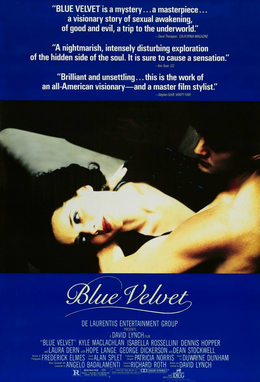


Style and themes
Stylistically the film mixes elements of film noir, melodrama and surrealism. Lynch employs elliptical storytelling, carefully composed closeups, an unsettling soundscape and abrupt tonal shifts to produce a sense of unease. Major themes include the duality of human nature, voyeurism, sexual desire and the fragility of social order. Lynch treats narrative clarity as secondary to mood, using imagery and sound to evoke emotional and psychological states.
Cast and performances
The ensemble balances established and emerging actors. Dennis Hopper delivers a notorious, intense portrayal of the film’s primary antagonist; Laura Dern appears in a key supporting role; and Kyle MacLachlan plays the film’s central young protagonist, whose curiosity propels the plot. The performances, often stylized and extreme, contribute to the film’s unsettling atmosphere and have been widely discussed in criticism and scholarship.
Music and sound
The title derives from the 1963 song "Blue Velvet" by Bobby Vinton, which Lynch recontextualizes to ironic and haunting effect. Music and sound design play a central role in the film’s emotional texture: popular songs, carefully placed cues and an oppressive ambient soundscape intensify moments of tenderness and menace alike. Sound becomes a narrative device that complements visual composition.
Reception and controversy
On release the film provoked intense reactions. Some critics praised its formal daring, while others condemned its explicit sexual imagery and scenes of violence, producing public debate about taste, censorship and filmic responsibility (see controversy). Over time many critics and scholars reassessed the film’s ambitions; it earned David Lynch an Academy Award nomination for Best Director (Academy recognition) and gained greater respect within film history circles.
Legacy and influence
Blue Velvet has had a lasting influence on contemporary cinema and popular culture. It is frequently taught and analyzed in film studies for its interrogation of American mythologies and its innovative use of music and sound. The film’s disturbing juxtaposition of the idyllic and the depraved helped inspire later filmmakers interested in subverting genre expectations. It has also developed a substantial cult following and remains a touchstone for discussions of transgressive art (cult favorite).
- Setting and mood: small‑town veneer versus hidden violence
- Techniques: surreal imagery, sustained closeups, sound as narrative
- Impact: polarized reception, academic study, ongoing cultural influence
For readers seeking further background, biographies of David Lynch, retrospectives on American independent cinema and dedicated film analyses provide detailed accounts of the movie’s production, visual approach and interpretive debates. Additional resources and archival material are available through regional and industry collections linked via regional repositories and film study portals.
Key names and moments associated with the film — including the main cast, the song that gives it its title and contemporary responses — are frequently referenced in writing about late‑20th century American film, and continue to invite interpretation and reappraisal.
Related articles
Author
AlegsaOnline.com Blue Velvet (1986 film) — David Lynch’s provocative mystery Leandro Alegsa
URL: https://en.alegsaonline.com/art/12384