
Kip Thorne: Contributions to Gravitational Physics and Public Science
Kip Thorne is an American theoretical physicist noted for work on general relativity, black holes, gravitational waves and public science. He helped establish LIGO and shared the 2017 Nobel Prize in Physics.
Overview
Kip S. Thorne (born June 1, 1940) is an American theoretical physicist best known for fundamental work in general relativity, relativistic astrophysics and the nascent field of gravitational‑wave astronomy. Long affiliated with the California Institute of Technology, Thorne combined theoretical research with leadership in large experimental projects and with efforts to explain complex ideas to wider audiences.
Image gallery
9 Images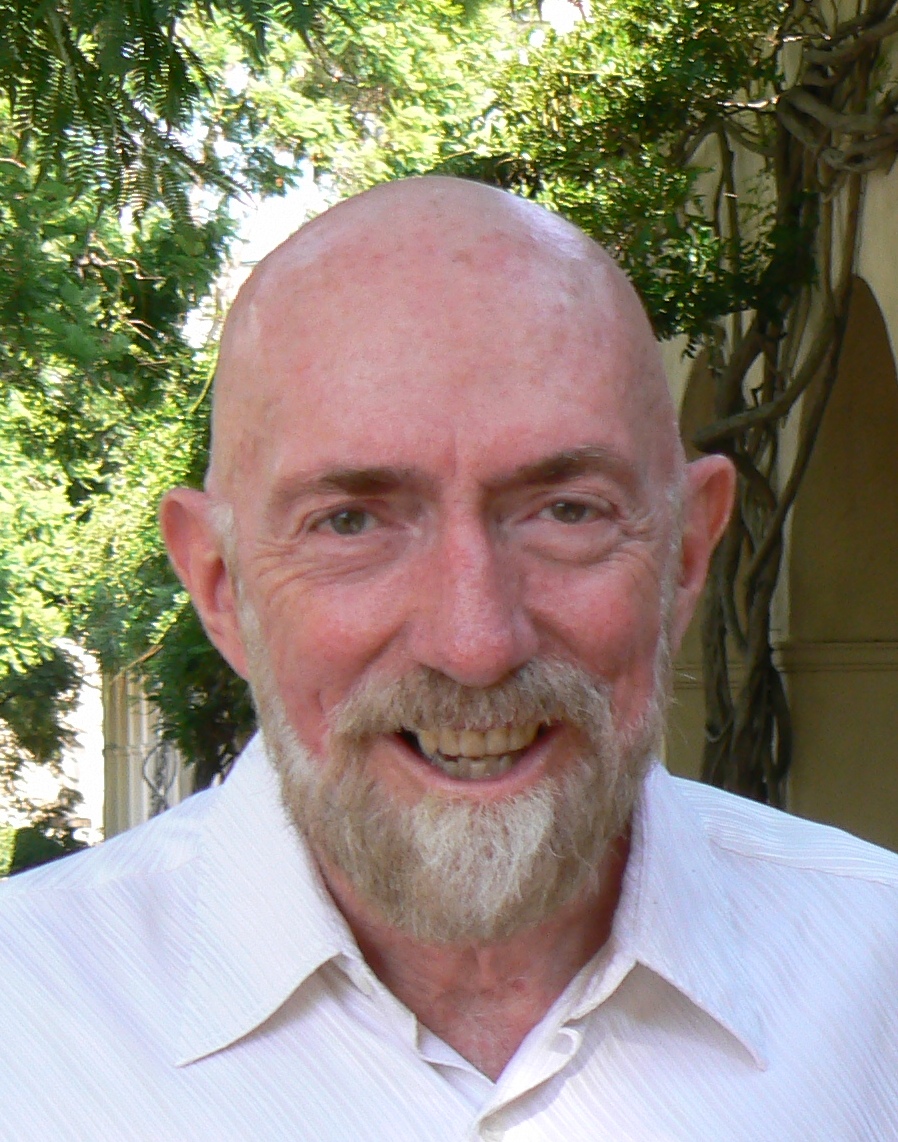



Education and early career
Thorne completed graduate work under the supervision of notable relativists and developed early expertise on the properties of strong gravitational fields. Over decades he held faculty positions at Caltech, where he trained students who went on to work across theoretical and experimental gravitational physics. For a general biographical sketch see a biography and institutional profile.
Scientific contributions
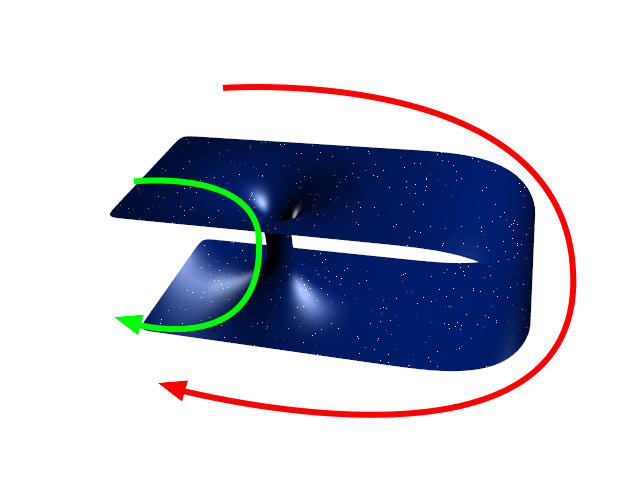
Thorne's research addressed the consequences of Einstein's theory of gravitation for compact objects such as black holes and neutron stars, and for the emission and detection of gravitational radiation. He contributed to analytic and semi‑analytic techniques for modeling binary systems, clarified observable signatures of strong gravity, and helped develop the theoretical framework used to interpret gravitational‑wave signals detected by interferometers. He also explored conceptual topics such as exotic solutions of the field equations and astrophysical implications of relativistic phenomena.
LIGO and the Nobel Prize
Thorne was a central figure in the conceptual development of the Laser Interferometer Gravitational‑Wave Observatory (LIGO), working to connect theoretical expectations with detector design and data analysis. In 2016 LIGO announced the first direct detection of gravitational waves from a binary black hole merger; in 2017 Thorne shared the Nobel Prize in Physics with colleagues who played complementary roles in the project. The prize citation emphasized decisive contributions to the detector and to the observation of gravitational waves; further material on the science can be found at sources about gravitational physics and project histories.
Public outreach and media
Beyond research, Thorne is known for popular books and for advising scientific portrayals in film and media. He authored and contributed to works that aim to make relativity and black hole science accessible to non‑specialists. He served as a scientific consultant on a major feature film, helping translate relativistic effects into visual images that informed both public understanding and technical discussion.
Selected topics and legacy
- Key areas connected to Thorne's work include binary mergers, gravitational waves as astronomical tools, and theoretical constructs related to compact objects.
- He has explored imaginative but rigorous ideas in relativity that stimulate both theoretical and observational follow‑up, and his students and collaborators continue to shape the field.
- For summaries and collections of his scientific and popular writings consult curated bibliographies and institutional pages here. Additional context on collaborators and contemporaries is available via resources about colleagues such as Rainer Weiss.
Further reading
Readers seeking an introduction to the topics Thorne helped to develop can consult overview materials on gravitational waves and relativity, accessible accounts of LIGO's development, and Thorne's own popular books. For curated educational resources and links to technical papers see pages maintained by academic departments and research collaborations (biography, institutional profile, field summaries).
Related articles
Author
AlegsaOnline.com Kip Thorne: Contributions to Gravitational Physics and Public Science Leandro Alegsa
URL: https://en.alegsaonline.com/art/123767
Sources
- einstein-bern.ch : "einstein medal"
- genealogy.math.ndsu.nodak.edu : "Kip Stephen Thorne"
- nobelprize.org : "The Nobel Prize in Physics 2017"
- bbc.co.uk : "Einstein's waves win Nobel Prize"
- nytimes.com : "2017 Nobel Prize in Physics Awarded to LIGO Black Hole Researchers"
- nytimes.com : "Learning from Gravitational Waves"
- Nobel Prize in Physics