
Khieu Samphan: Cambodian politician and head of state of Democratic Kampuchea
Khieu Samphan (born 1931) was a senior Khmer Rouge official who served as nominal head of state of Democratic Kampuchea (1976–1979) and was later tried and convicted for crimes committed under that regime.
Overview
Khieu Samphan (born July 27, 1931) is a Cambodian political figure best known for his senior role in the Khmer Rouge movement and for serving as the official head of state of Democratic Kampuchea from 1976 until the regime's fall in 1979. He was part of a revolutionary leadership that pursued radical social and economic changes. Although he held the formal title of president, real authority is widely understood to have been concentrated in the party leadership under Pol Pot.
Image gallery
2 Images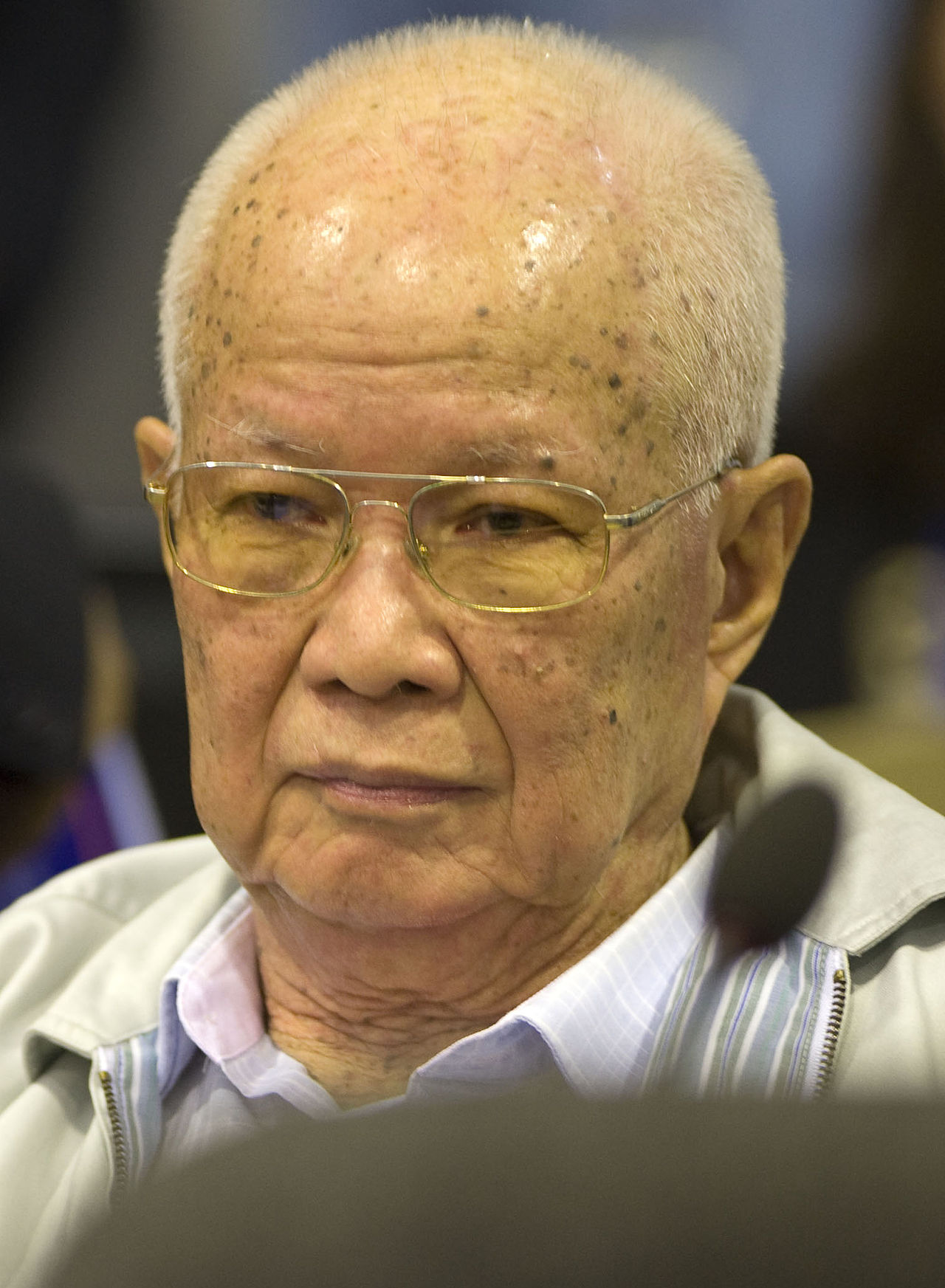

Early life and education
Born in what is now Cambodia, Khieu Samphan trained in economics and worked as an academic and public servant before becoming active in revolutionary politics. Like several other future Khmer Rouge leaders, he spent time abroad while studying and returned to a Cambodia undergoing political upheaval in the 1950s and 1960s. His educational and professional background as an economist shaped how he was presented as a state official during the revolutionary period.
Role in the Khmer Rouge
Within the movement Khieu Samphan occupied prominent state positions and acted as a public representative of the regime. The government implemented systematic policies of forced evacuation of cities, collectivization, forced labor, and strict social controls that produced widespread suffering. Observers and historians emphasize the difference between titular state roles and the party hierarchy; nevertheless, as a senior official he was part of the decision-making structures and public administration of the regime.
Accountability and trials
Following the collapse of Democratic Kampuchea, many former Khmer Rouge leaders lived in relative obscurity for years. Decades later, a United Nations-backed national tribunal, the Extraordinary Chambers in the Courts of Cambodia (ECCC), was established to prosecute senior leaders and those most responsible for crimes committed during 1975–1979. Khieu Samphan and other senior figures, including Nuon Chea, were charged with serious offenses. In 2014 the court found Khieu Samphan guilty of crimes against humanity and imposed a life sentence; the trials aimed to establish individual responsibility and to provide legal findings about the pattern of abuses carried out under the regime.
Policies and human consequences
The policies pursued by Democratic Kampuchea involved mass population transfers, forced labor in rural collectives, restrictions on movement and expression, and targeted violence against perceived opponents and certain ethnic and social groups. These practices resulted in extensive hardship, deaths from starvation, disease and execution, and long-term social and demographic disruption. Victims, researchers and human rights organizations have documented these outcomes in detail and have sought accountability through documentation and legal processes.
Legacy and interpretation
Khieu Samphan remains one of the most widely recognized surviving figures associated with the Khmer Rouge era. His career illustrates the complex relationship between formal state titles and party authority in revolutionary regimes. The ECCC trials have been described as a mixed process: praised for producing tangible convictions and official records, while also criticized for the length of proceedings and the limits of justice for all victims. Scholarly and public debate continues about the historical origins of the movement, the responsibilities of individuals and institutions, and the best measures of reparations and reconciliation for affected communities.
- Khieu Samphan served as the nominal head of state of Democratic Kampuchea (1976–1979).
- He had a background in economics and academia before joining revolutionary politics.
- He was tried by the UN-backed tribunal and convicted of crimes against humanity in 2014.
For language and cultural context see references labeled "Khmer" and for basic country information consult general guides on Cambodia. For broader ideological background see materials on communist movements and revolutionary parties. Official court documents and tribunal publications provide primary legal texts and detailed judgments related to the prosecutions of senior Khmer Rouge leaders.
Related articles
Author
AlegsaOnline.com Khieu Samphan: Cambodian politician and head of state of Democratic Kampuchea Leandro Alegsa
URL: https://en.alegsaonline.com/art/123696
Sources
- eccc.gov.kh : "Mrs. SO Socheat"
- eccc.gov.kh : "KHIEU Samphan"
- cnn.com : "Top Khmer Rouge leaders found guilty of crimes against humanity, sentenced to life in prison"