
Nuon Chea: Senior Khmer Rouge leader and chief ideologue
Nuon Chea (1926–2019), known as Brother Number Two, was the Khmer Rouge's chief ideologue and second‑in‑command. He was later tried and convicted by the UN-backed Extraordinary Chambers for mass crimes.
Nuon Chea (also Long Bunruot; Khmer: នួន ជា) was a senior Cambodian communist politician and a principal architect of the Democratic Kampuchea regime (commonly called the Khmer Rouge). Widely referred to as "Brother Number Two," he served as the movement's second in command and its chief ideological figure, shaping policies implemented across Cambodia between 1975 and 1979.
Image gallery
2 Images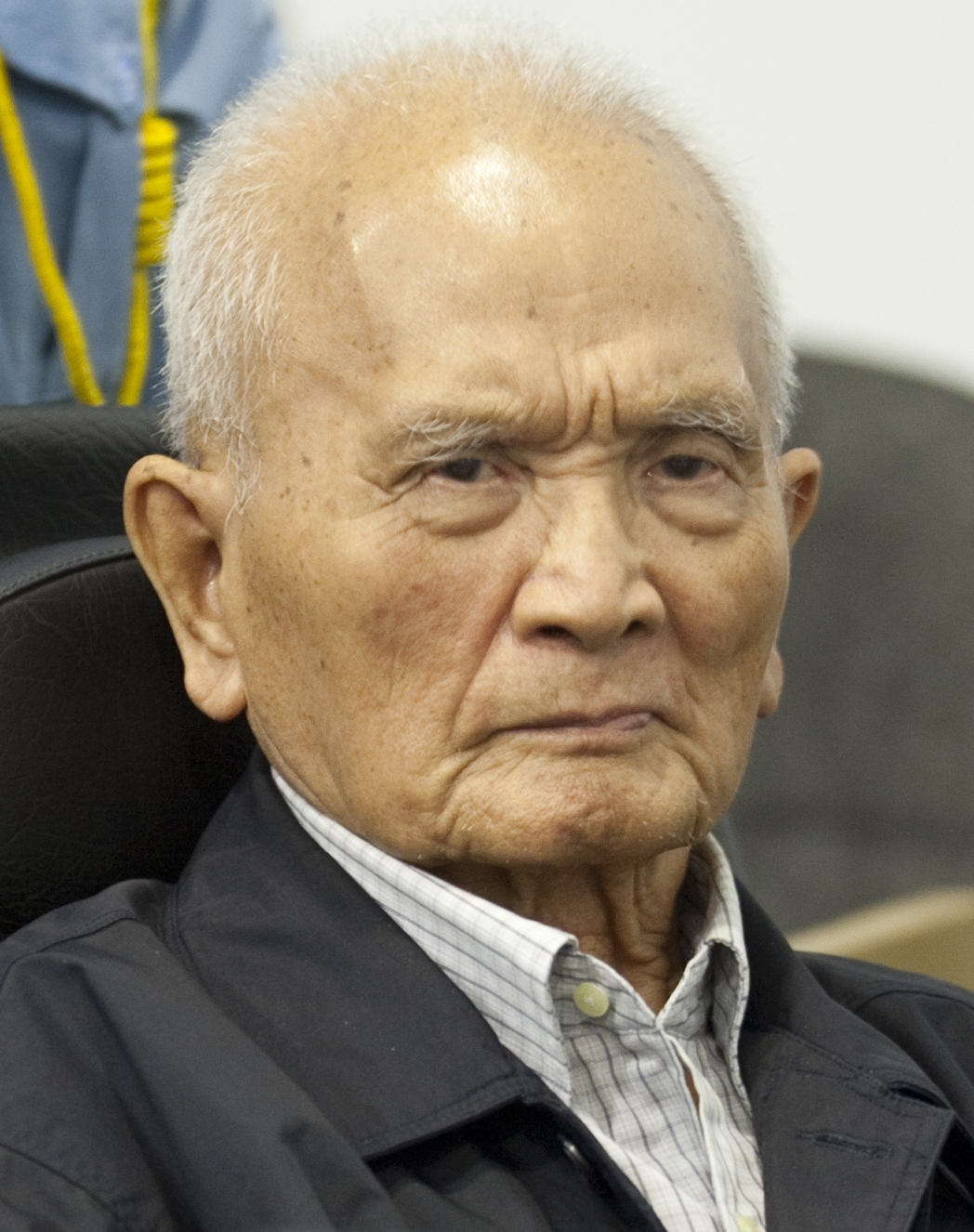

Role and characteristics
As a leading member of the Communist Party of Kampuchea, Nuon Chea helped formulate the doctrine that underpinned the regime's radical transformation of Cambodian society: extreme agrarian collectivization, forced urban evacuations, suppression of perceived political opponents, and the prioritization of autarky and social engineering. He was closely associated with Pol Pot and other senior cadres in directing state institutions and internal security mechanisms.
Policies and impact
- Forced population transfers and mass evacuations from cities to the countryside.
- Collectivization of agriculture, abolition of money and private property in many areas.
- Political purges and repression that targeted officials, intellectuals, ethnic minorities and perceived enemies, often through secret detention centers.
The regime's policies resulted in widespread death from execution, starvation, disease and overwork; scholarly estimates of the total number of victims during 1975–1979 vary, often cited in the range of 1.5–2 million people.
Prosecution and later life
Decades after the fall of Democratic Kampuchea, Nuon Chea was detained and tried by the Extraordinary Chambers in the Courts of Cambodia (ECCC), a UN-backed tribunal established to investigate crimes committed by the Khmer Rouge. The court concluded that senior leaders, including Nuon Chea, bore responsibility for crimes against humanity and acts of genocide against certain groups; he was convicted and received a life sentence. He remained in custody until his death in 2019.
Legacy and distinctions
Nuon Chea is remembered as one of the principal intellectual drivers of the Khmer Rouge's radical program and for his central role in a period that dramatically altered Cambodia's demographic and social landscape. His convictions at the ECCC represented a major international effort to account for state‑level atrocities. The trials also generated debate about justice, reconciliation and historical memory in Cambodia and beyond.
For additional context on Khmer Rouge leadership and the court process, see resources on the regime's structure and the internationalized tribunal: political background, communist movement, and the role of formal office titles such as Prime Minister in Democratic Kampuchea.
Author
AlegsaOnline.com Nuon Chea: Senior Khmer Rouge leader and chief ideologue Leandro Alegsa
URL: https://en.alegsaonline.com/art/127799