
Khaled Mohieddin: Egyptian revolutionary, politician, and founder of Tagammu
Egyptian Free Officer, leftist politician and founder of the National Progressive Union Party (Tagammu). Prominent in the 1952 revolution and an enduring opposition figure until his death in 2018.
Khaled Mohieddin (17 August 1922 – 6 May 2018) was an Egyptian military officer and long‑standing leftist politician. A member of the group of Free Officers that carried out the 1952 coup which ended the monarchy, Mohieddin combined a military background with an enduring commitment to socialist and progressive politics. He is best known for helping to shape early republican institutions and later founding the National Progressive Union Party, commonly called Tagammu.
Image gallery
2 Images
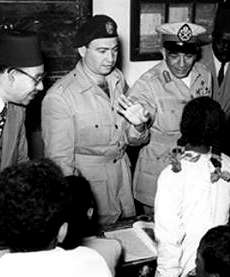
Early life and military role
Born in the early 1920s, Mohieddin rose through the ranks of the Egyptian officer corps to the rank of major. He was one of the younger officers associated with the Free Officers movement that orchestrated the 1952 revolution against King Farouk. His service in the Egyptian Army and participation in the overthrow of the monarchy placed him among the group that would steer Egypt through the transition to republican rule.
Political career and influence
After the revolution Mohieddin became a member of the Revolutionary Command Council and played a visible civic and political role during the formative years of the republic. He worked within the administration of President Gamal Abdel Nasser on issues that reflected his left‑wing orientation, though over time his positions set him apart from other leaders as Egypt’s political environment evolved.
Founding of Tagammu and opposition work
In 1976 Mohieddin founded the National Progressive Union Party (Tagammu), a legal leftist party that gathered socialists, nationalists and independent progressives. Under his guidance Tagammu became one of the principal organized opposition forces through the later decades of the twentieth century, especially during the long presidency of Hosni Mubarak. The party was notable for advocating social justice, expanded public services and civil liberties within the constraints of Egypt’s political system at the time.
Views, notable roles and distinctions
- Committed to socialist and Arab nationalist ideas while remaining an institutional politician.
- Part of the inner circle of the 1952 revolutionary leadership yet later identified with dissident and opposition currents.
- Founding leader of a legal leftist party that survived shifts in Egypt’s political landscape.
Later years and legacy
Mohieddin remained politically active into old age, speaking and writing about Egypt’s political development and maintaining a public profile as a veteran of the revolution. He died on 6 May 2018 in a hospital in Cairo of congestive heart failure at the age of 95. His career is often cited as an example of the generation of military officers who moved from armed revolt to sustained political engagement, and his role in founding Tagammu secured his place in the history of Egypt’s organized left.
For further context on the 1952 revolution, the Free Officers, and post‑revolutionary political movements in Egypt see related sources and profiles of contemporary figures and parties: Communist and leftist currents, institutional reforms and party histories.
Related articles
Author
AlegsaOnline.com Khaled Mohieddin: Egyptian revolutionary, politician, and founder of Tagammu Leandro Alegsa
URL: https://en.alegsaonline.com/art/123686
Sources
- dbonfrdgauzmg.cloudfront.net : dbonfrdgauzmg.cloudfront.net