
Karl Landsteiner — discoverer of the ABO blood groups
Austrian-born immunologist and pathologist who discovered human blood groups in 1901, transforming transfusion medicine and earning the 1930 Nobel Prize in Physiology or Medicine.
Karl Landsteiner (June 14, 1868 – June 26, 1943) was an Austrian physician and immunologist best known for identifying the major human blood groups. His 1901 publication on the classification of human blood into distinct types (blood types) established the scientific basis for safe blood transfusion; the original report appeared on 14 November 1901.
Image gallery
7 Images


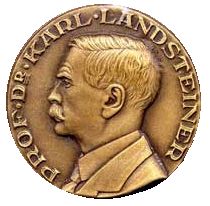
Overview and contributions
Landsteiner's work demonstrated that incompatibility between human blood samples could cause dangerous reactions in transfused patients. He categorized the principal groups now known as A, B, AB and O, showing that matching donor and recipient types prevents many transfusion complications. This insight rapidly changed clinical practice and reduced the risk associated with blood transfusion.
Career and later work
Trained in medicine and pathology, Landsteiner conducted laboratory research that bridged clinical practice and basic immunology. After moving to the United States in the early 20th century, he continued research on serology and immunochemical reactions. Later in his career he contributed to the identification of additional blood-related factors that further refined transfusion safety.
Impact and recognition
- Nobel Prize: Awarded the Nobel Prize in Physiology or Medicine in 1930 for his discovery of human blood groups.
- Clinical impact: His classification enabled routine, life-saving transfusions during surgery, obstetric emergencies and trauma care.
- Scientific legacy: Founded methods in blood typing and immunohematology that remain foundational to transfusion medicine and forensic science.
Landsteiner's discoveries illustrate how laboratory observation can produce immediate clinical benefits. His name is widely associated with serology and blood transfusion practice, and his work continues to be taught in medical and nursing curricula. For a concise timeline, biographical details, and summaries of his publications, see specialized medical histories and institutional biographies that document his life and scientific achievements.
Birth date • Year of birth • Date of death • Year of death • Nationality • Blood group discovery • Original publication date
Related articles
Author
AlegsaOnline.com Karl Landsteiner — discoverer of the ABO blood groups Leandro Alegsa
URL: https://en.alegsaonline.com/art/123324
Sources
- nobelprize.org : "Biography of Karl Landsteiner"