
Karl Pearson: pioneer of mathematical statistics
English mathematician and statistician Karl Pearson (1857–1936) established key statistical methods, founded a university statistics department and Biometrika, and remains a controversial figure for his role in eugenics.
Overview
Karl Pearson (27 March 1857 – 27 April 1936) was an English mathematician whose work helped establish the modern discipline of mathematical statistics. Trained originally in mathematics and natural philosophy, Pearson applied quantitative methods to biological and social questions. He is widely remembered for introducing statistical measures and approaches that remain in use, while also holding and promoting views on heredity and human differences that are now regarded as unethical and scientifically flawed.
Image gallery
5 Images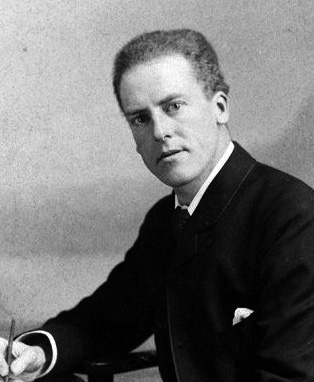


Main contributions
Pearson developed or popularized several statistical concepts and tools. Among these are the product-moment correlation coefficient (often called the Pearson correlation), techniques for measuring association and variation, and the system of frequency distributions known as the Pearson family of distributions. He formulated methods for goodness-of-fit testing, including work that led to what is now called the chi-squared approach, and helped formalize the method of moments for estimating parameters.
Career and institutions
Pearson combined mathematical theory with applied problems in biology, medicine and anthropology. In 1901 he helped found the journal Biometrika, intended to bring rigorous quantitative analysis to biological data. In 1911 he established the first university department explicitly devoted to statistics at University College London, creating a model for academic statistical teaching and research. He also authored influential texts on the philosophy of science and the use of statistics in research.
History, collaborations and influence
Pearson worked closely with contemporaries concerned with variation and heredity. He developed ideas in dialogue with Francis Galton and the generation of biometric researchers interested in applying Darwinian ideas quantitatively. His writing and the institutions he built trained several students who went on to shape twentieth-century statistics and biometry. His influence is visible in standard statistical terminology and in methods still taught in introductory courses.
Controversies and legacy
While Pearson made foundational methodological contributions, his advocacy of eugenics and racial hierarchies has tainted aspects of his legacy. He was a prominent proponent of applying hereditarian ideas to social policy, a stance that modern scientists reject both ethically and scientifically. Contemporary histories thus present a mixed assessment: recognition of his technical achievements together with critical appraisal of the social and political consequences of some of his work.
Further reading and resources
- Biographical sketches and archival materials are available through academic and museum collections; see representative pages such as biographical overview.
- Historical analyses of the development of statistics and biometrics can be found at sites like historical review.
- Examinations of Pearson's statistical inventions and their mathematical formulation are available in scholarly treatments: technical discussion.
- Discussions of his role in eugenics and its consequences are provided by critical histories: eugenics critique.
- Material on the founding of the statistics department at University College London and its early work: institutional history.
- Collections of Pearson's own writings and correspondence are cataloged in various archives: primary sources.
For a balanced perspective, readers should consult both technical expositions of Pearson's statistical methods and critical treatments that place his scientific work in its wider historical and ethical context.
Questions and answers
Q: What was Karl Pearson's full name?
A: His full name was Karl Pearson FRS.
Q: How did the spelling of his name change?
A: When he enrolled at the University of Heidelberg in 1879, they changed the spelling from "Carl Pearson" to "Karl Pearson".
Q: When did he adopt the name "KP"?
A: He adopted the name "KP" by 1884.
Q: Where did he found a university statistics department?
A: In 1911, he founded the world's first university statistics department at University College London.
Q: What is eugenics?
A: Eugenics is a social philosophy which advocates for improving human hereditary traits through selective breeding and other methods.
Q: Who was Karl Pearson's protégé and biographer?
A: His protégé and biographer was Sir Francis Galton.
Q: When was a conference held to celebrate his 150th birthday anniversary?
A: A conference was held in London on 23 March 2007 to celebrate his 150th birthday anniversary.
Related articles
Author
AlegsaOnline.com Karl Pearson: pioneer of mathematical statistics Leandro Alegsa
URL: https://en.alegsaonline.com/art/123331
Sources
- rsbm.royalsocietypublishing.org : rsbm.royalsocietypublishing.org/content/obits/2/5/72.html
- www2.royalsociety.org : "Library and Archive catalogue"
- economics.soton.ac.uk : "Karl Pearson sesquicentenary conference"
- thescorp.multics.org : Race, intelligence and bias in Academe
- doi.org : 10.1214/ss/1177012580
- doi.org : 10.1080/14786440009463897
- doi.org : 10.1080/14786440109462720