
Karl Carstens (German politician, President of the Federal Republic 1979–1984)
Overview of Karl Carstens, a CDU politician who served as the fifth Federal President of West Germany (1979–1984), with career background, roles, and legacy.
Karl Walter Claus Carstens (14 December 1914 – 29 May 1992) was a German politician and lawyer who served as the fifth Federal President of the Federal Republic of Germany from 1979 to 1984. A long-time member of the Christian Democratic Union (CDU), Carstens played several senior roles in parliamentary and federal institutions before his election as head of state.
Image gallery
4 Images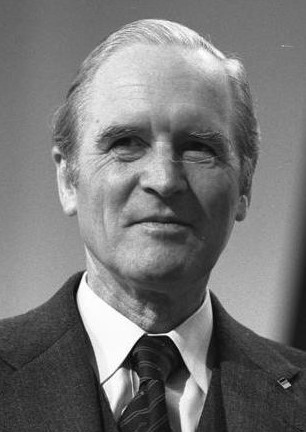


Early life and professional background
Carstens trained in law and entered public administration and diplomatic service in postwar West Germany. His legal education and civil-service background shaped his approach to public office, emphasizing constitutional order, federal structures and the formal duties of state institutions. These early experiences provided the administrative grounding that he later brought to higher political roles.
Political career and offices
He represented the CDU in the Bundestag and rose to prominent parliamentary positions. Before becoming Federal President he held leading posts in the federal legislature and government circles. Key aspects of his career include:
- Service as a member of the German federal parliament (Bundestag).
- Holding senior parliamentary office, including the presidency of the Bundestag prior to his head-of-state election.
- Acting as a national representative abroad and carrying out ceremonial duties associated with the presidency.
Presidency (1979–1984)
As Federal President of West Germany, Carstens fulfilled the largely ceremonial but constitutionally important role of head of state. His tenure coincided with the late Cold War years and domestic debates about security, European integration and social policy. While the office does not exercise direct executive power, Carstens used the platform to stress democratic values, federal cohesion and respect for constitutional procedures.
Style, legacy and notable facts
Carstens was known for a formal, law-oriented style and for treating the presidency as a guardian of constitutional norms rather than a partisan instrument. Observers often noted his preference for ceremonial representation and public engagement on civic themes. He remains a figure associated with the stabilization of West German institutions in a period of international tension and domestic change.
For further context on the office he held and the country he represented, see general references to the role of Federal President and to West Germany. Carstens died in 1992, leaving a record as a senior statesman of the CDU and a custodian of constitutional etiquette.
Related articles
Author
AlegsaOnline.com Karl Carstens (German politician, President of the Federal Republic 1979–1984) Leandro Alegsa
URL: https://en.alegsaonline.com/art/123319
Sources
- Karl Carstens