
Karl Dönitz: German naval commander, U‑boat strategist and interim head of state
German admiral Karl Dönitz (1891–1980) led the Kriegsmarine's U‑boat arm, briefly served as Germany's head of state after Hitler, was convicted at Nuremberg, and later published memoirs.
Overview
Karl Dönitz (often rendered as Karl Doenitz when the character ö is unavailable) was a German naval officer born in Berlin in 1891 who rose to prominence as the commander of Germany's submarine force and later as head of the German navy and short‑term head of state. His career spanned the Imperial German Navy, the interwar Reichsmarine and the Third Reich's Kriegsmarine. Dönitz is most often remembered for developing U‑boat tactics that shaped the Battle of the Atlantic, for his brief succession after Adolf Hitler's death, and for his postwar conviction at the Nuremberg Trials.

Image gallery
10 Images


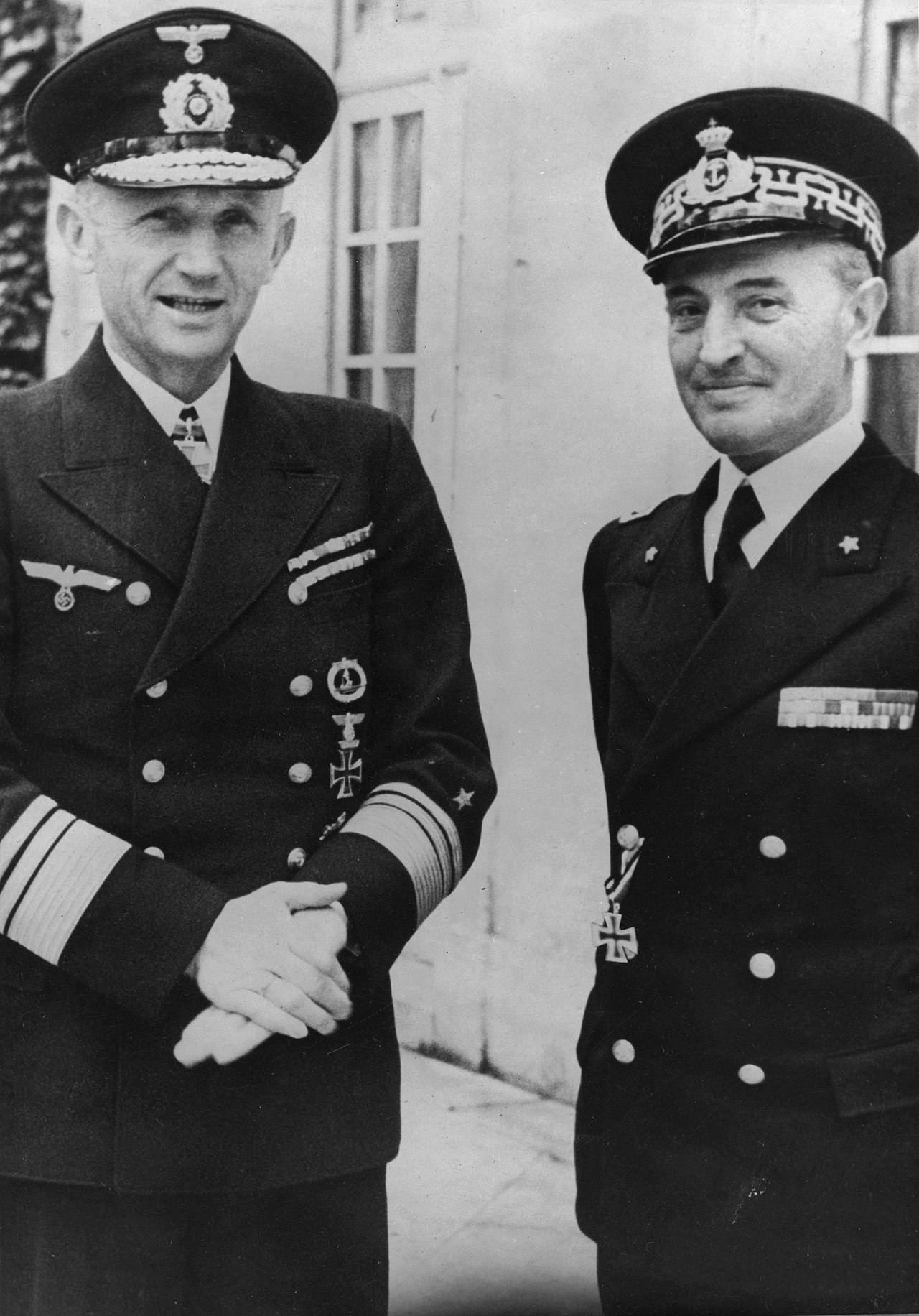


Early life and naval career
Dönitz entered the Imperial German Navy in 1911 and served through World War I, initially on surface vessels before transferring to submarines. After the war he remained in service with the limited navy of the Weimar era, advancing through rank and specialization in undersea warfare. He never formally joined the Nazi Party, yet he worked within the expanding military establishment as it rearmed in the 1930s. Over time he became commander of the U‑boat arm (B.d.U.) and ultimately achieved the rank of Großadmiral and the post of Commander‑in‑Chief of the German navy.
U‑boat strategy and World War II
Under Dönitz the U‑boat force pursued a strategy of concentrated wolfpack attacks aimed at Allied convoys. This approach sought to sever Britain's maritime supply lines during World War II. Dönitz advocated unrestricted submarine warfare at various stages, a policy that contributed to diplomatic and legal controversy because it ran counter to restrictions such as those in the Second London Naval Treaty. His direction of the U‑boat campaign made him the most visible naval commander in the Atlantic theater and earned him the reputation—among supporters—of a tenacious strategist often nicknamed "der Löwe" (the Lion).
Political role, surrender and captivity
In the closing days of the war, following Hitler's suicide, Dönitz was named head of state (Reichspräsident) and led a short government that attempted to negotiate localized surrenders and to preserve what remained of Germany's naval forces. After Germany's unconditional surrender he was taken into custody by the British and held as a prisoner of war (British custody). He was later indicted and tried at Nuremberg on charges that included crimes arising from aggressive war policy and violations of the laws of war.
Trial, conviction and imprisonment
At the Nuremberg Trials Dönitz was convicted and sentenced to ten years' imprisonment. Prosecutors cited his advocacy of unrestricted submarine warfare and other actions; defense evidence and cross‑examination examined Allied practices as well, which influenced sentences and legal reasoning. The trial record remains a key source for historians studying naval conduct, legality in maritime warfare, and the lines between military orders and criminal responsibility.
Later life and legacy
Released after serving his sentence, Dönitz settled near Hamburg, where he wrote memoirs and reflected on his career. He died of a heart attack on 24 December 1980. Assessments of Dönitz are mixed: naval historians often credit his operational innovations and organizational skill, while moral and legal commentators stress his role in contentious policies and his responsibility as a senior military leader. His case continues to be cited in discussions about command responsibility, maritime law, and the ethical limits of naval warfare.
Key facts and notable distinctions
- Born: 1891 in Berlin; died 1980.
- Served in World War I and rose through the Reichsmarine into the Kriegsmarine.
- Led the U‑boat arm (U‑boats) and later became Commander‑in‑Chief.
- Briefly held the office of President of Germany after Hitler's death.
- Convicted at Nuremberg and imprisoned; released and lived near Hamburg.
- Never formally a member of the Nazi Party, but closely involved with the wartime leadership.
For more detailed discussion of Dönitz's tactics, legal case and postwar writings, consult specialized naval histories and primary documents from the mid‑20th century; many archives and annotated collections provide the trial transcripts and contemporary evaluations that illuminate both his military methods and the controversies that followed.
Questions and answers
Q: Who was Karl Dönitz?
A: Karl Dönitz was a German naval leader who commanded the German Navy (Kriegsmarine) during the second half of World War II and served as President of Germany for 23 days after Adolf Hitler's suicide.
Q: How did he get his nickname?
A: He was referred to as "der Löwe" (the Lion).
Q: When did he enter the Imperial German Navy?
A: He entered the Imperial German Navy (Kaiserliche Marine) in 1911.
Q: What position did he hold during World War I?
A: During World War I, he served on surface ships. Later he was transferred to submarines (U-boats).
Q: What role did he play in the Battle of the Atlantic?
A: Under his command, the U-boat fleet fought the Battle of the Atlantic.
Q: What happened after Adolf Hitler's suicide?
A: After Adolf Hitler's suicide, Dönitz became Reichspräsident for 23 days.
Q: What were his convictions at Nuremberg Trials?
A: At Nuremberg Trials, Dönitz was charged and convicted of "crimes against peace" and "war crimes".
Related articles
Author
AlegsaOnline.com Karl Dönitz: German naval commander, U‑boat strategist and interim head of state Leandro Alegsa
URL: https://en.alegsaonline.com/art/123320
Sources
- spartacus.schoolnet.co.uk : "Biography of Karl Dönitz"
- knowledgerush.com : "Karl Dönitz's biography"
- time.com : The Lion is out
- yale.edu : Judgement: Dönitz
- Karl Dönitz