
Blubber (subcutaneous fat of marine mammals)
Blubber is the thick, vascularised layer of fat beneath the skin of many marine mammals, providing insulation, energy storage, buoyancy and historical material for human use and study.
Overview
Blubber is a specialized layer of fat located beneath the skin of many marine mammals—most famously whales, seals and walruses. It differs from ordinary body fat in structure and function, forming a continuous insulating layer that helps animals maintain body temperature in cold water.
Image gallery
2 Images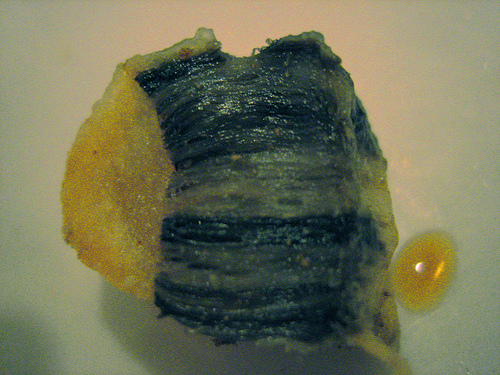

Structure and characteristics
Blubber is composed of adipose tissue interwoven with connective tissue and blood vessels. Its thickness and composition vary by species, age, season and nutritional status. Unlike simple fat deposits, blubber is often more fibrous and vascularised, which allows some heat exchange and metabolic activity.
Primary functions
- Insulation: reduces heat loss in cold aquatic environments.
- Energy reserve: serves as stored calories during fasting, migration or lactation.
- Buoyancy and streamlining: affects body density and hydrodynamics.
- Thermoregulation: blood flow through blubber can be adjusted to conserve or dissipate heat.
Human uses and history
For centuries, indigenous Arctic peoples used rendered blubber (often called oil) for heating and lighting in lamps. Commercial whaling expanded the use of whale oil for lamps, soap and lubrication until petroleum products largely replaced it. Traditional and historical uses are an important cultural and economic chapter linked to blubber.
Scientific and conservation relevance
Researchers sample blubber to assess body condition, diet and pollutant loads because many persistent contaminants accumulate in fatty tissues. Changes in blubber thickness and composition can indicate shifts in food availability or climate impacts. Conservation measures and regulations have changed how blubber is obtained and studied.
Notable distinctions
Blubber is not simply the same as terrestrial body fat: its continuous, insulating architecture and vascular features set it apart. While many marine mammals rely on blubber, others use a combination of fur and fat. For additional context on cultural uses and historical lamp technologies, see further reading.
Related articles
Author
AlegsaOnline.com Blubber (subcutaneous fat of marine mammals) Leandro Alegsa
URL: https://en.alegsaonline.com/art/12321