
Blu-ray Disc (BD): high-density optical disc format
Blu-ray Disc (BD) is a high-capacity optical disc format for high-definition video, large data storage and games. Developed by the Blu-ray Disc Association, it succeeded earlier HD formats in the 2000s.
Blu-ray Disc (commonly called Blu-ray or BD) is an optical disc format designed to store and deliver high-definition video, large data sets and interactive game media. Its name refers to the shorter-wavelength blue/violet laser used to read and write the disc surface, which allows tighter focusing and higher data density than the older red laser used by earlier optical formats such as DVD and CDs. The format was created and promoted by the Blu-ray Disc Association (BDA) and first appeared in consumer products in the mid-2000s, becoming widely used for packaged HD movies and as the primary media for some game consoles.
Image gallery
8 Images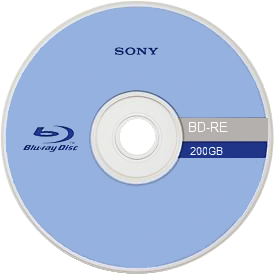



Technical characteristics
Blu-ray discs use a blue-violet laser with a wavelength near 405 nm, enabling smaller pits and tracks on the disc surface. Common commercial capacities include a single-layer disc of about 25 GB and a dual-layer disc of roughly 50 GB. Extended variants such as BD-XL support three or four layers, with significantly higher capacities for archival and professional use. Because of the higher density, a dual-layer Blu-ray holds more than five times the data of a standard DVD and many times the storage of a CD.
Formats and compatibility
The Blu-ray family includes several media types and standards: BD-ROM (pre-pressed read-only), BD-R (recordable once) and BD-RE (rewritable). Manufacturers also produced drives and players for computers and consumer electronics; many desktop and laptop personal computer optical drives offered Blu-ray read/write capability. Most Blu-ray players are backward compatible with DVDs and CDs, allowing users to play older discs in many, but not all, players.
History and the 'format war'
Blu-ray was developed by a coalition of electronics, media and computing companies and launched commercially in the 2000s. Its main rival was the HD DVD format; the competition between the two standards is often called the format war. Blu-ray eventually achieved broader industry support and retail adoption, while HD DVD lost major studio and manufacturer backing and was discontinued as a consumer format. The format’s rise was also influenced by prominent adopters such as the PlayStation 3 game console, which used Blu-ray discs for games and media playback.
Uses, codecs and market context
Blu-ray became the standard medium for distributing high-definition movies and television seasons on disc, supporting advanced video codecs such as H.264/AVC and VC-1 as well as high-bitrate audio formats. It has been used for software distribution, archival storage and as a physical format for console games. In recent years physical-disc sales have declined in many markets as streaming and digital distribution gained popularity, but Blu-ray remains important where high-capacity, high-quality local playback or long-term archival storage is required.
Distinctions and notable facts
- Blu-ray discs are named for their blue/violet laser, in contrast to older formats that used a red laser.
- Variants include higher-capacity BD-XL discs and multiple commercial and recordable types (BD-ROM, BD-R, BD-RE).
- The format competed directly with HD DVD during the late 2000s; Blu-ray’s victory consolidated HD optical distribution around one standard.
- Physical discs are region-coded in some releases, but many discs and players are region-free; distribution practices vary by studio and manufacturer.
Related articles
Author
AlegsaOnline.com Blu-ray Disc (BD): high-density optical disc format Leandro Alegsa
URL: https://en.alegsaonline.com/art/12320