
José Napoleón Duarte
Salvadoran politician and president (1984–1989) who led the Christian Democratic Party during much of the civil war era and attempted political and social reforms amid intense armed conflict.
José Napoleón Duarte Fuentes (23 November 1925 – 23 February 1990) was a Salvadoran politician best known for serving as President of El Salvador from 1984 to 1989. A leading figure in the country's Christian Democratic Party (PDC), Duarte emerged as a prominent urban politician and mayor of San Salvador before his first presidential bid in 1972. His public career unfolded against the backdrop of escalating political violence and a protracted civil war.
Image gallery
6 Images


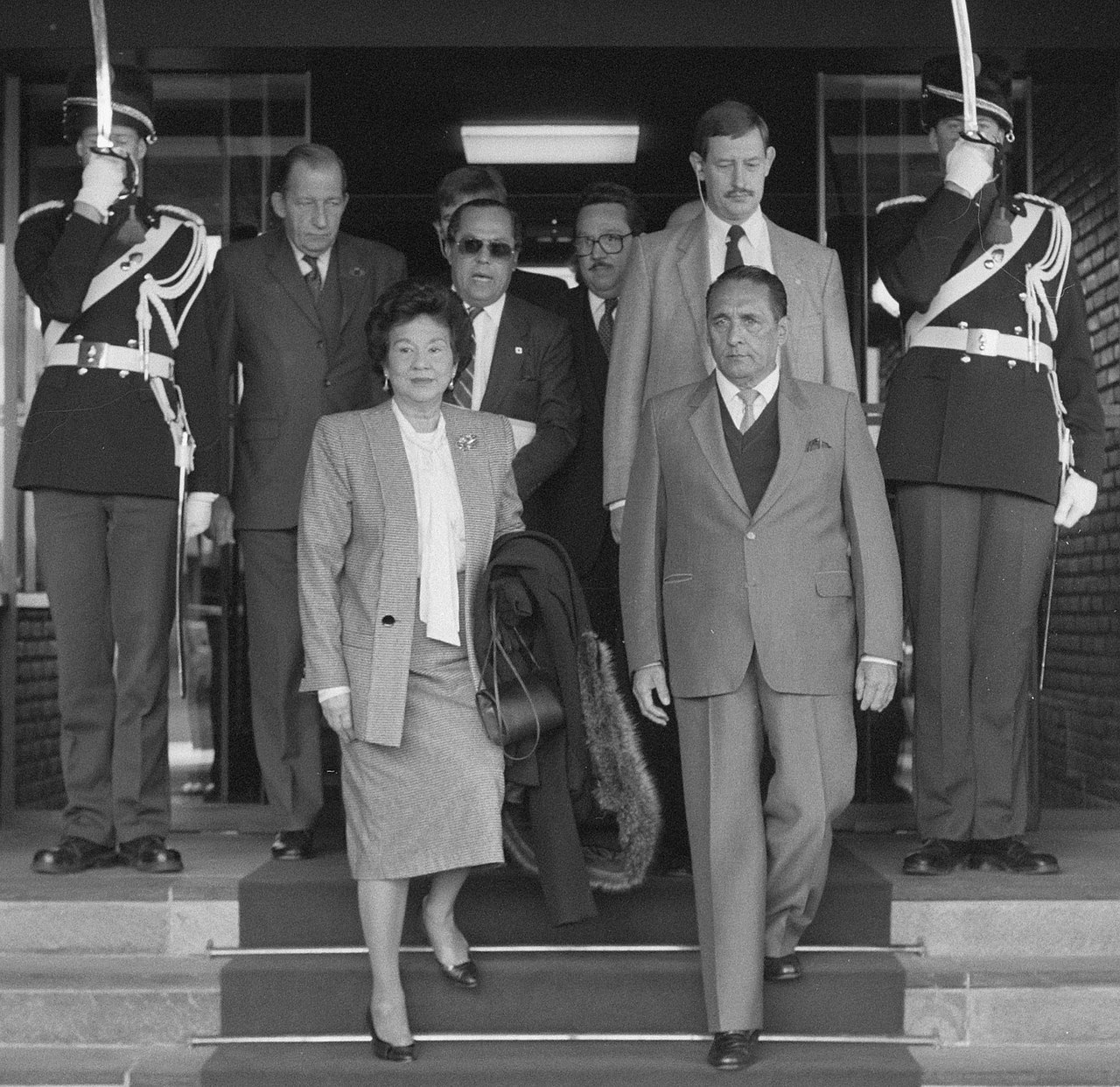


Early life and political rise
Duarte trained as an engineer and became active in centrist and reformist politics in the decades after World War II. He rose to national prominence through municipal leadership in the capital, where he emphasized civic improvements and sought to expand political space for moderate parties. His candidacy in the 1972 presidential contest was widely viewed as contested; in the subsequent turmoil he was briefly sidelined and spent periods abroad, returning later to continue political work with the PDC.
Presidency (1984–1989) and governance
Taking office in 1984, Duarte assumed leadership at a time when armed insurgency and violent repression marked public life. His administration pursued a mixed program: it attempted limited social reforms, promoted civilian rule over the military, and sought international support to stabilize the country. At the same time, his government faced criticism from both the political right and armed left for perceived compromises and for its inability to end human-rights abuses tied to the broader conflict.
Challenges, policies, and notable aspects
- Balancing act: sought to strengthen democratic institutions while confronting guerrilla warfare and paramilitary activity.
- Reform efforts: proposed economic and social measures intended to address inequality, though many measures were constrained by security priorities.
- International relations: engaged with foreign governments to obtain diplomatic and material support during the civil war period.
- Transition: his term paved the way for continued political contests and eventually for negotiated processes in the early 1990s.
Duarte left office after the 1989 election, which brought a conservative opposition candidate to power. Observers credit him with helping to keep an institutional framework for civilian government intact during a profoundly destabilizing era, while critics point to shortcomings in preventing abuses and achieving deeper reforms.
In February 1990 Duarte died in San Salvador at age 64 from stomach cancer. His career remains a subject of study for those examining democratization, centrist reform movements, and the complexities leaders face when governing during armed conflict.
For further context on Duarte's life and the period in which he governed, consult dedicated histories of El Salvador's late 20th-century politics and biographies of regional political figures.
Related articles
Author
AlegsaOnline.com José Napoleón Duarte Leandro Alegsa
URL: https://en.alegsaonline.com/art/122874
Sources
- query.nytimes.com : "Jose Napoleon Duarte, Salvadoran Leader In Decade of War and Anguish, Dies at 64"