
José Raúl Capablanca: Cuban World Chess Champion and Endgame Master
Overview of José Raúl Capablanca (1888–1942), Cuban world chess champion (1921–1927), known for natural talent, exceptional endgame skill, rapid play, influential writings and enduring influence on modern chess.
Overview
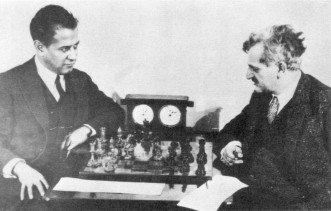
José Raúl Capablanca y Graupera (1888–1942) was a Cuban chess player who became World Chess Champion and remained one of the most admired figures in the game. Born in Havana and associated with Cuba throughout his life, Capablanca rose from a celebrated child prodigy to an international celebrity, traveling widely and representing his country abroad. He held the official world title from 1921 until 1927 and was widely praised for the clarity and economy of his play.
Image gallery
10 Images




Playing style and characteristics
Capablanca is best remembered for a style that emphasized simplicity, positional clarity and technical mastery in the endgame. He was famous for making good moves quickly and for an almost preternatural feel for piece activity and pawn structure. His approach minimized tactical complications and often made his wins look effortless: opponents were outplayed rather than out-calculated. Because of this he became a model of how efficient, almost classical chess could dominate top-level play.
Career highlights and development
Capablanca's competitive ascent was rapid: as a youth he defeated strong masters and began to attract international attention. He became world champion by defeating Emanuel Lasker in 1921 and later lost the title to Alexander Alekhine in 1927, a match that marked a turning point in elite chess competition. Aside from matches for the world crown, Capablanca won or finished near the top in many of the major tournaments of his era and remained a leading player through the 1930s.
Writings, ideas and legacy
Beyond over-the-board play, Capablanca made a lasting contribution through his writings and chess pedagogy. His book Chess Fundamentals is widely regarded as a classic introduction to strategic and endgame concepts and continues to be recommended to students of the game. He also proposed changes and experiments aimed at improving chess—most famously a variant with an expanded board intended to reduce quick draws—which has been referred to by his name in chess literature.
Importance and notable facts
- World Champion from 1921 to 1927, establishing a reputation for sublime technical play.
- Renowned for endgame technique and rapid, economical decision-making at the board.
- Authored instructional works that remain influential for players and instructors.
- Inspired later generations of positional and pragmatic players who value harmony and simplification.
Personal life and public profile
Capablanca became a well-known public figure: newspapers and other media reported on his travels, exhibitions and matches, and he enjoyed considerable fame both in his homeland and abroad. He married Gloria Simoni Betancourt in December 1921 and had two children, a son in 1923 and a daughter in 1925; that marriage later dissolved and he remarried. In addition to his chess career he served at times in capacities that promoted Cuban culture and presence overseas. He died in New York in 1942, leaving a legacy as one of the most elegant and influential players in chess history.
For further reading on Capablanca's life, play and influence consult historical summaries and collections of his games, which document the clarity and technical precision that made his play a model for generations of students and masters. Contemporary and retrospective accounts in newspapers, radio archives and film reels reflect his broad cultural reach; modern overviews and biographies remain available through many chess resources and archives devoted to the game. He was frequently portrayed in the press as a national ambassador (ambassador-at-large) and as an early media celebrity of international chess.
Examples of his enduring influence include instructional citations in modern endgame manuals and tournaments that recall his name. Various online and printed compilations preserve his best games and annotate them for study; these resources continue to be consulted by students aiming to learn positional judgment and the art of simplification in chess play. For curated game collections and biographical details see specialized chess sites and archives here.
Questions and answers
Q: Who was José Raúl Capablanca y Graupera?
A: José Raúl Capablanca y Graupera was a chess player who was World Chess Champion from 1921 to 1927, born in Havana, Cuba, on November 19, 1888, and passed away in New York on March 8, 1942.
Q: What was Capablanca's talent?
A: Capablanca was a child prodigy with an extraordinary natural talent for the game of chess.
Q: What did Capablanca become besides being a chess player?
A: Capablanca grew up into a cultured and charming man that the Cuban government made its roving ambassador-at-large.
Q: How was Capablanca's fame outside of his chess career?
A: Capablanca was a media celebrity whose travels around the world were reported in newspapers, radio, and movie newsreels. He was probably the best-known Cuban to the rest of the world in his lifetime.
Q: Did Capablanca marry and have children?
A: Yes, Capablanca got married to Gloria Simoni Betancourt in December 1921, shortly after becoming World Champion. They had a son named José Raúl Jr. in 1923 and a daughter named Gloria in 1925.
Q: What did Capablanca's second wife say about his first marriage?
A: According to Capablanca's second wife, Olga, his first marriage broke down fairly soon.
Q: When and where did Capablanca pass away?
A: Capablanca passed away in New York on March 8, 1942.
Related articles
Author
AlegsaOnline.com José Raúl Capablanca: Cuban World Chess Champion and Endgame Master Leandro Alegsa
URL: https://en.alegsaonline.com/art/122879
Sources
- chessgames.com : "Capablanca's Best Chess Endings"
- gtryfon.demon.co.uk : "José Raúl Capablanca"
- chessgames.com : "Capablanca vs the World Champions Decisive Games"
- chesshistory.com : "The Genius and the Princess"
- chess-poster.com : "Jose R Capablanca"
- chessarch.com : "One man’s mind"
- books.google.com : The unknown Capablanca
- members.aol.com : "1921 World Chess Championship" · web.archive.org
- books.google.com : 107 Great chess battles'
- measuringworth.com : "Five ways to compute the relative value of a U.K. pound amount, 1830 - 2006"
- kramnik.com : "Kramnik Interview: From Steinitz to Kasparov"
- chesscorner.com : "Jose Raul Capablanca"
- labatechess.com : New York 1927