
Jesse Jackson — civil rights leader, minister and political organizer
American Baptist minister, civil rights activist and two-time Democratic presidential candidate; founder of Operation PUSH and the Rainbow/PUSH Coalition, influential in black political mobilization.
Overview
Jesse Louis Jackson, Sr. (born October 8, 1941) is an American Baptist minister, civil rights activist and political organizer. He rose to national prominence in the 1960s as an organizer with the Southern Christian Leadership Conference and as a close associate of Martin Luther King Jr. Later he founded influential advocacy groups and ran for the Democratic presidential nomination in the 1980s.
Image gallery
10 Images


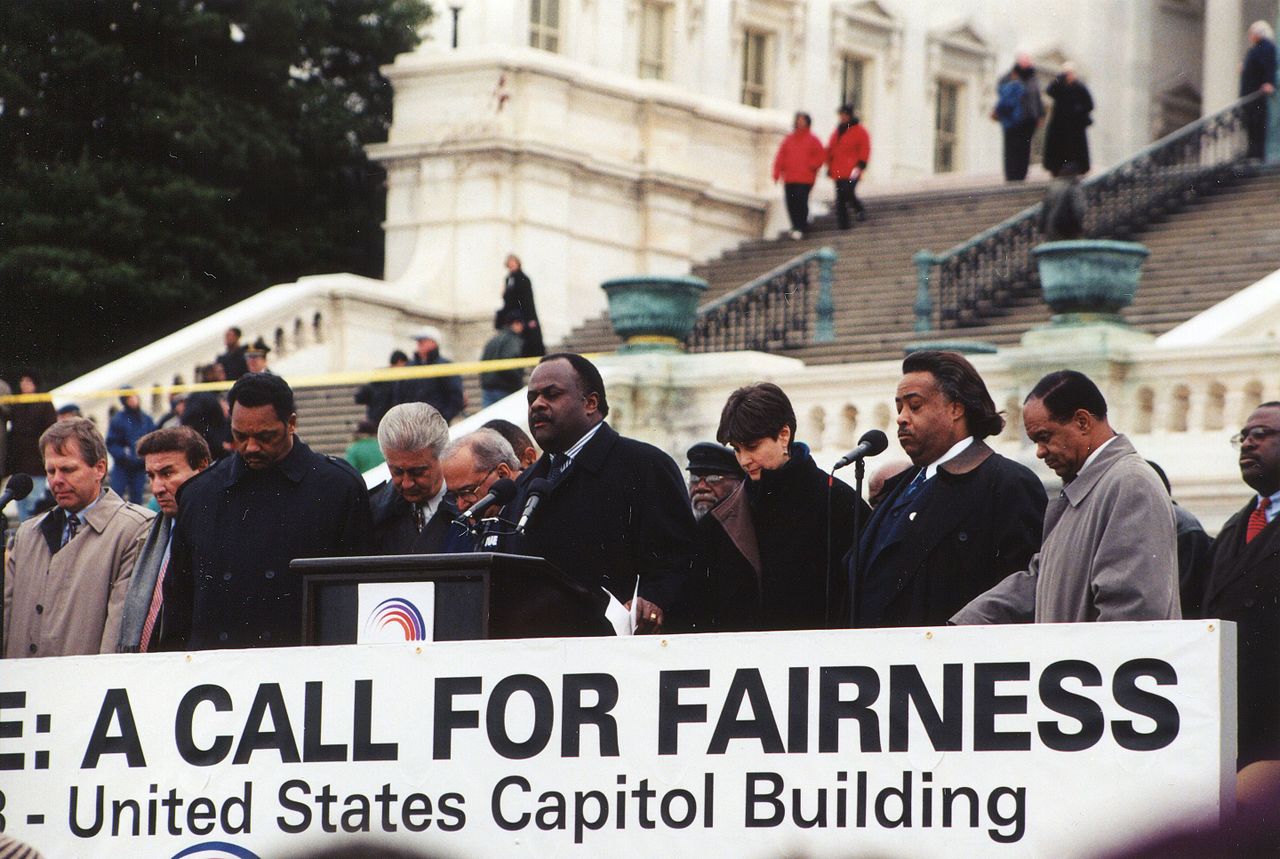

Early life and background
Born Jesse Louis Burns in Greenville, South Carolina, Jackson was raised by his grandmother for much of his childhood after his young mother, Helen Burns, did not marry his biological father. His mother later married Charles Jackson, who adopted Jesse when he was a teenager. These formative years in the segregated American South shaped his early interest in social justice and organized religion.
Civil rights work and organizations
Jackson became active in the civil rights movement as a field organizer and preacher, working with churches and grassroots groups to challenge racial segregation and economic exclusion. In the 1970s he created Operation PUSH (People United to Save Humanity), later merging it with the National Rainbow Coalition to form Rainbow/PUSH, an organization that combined economic empowerment, political advocacy and voter mobilization.
Political campaigns and public roles
Jackson sought the Democratic presidential nomination twice, mounting national campaigns that broadened political engagement among African Americans, young voters and working-class constituencies. His candidacies helped push major parties and corporations to address issues of racial equity, affirmative action and corporate responsibility. He has also engaged in public diplomacy and humanitarian delegations abroad.
Notable activities and controversies
- Work with civil rights organizations and mass mobilization efforts.
- Founder and leader of Operation PUSH and the Rainbow/PUSH Coalition.
- International delegations to negotiate for prisoners and pursue humanitarian aims.
- Throughout his career he has received both praise for advocacy and criticism over tactics and public statements.
Legacy and significance
Jackson is widely regarded as a key figure in the transformation of African-American political power from the 1970s onward. His efforts helped increase minority participation in electoral politics, influenced corporate diversity practices, and expanded the language of inclusion in American public life. For further information and archival materials, see biographical resources, the archives of organizations he led at Operation PUSH / Rainbow and contemporary analyses at scholarly sites and news collections.
Related articles
Author
AlegsaOnline.com Jesse Jackson — civil rights leader, minister and political organizer Leandro Alegsa
URL: https://en.alegsaonline.com/art/121919
Sources
- biography.com : "Jesse Jackson Biography"
- history.com : "Jesse Jackson"
- cnn.com : "Jesse Jackson Fast Facts"
- cnn.com : "Jesse Jackson diagnosed with Parkinson's disease"
- edition.cnn.com : "Jesse Jackson endorses Hillary Clinton"
- cnn.com : "Jesse Jackson endorses Bernie Sanders for president"
- Jesse Jackson