
Jeanne Gang: American Architect and Founder of Studio Gang
Profile of Jeanne Gang, the Chicago architect who founded Studio Gang, summarizing her education, major projects, design approach, offices, and recognition.
Overview
Jeanne Gang (born March 19, 1964) is an American architect and the founder of Studio Gang, an architecture and urban design practice known for inventive structural expression, attention to public life, and environmental strategies. The firm maintains offices in Chicago, New York and San Francisco and works across scales from buildings to waterfronts and urban plans.
Image gallery
7 Images
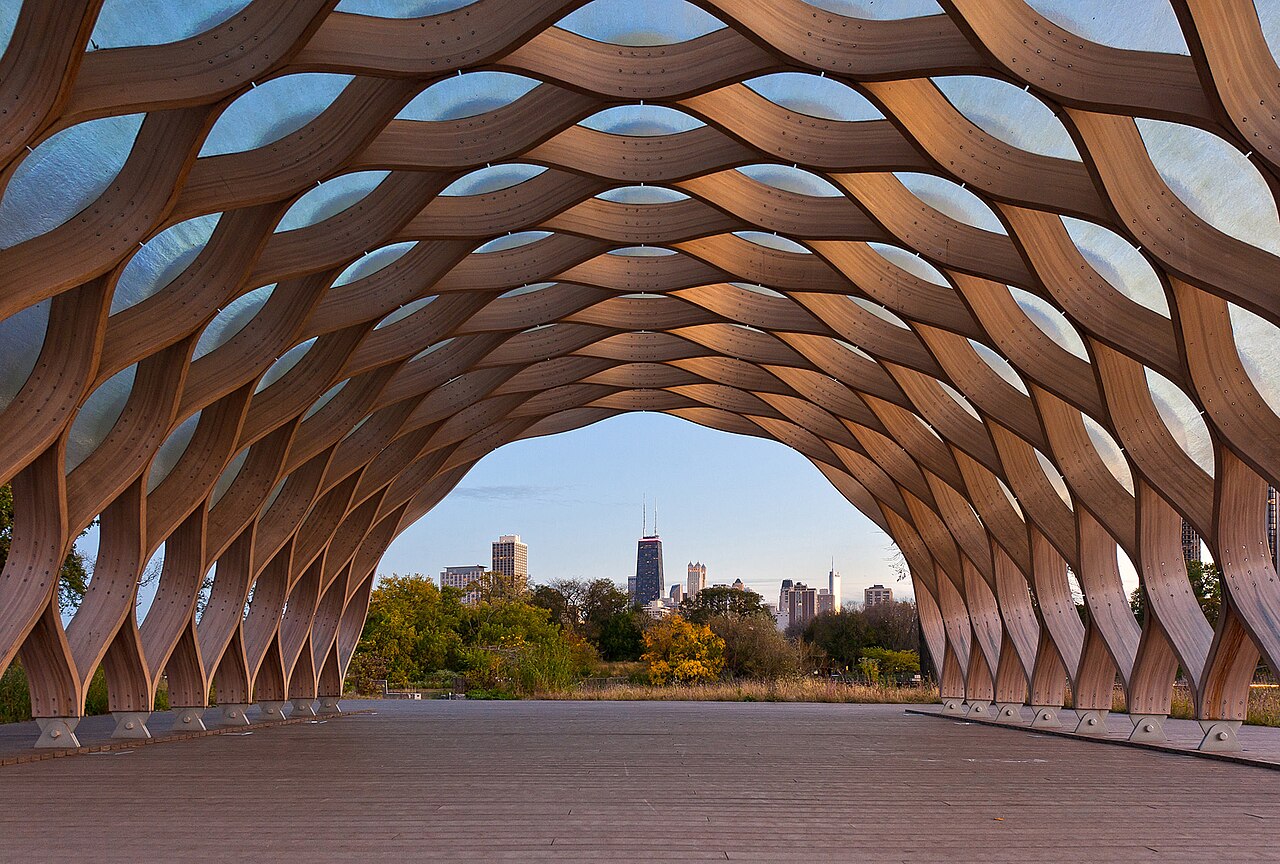


Education and early career
Gang trained in architecture at the University of Illinois and continued graduate studies at the Harvard Graduate School of Design. She founded Studio Gang in the 1990s, building a practice that integrates architecture, landscape and urban design while collaborating closely with engineers, ecologists and community stakeholders.
Major projects
Studio Gang's portfolio includes a range of high‑profile and community projects. The firm is widely known for Aqua Tower, a mixed‑use high‑rise in Chicago celebrated for its undulating concrete balconies and attention to views and daylight; see the project page at Aqua Tower. Other notable works include the University of Chicago Campus North Residential and Dining Commons (Campus North) and civic‑scale interventions along the Chicago River such as two boathouses and riverfront improvements (Chicago River boathouses). Studio Gang maintains regional offices, including a headquarters in Chicago (Chicago office) and additional studios in New York and San Francisco.
- Aqua Tower: a mixed‑use tower noted for its sculptural balconies and integration with the streetscape.
- Campus North: University housing and dining designed to foster community life.
- Chicago River projects: boathouses and public‑realm work that reconnect neighborhoods to the river.
- Vista Tower / St. Regis Chicago: a later, prominent high‑rise design in the city.
Design approach and themes
Gang's work emphasizes the relationship between structure, program and public realm. She often shapes massing to create terraces, balconies and stepped forms that activate façades and provide outdoor space. Sustainability, material innovation and contextual response are recurrent priorities, as is designing ground‑level spaces that encourage pedestrian activity and civic use.
Recognition and influence
Over her career Gang has received national and international recognition, including a MacArthur Fellowship among other honors, and her projects appear frequently in discussions of contemporary tall buildings and urban design led by women. Her practice has broadened debates about the social and environmental responsibilities of architecture through collaborative, research‑oriented work.
Teaching, writing and public engagement
In addition to running a large practice, Gang has lectured widely, contributed to exhibitions and publications, and engaged in interdisciplinary research. Studio Gang continues to pursue projects that link design excellence with civic and ecological goals, advocating for resilient and inclusive urbanism.
Related articles
Author
AlegsaOnline.com Jeanne Gang: American Architect and Founder of Studio Gang Leandro Alegsa
URL: https://en.alegsaonline.com/art/121674
Sources
- rrstar.com : "Belvidere's Jeanne Gang Gets 2011 MacArthur Foundation Genius Grant"
- chicagoreader.com : "The Third School: A new kind of skyscraper heralds a new kind of Chicago architecture"
- studiogang.com : "Aqua Tower"
- archrecord.construction.com : "WMS Boathouse at Clark Park | 2014-01-16 | Architectural Record"
- dnainfo.com : "Eleanor Boathouse Officially Opens In Bridgeport" · web.archive.org