
Imre Hollai — Hungarian diplomat and President of the UN General Assembly
Imre Hollai (1925–2017) was a Hungarian career diplomat who served as Hungary's ambassador to the UN and presided over the UN General Assembly in 1982–1983.
Overview
Imre Hollai (22 January 1925 – 22 November 2017) was a Hungarian career diplomat best known for serving as president of the United Nations General Assembly in 1982–1983. Over a diplomatic career spanning several decades, Hollai represented Hungary at headquarters and abroad, taking on senior roles during a period when multilateral diplomacy was shaped by Cold War tensions and the evolving United Nations system.
Image gallery
1 Image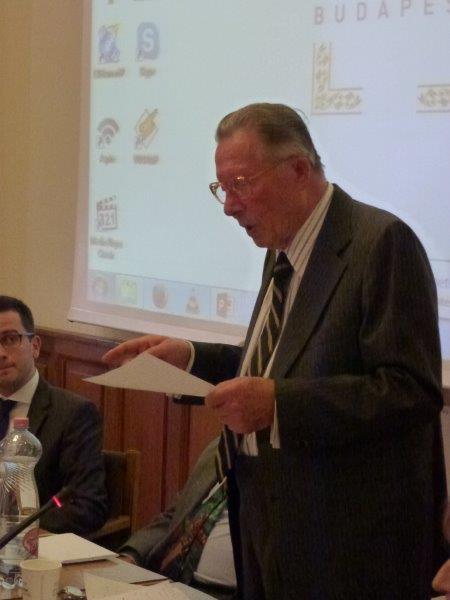
Career and principal roles
Hollai entered the Hungarian foreign service in 1949. Early in his career he was posted to New York as Hungary's deputy representative to the United Nations from 1956 to 1960, a formative assignment that established his expertise in multilateral affairs. He later served within his country's party and government structures as head of foreign relations for the Central Committee from 1960 to 1963, a post that involved managing international contacts for the ruling authorities.
- 1964–1970: Ambassador to Greece and to Cyprus, where he handled bilateral relations in the Eastern Mediterranean.
- 1970–1974: Deputy Foreign Minister of Hungary, taking part in shaping foreign-policy priorities.
- 1974–1980: Hungary's Ambassador and Permanent Representative to the United Nations, the senior Hungarian voice at the UN during much of the 1970s.
President of the UN General Assembly (1982–1983)
In 1982 Hollai was elected to preside over the General Assembly for its annual session, a role that rotates among member states and carries responsibility for chairing plenary meetings, guiding debates, and representing the Assembly in contacts with other UN organs. His presidency took place against the backdrop of renewed East–West rivalry, debates over disarmament, economic development, and issues affecting the Global South. As president, Hollai's work required balancing procedural duties with efforts to keep discussions inclusive for a diverse membership.
Legacy, approach and significance
Hollai's career typifies the professional diplomat of a mid-20th-century Eastern European state: long-term service, alternating bilateral and multilateral postings, and roles that bridged party policy and state representation. Colleagues noted his familiarity with UN procedures and his capacity to represent a smaller state on the global stage. By serving both as ambassador to international organizations and as an envoy to regional partners, he exemplified the diplomatic practice of combining technical knowledge of international institutions with political awareness of national interests.
Later life and death
After leaving active diplomatic posts, Hollai remained a recognized figure in Hungarian foreign-policy circles. He died on 22 November 2017 in Budapest at the age of 92. His tenure at the UN and his service in Athens, Nicosia and other capitals are often cited when summarizing Hungary's diplomatic history in the Cold War era.
For more context on the offices he held and the institutions he engaged with, see entries on the United Nations General Assembly, the United Nations, and the diplomatic relations of Greece and Cyprus. Additional background on Hungary's foreign policy in the second half of the 20th century can provide fuller understanding of the environment in which Hollai worked.
Related articles
Author
AlegsaOnline.com Imre Hollai — Hungarian diplomat and President of the UN General Assembly Leandro Alegsa
URL: https://en.alegsaonline.com/art/120911
Sources
- news.google.com : "Attempt to honor Columbus sparks stormy argument in U. N."
- un.org : "UN General Assembly - President of the 62nd Session - Imre Hollai (Hungary)"
- nepszava.hu : "Elhunyt Hollai Imre"