
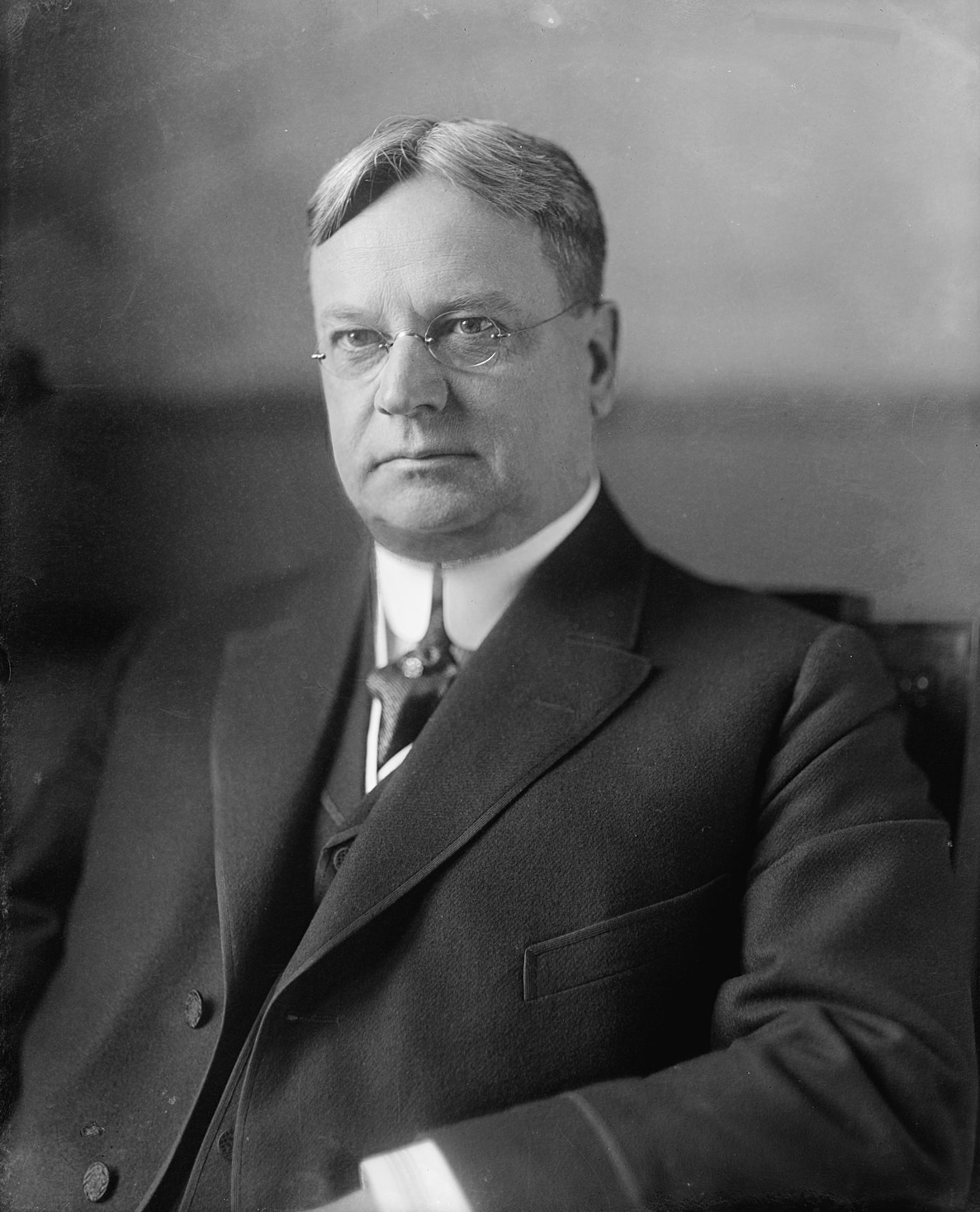
Hiram Johnson
Progressive Republican leader from California; governor (1911–1917), U.S. senator (1917–1945), 1912 Progressive Party vice-presidential nominee, reformer known for direct-democracy measures and independent Senate career.
Hiram Warren Johnson (1866–1945) was a prominent American politician widely associated with the Progressive movement. He is remembered for leading a reform-minded campaign against entrenched interests in California and for maintaining an independent, often contrarian presence in the U.S. Senate. Johnson's career bridged state-level reform and national politics, and his positions reflected a blend of progressive domestic aims and a cautious, sometimes isolationist, approach to foreign policy.
Image gallery
10 Images




Offices and public roles
Johnson served as a leading progressive voice within the Republican ranks. He was elected the 23rd Governor of California in 1911 and took office at a time when voters sought greater control over state government. After two terms as governor he moved to the U.S. Senate, where he represented California as a United States Senator from 1917 until his death. His long Senate tenure gave him a platform to influence national debates across three decades. He died in 1945 of cerebral thrombosis.
Johnson first rose to national prominence in 1912 when he joined former President Theodore Roosevelt as his running mate on the Progressive Party ticket, commonly known as the "Bull Moose" campaign. That campaign fused calls for political reform, regulation of corporate power, and expanded democratic participation, and it affirmed Johnson's reputation as a reformer who could challenge party orthodoxy.
Electoral attempts and shifting alliances
After the split of 1912, Johnson remained a significant figure in Republican politics. He sought the party's presidential nomination in the early 1920s but did not secure it. In 1932, faced with the economic crisis of the Great Depression, he broke with some party leaders and supported the Democratic nominee, Democrat Franklin D. Roosevelt, who promised active federal response. Johnson backed many programs of the New Deal, especially those aimed at relief and reform, though he later criticized aspects of FDR's long presidency and its expanding executive power.
Political reforms and positions
Johnson is particularly associated with state-level innovations that increased popular control over government. He championed measures that made it easier for citizens to place initiatives and referenda on the ballot and to recall elected officials. In the Senate he was known for his:
- Support for direct democracy: promotion of initiative, referendum, and recall as checks on corporate and party machines.
- Anti-monopoly stance: advocacy of regulation to curb the political influence of large corporations and utility interests.
- Independent foreign-policy posture: skepticism toward international commitments such as the League of Nations and a general preference for neutrality in foreign entanglements.
- Pragmatic reformism: willingness to endorse federal relief and regulatory measures during crises while guarding congressional prerogatives.
His legislative style combined sharp rhetoric with an insistence on procedural safeguards and transparency; he cultivated a reputation for exposing what he saw as corruption or undue influence and for defending the idea that government should be responsive to ordinary voters.
Legacy and evaluation
Historians and political observers view Johnson as a complex figure: a progressive reformer who nevertheless kept a distinctively independent streak. His reforms permanently altered California's political landscape by empowering voters and weakening party bosses. In Washington he remained a powerful senator whose judgments could not be taken for granted by either party. Johnson's career illustrates the tensions within American progressivism—between reform and institution-building, and between moral critique of concentrated power and pragmatic responses to national crises.
Related articles
Author
AlegsaOnline.com Hiram Johnson Leandro Alegsa
URL: https://en.alegsaonline.com/art/120651
Sources
- freepages.genealogy.rootsweb.ancestry.com : "HON. HIRAM WARREN JOHNSON"