
Henry III of England: long reign, baronial conflict, and artistic patronage
King of England from 1216 to 1272 whose long rule saw recovery after King John, clashes with the barons, the Provisions of Oxford, the Barons' War with Simon de Montfort, and major rebuilding at Westminster Abbey.
Overview
Henry III (1 October 1207 – 16 November 1272) was king of England for more than half a century, ascending the throne as a child in 1216 after the death of his father, King John. His reign combined long stretches of relative peace and stability with episodes of intense political crisis. Henry became known for his devotion to ceremony and the church, a passion for building and decoration, and a governing style that at times alienated powerful barons and led to open rebellion.
Image gallery
10 Images




Early life and accession
When Henry succeeded at the age of nine, the kingdom was still reeling from the First Barons' War and the aftermath of Magna Carta. During his minority the realm was administered by regents and leading magnates who sought to preserve royal authority and restore order. As he matured Henry adopted a formal, pious kingship and formed close personal attachments to his wife, Eleanor of Provence, whom he married in 1236. Their marriage produced several children, the most important of whom was the eldest son, the future Edward I.
Government, finance and baronial discontent
Henry preferred elaborate court life and expensive building projects and often relied on foreign relatives and advisers. His frequent grants of land and offices to men from his wife's circle and to continental supporters generated resentment among native barons. Recurrent financial strain and disputes about royal authority culminated in the barons demanding clearer limits on royal power in the mid-13th century.
- 1258: the barons forced Henry to accept the Provisions of Oxford, creating a council to supervise government.
- Henry later repudiated these provisions, arguing that royal prerogative could not be so constrained.
Barons' War and Simon de Montfort
Tensions over governance and reform produced the Second Barons' War (c. 1263–1267). The leading figure of the opposition was Simon de Montfort, a powerful noble who briefly governed in the king's name and summoned what many historians regard as an important early form of representative assembly in 1265, including knights and burgesses alongside magnates. The military struggle culminated at the Battle of Evesham in 1265, where royal forces routed the rebels and de Montfort was killed. By 1267 the remaining opposition had been suppressed and Henry's son, Edward, took an increasingly central role in restoring royal authority.
Patronage, architecture and culture
Henry III left a lasting cultural legacy through his extensive patronage of ecclesiastical and royal architecture. He rebuilt and lavishly decorated parts of Westminster Abbey, promoting the cult of Edward the Confessor and arranging the translation and reburial of Edward's relics at the abbey's consecration in 1269; this event was a major symbolic achievement for the king and helped to elevate the sanctity of his court. Henry also improved the Tower of London, which during his reign housed a famous royal menagerie with exotic animals such as lions and an elephant. His taste for ornament and ritual reshaped English royal ceremonial and influenced Gothic architecture in England.
Death, succession and legacy
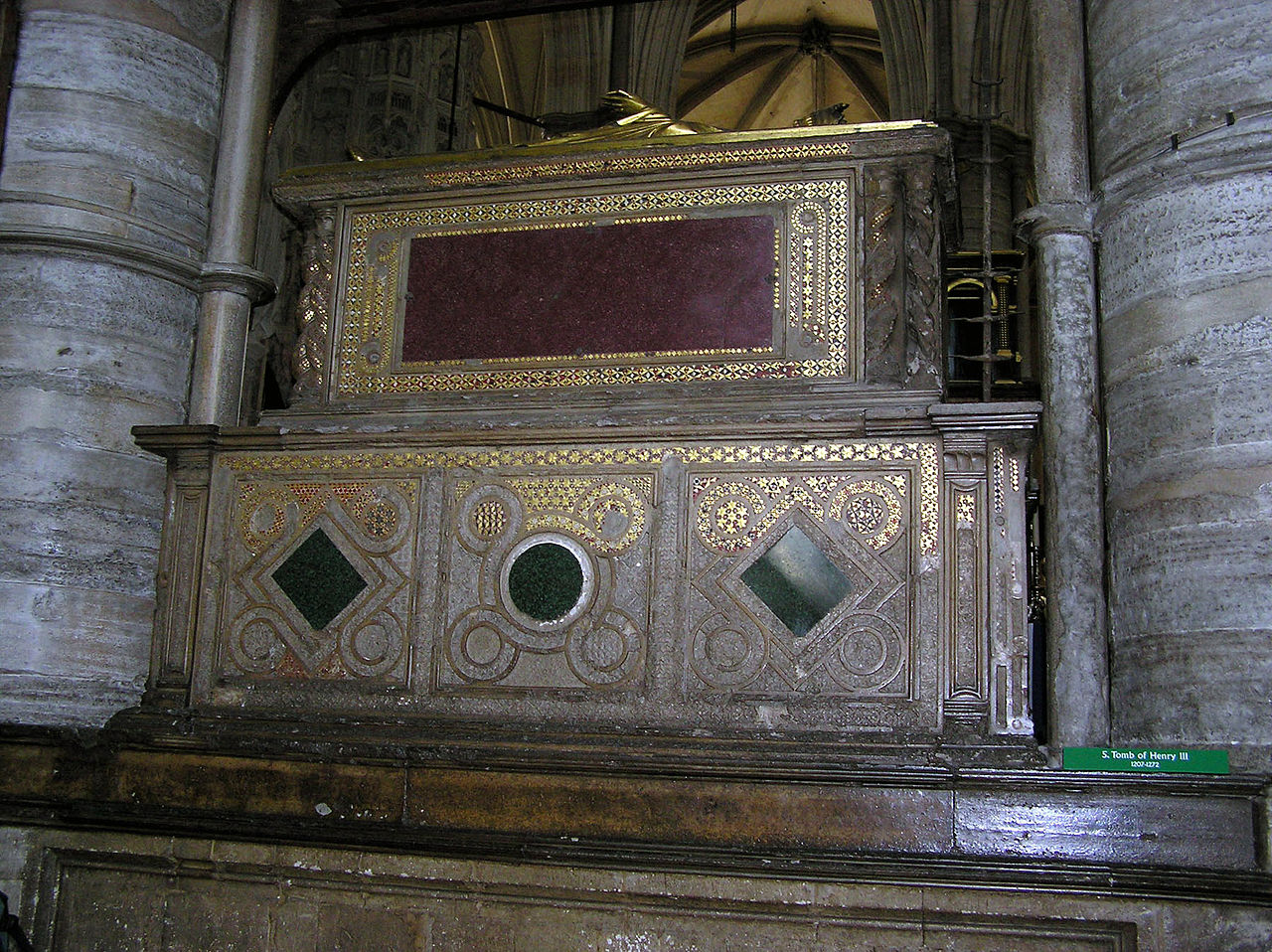
Henry died in 1272 after a reign of fifty-six years and was succeeded by his son, Edward I. His long rule helped stabilize the monarchy after the crises of King John's later years, even though his deference to foreign favourites and his disputes with the barons exposed the limits of absolute royal power. The experience of reform and rebellion under Henry contributed to developments in English government, including precedents for councils and representative assemblies. Henry's personal devotion and architectural patronage left visible monuments, especially Westminster Abbey, that continued to shape royal identity in later centuries. His tomb at Westminster has been studied by generations of historians, and his reign is often seen as a mixture of artistic achievement, piety and political challenge.
Key facts
- Reigned 1216–1272, one of the longest continuous reigns in medieval England.
- Marriage to Eleanor of Provence tied the court to continental connections and produced the future Edward I.
- Clashes with barons produced the Provisions of Oxford (1258) and the Second Barons' War; opposition led by Simon de Montfort.
- Instrumental in the rebuilding and consecration of Westminster Abbey; promoted the cult of Edward the Confessor.
Related articles
Author
AlegsaOnline.com Henry III of England: long reign, baronial conflict, and artistic patronage Leandro Alegsa
URL: https://en.alegsaonline.com/art/120536