
Edward the Confessor: King of England (c. 1003–1066)
Anglo-Saxon king known for piety, Norman connections, Westminster Abbey, and a childless death that triggered the 1066 succession crisis and the Norman Conquest.
Edward the Confessor (born c. 1003; died January 1066) was King of England from 1042 until his death. Remembered for his religious devotion and long association with Normandy, he presided over the last years of independent Anglo‑Saxon rule before the events of 1066. His reign is often described as comparatively peaceful but politically constrained by powerful magnates and competing dynastic claims.
Image gallery
10 Images






Origins and early life
Edward was the son of King Æthelred II (often called "the Unready") and Emma of Normandy. As a child he spent years in exile in Normandy during the Danish invasions of England and developed close ties with Norman court circles. These continental connections shaped both his household and later disputes over succession. English nobles invited him back from Normandy in 1041, and after the death of King Harthacnut in 1042 he became king. Contemporary annals record his accession as widely approved; he was crowned in Winchester on 3 April 1043.
Kingdom and government
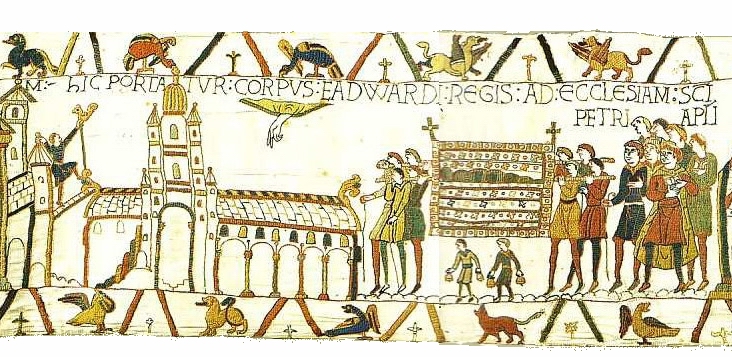
Edward's rule combined personal piety with limited royal initiative. He cultivated the church and monastic reform, and he is credited with founding or rebuilding churches, most famously the ambitious rebuilding of Westminster Abbey in the Romanesque style, begun during his reign. At the same time, powerful noble families — notably the Godwins — exercised great influence. Periods of cooperation and confrontation with leading earls, including an exile and later return of the Godwin family, marked his tenure and exposed the crown's dependence on aristocratic support.
Succession and 1066
Edward died in January 1066 without legitimate children, leaving no settled heir. In the months after his death several men claimed that Edward had promised them the throne; the competing claimants included Harold Godwinson, William of Normandy, Harald Hardrada of Norway and the young prince Edgar Ætheling. Harold was chosen and crowned by the English nobles, but the disputed succession triggered the invasions and key battles of 1066 that culminated in the Norman Conquest.
Reputation and sainthood
Edward's reputation emphasized holiness and miracle‑working. He was eventually canonized as a saint in the 12th century, and his shrine at Westminster became an important focus of royal ceremony and popular devotion. His epithet "the Confessor" refers to his religious life rather than to a confession of faith in the technical sense used for martyrs. Later medieval rulers and chroniclers invoked Edward's image when arguing about royal legitimacy and the sanctity of kingship.
Notable aspects and legacy
- Norman connections: his upbringing and court ties linked England closely with Normandy, affecting politics and later Norman claims to the throne. See more on that background at Normandy.
- Dynastic uncertainty: after his death multiple rival claimants emerged; contemporary accounts of these claims can be explored via resources on the claimants to the throne.
- Family links: Edward served in the household of his half‑brother Harthacnut before becoming king; sources discussing that period include accounts of Harthacnut and the Anglo‑Saxon chronicle traditions.
Edward's long shadow shaped the transition from Anglo‑Saxon to Norman England: his sanctity, his architectural patronage, and the unresolved question of succession combined to make him a pivotal figure in English medieval history.
Questions and answers
Q: Who was St. Edward the Confessor?
A: St. Edward the Confessor was the King of England from 8 June 1042 AD to 4 January 1066.
Q: How many people claimed the throne after Edward's death?
A: Four people claimed the throne after Edward's death.
Q: What promise did Edward make to each of the claimants of the throne?
A: Edward promised each of them that they would be king.
Q: Where did Edward spend many years before being invited back to England in 1041?
A: Edward spent many years in Normandy before being invited back to England in 1041.
Q: Who did Edward become part of the household of when he came back to England?
A: Edward became part of the household of his half-brother Harthacnut.
Q: When was Edward crowned as the king of England?
A: Edward was crowned as the king of England at the cathedral of Winchester on 3 April 1043.
Q: How did the people react when Edward was crowned as king?
A: According to the Anglo-Saxon Chronicle, the people chose Edward as king in London before Harthacnut was even buried, indicating the popularity he enjoyed at his accession.
Related articles
Author
AlegsaOnline.com Edward the Confessor: King of England (c. 1003–1066) Leandro Alegsa
URL: https://en.alegsaonline.com/art/118166