
Henrique Rosa: Interim President and Transitional Leader of Guinea-Bissau
Biography of Henrique Pereira Rosa (1946–2013), interim president of Guinea-Bissau (2003–2005), his role in the transition to civilian rule, later candidacy, and legacy.
Henrique Pereira Rosa (16 January 1946 – 15 May 2013) was a Guinea-Bissau political figure who served as the country's interim president from 2003 until 2005. Born in Bafatá, he came to national attention when he led a transitional administration that oversaw the return to elected civilian government after a period of political crisis. Rosa is often described as an independent or nonpartisan choice for a temporary head of state.
Image gallery
1 Image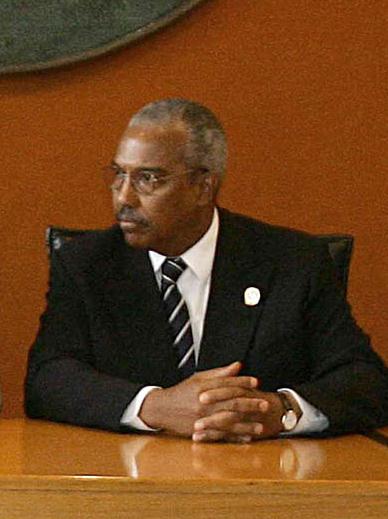
Background and rise to prominence
Rosa was born in the eastern town of Bafatá in what is today Guinea-Bissau. Details about his early professional life are less widely reported than his role in national politics, but he was regarded as a consensus figure acceptable to multiple political actors when the country required a neutral interim leader. He assumed office in the aftermath of upheaval that prompted a transitional arrangement.
Transitional presidency (2003–2005)
Appointed to lead a caretaker government, Rosa's administration had primary responsibility for organizing free elections and restoring constitutional order. During his tenure, national authorities and international partners worked toward holding legislative and presidential polls and reestablishing civilian institutions. On 1 October 2005, he formally handed over power to the winner of the 2005 presidential election, returning the country to an elected head of state.
Later political activity and candidacy
After leaving the interim presidency, Henrique Rosa remained engaged in national affairs. He stood as an independent candidate in the 2009 presidential election, where he finished in third place. His participation underscored his continued public profile and the role of independents in Guinea-Bissau's competitive, and often fragmented, political environment.
Death and legacy
Rosa died on 15 May 2013 in a hospital in Porto, in northern Portugal, after a lengthy illness attributed to lung cancer. He was 67. His period in office is frequently cited as a pragmatic effort to steer Guinea-Bissau through a delicate handover process; analysts and observers note that transitional leaders such as Rosa play a particular role in preparing electoral frameworks and stabilizing institutions during recovery from political turmoil.
Notable points
- Served as interim president from 2003 to 2005 and supervised the transition to elected government.
- Ran as an independent in the 2009 presidential election and placed third.
- Died in Portugal in 2013 after battling lung cancer.
For further context on Guinea-Bissau's political transitions and the role of interim administrations, consult general overviews of the country's modern history and summaries of the 2003–2005 transition period for additional detail on institutional reforms and election processes.
Related articles
Author
AlegsaOnline.com Henrique Rosa: Interim President and Transitional Leader of Guinea-Bissau Leandro Alegsa
URL: https://en.alegsaonline.com/art/120505
Sources
- asemana.publ.cv : Henrique Rosa at asemana.publ.cv
- google.com : "Guinea-Bissau candidates keep it low-key after killings"
- capitalfm.co.ke : "Guinea-Bissau's former interim president Rosa dies"