
Gunnar Myrdal
Swedish economist and sociologist (1898–1987) known for contributions to development economics, the study of race relations in the U.S., and winner of the 1974 Nobel Prize in Economic Sciences.
Overview
Karl Gunnar Myrdal (6 December 1898 – 17 May 1987) was a Swedish economist and social scientist whose work bridged economics, sociology and public policy. He is widely remembered for his theoretical contributions to development economics and monetary theory, his influential study of race relations in the United States, and his role as a public intellectual in debates over welfare, planning and social reform.
Image gallery
5 Images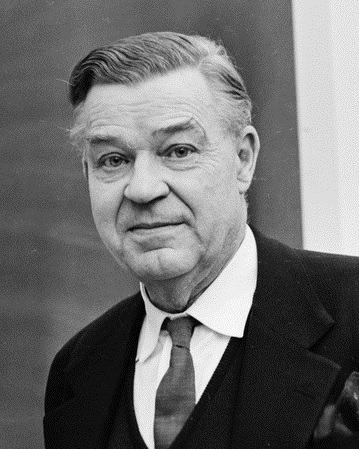


Intellectual contributions and concepts
Myrdal advanced several ideas that have remained important in social science. He argued that economic and social processes are interdependent, stressing how institutions, norms and policy feedback into economic outcomes. He is associated with the concept of "cumulative causation," a view that economic changes tend to generate effects that reinforce initial advantages or disadvantages. In monetary and business cycle theory he explored the links between money, expectations and fluctuations, work for which he shared a major international award.
Major works and themes
- An American Dilemma (1944): A large empirical study of race relations in the United States that examined the gap between American ideals and racial realities. Commissioned by external sponsors, the book analyzed social, economic and political forces shaping the status of African Americans and influenced later policy discussions.
- Development economics and planning: Myrdal wrote extensively on how underdevelopment can persist through reinforcing mechanisms and how policy and institutions can alter those dynamics.
- Monetary and business-cycle analysis: His work on money and fluctuations contributed to broader discussions of macroeconomic theory in the mid-20th century.
Life, career and public roles
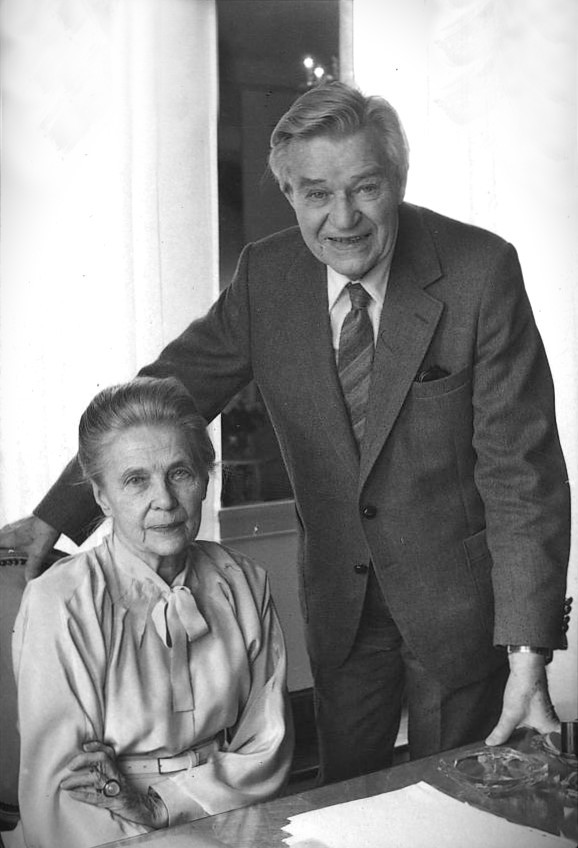
Myrdal trained in economics and held academic posts in Sweden, becoming an influential teacher, author and adviser. He moved comfortably between scholarly work and public service, participating in policy debates on welfare, social reform and international economic development. He was married to Alva Myrdal, herself a prominent social reformer and diplomat. Throughout his career he acted as a prominent public intellectual, writing for scholarly and general audiences.
Recognition, influence and contested legacies
In 1974 Myrdal received the Nobel Memorial Prize in Economic Sciences, an honor he shared with Friedrich Hayek for contributions related to the theory of money and economic fluctuations and for exploring economic, social and institutional interdependencies. The joint award was notable because Myrdal and Hayek represented very different methodological and political outlooks, underscoring the breadth of 20th-century economic debate. Myrdal's empirical approach to social problems, especially his pioneering study of race in America, left a lasting imprint on sociology, public policy and development studies, even as some of his prescriptions and interpretations sparked debate among scholars and policymakers.
Selected concepts and publications
- Key concepts: cumulative causation, institutional interdependence, social policy as economic instrument.
- Notable publication: An American Dilemma (1944).
For further overview and biographical details see biographical resources and official prize information at Nobel Prize references.
Related articles
Author
AlegsaOnline.com Gunnar Myrdal Leandro Alegsa
URL: https://en.alegsaonline.com/art/120115
Sources
- nobelprize.org : "The Sveriges Riksbank Prize in Economic Sciences in Memory of Alfred Nobel 1974"
- books.google.com : Gunnar Myrdal and America's Conscience: Social Engineering and Racial Liberalism, 1938–1987