
Friedrich August von Hayek
Austrian-British economist and political philosopher (1899–1992) who argued that dispersed knowledge, price signals and spontaneous order favor limited government and free markets.
Friedrich August von Hayek (1899–1992) was an Austrian-born economist and political thinker who spent much of his career in Britain and the English-speaking world. He combined technical work in economic theory with broader reflections on law, social institutions and the limits of centralized planning. Readers often encounter him through popular works as well as scholarly contributions; his life bridged academic economics, public policy debates and intellectual history. See an overview of his life and honors via his formal biography, and his national background described as Austrian and later British in many accounts. Hayek is usually labeled an economist and a political philosopher.
Image gallery
10 Images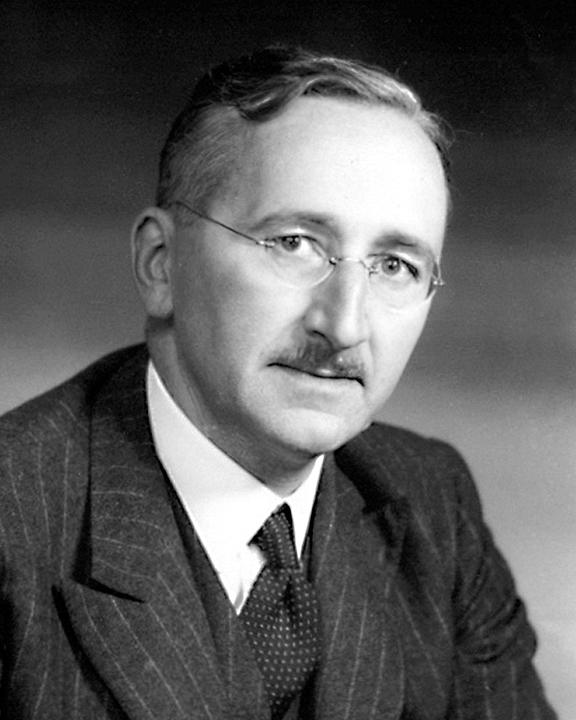



Core ideas
Hayek is best known for defending a form of liberalism that emphasizes individual liberty, decentralized decision-making and the role of market prices. He argued that free-market institutions and capitalism harness dispersed information, whereas excessive central control undermines economic coordination and harms society. He warned against large-scale experiments in socialism and authoritarian planning in works such as The Road to Serfdom, where he contended that centrally planned economies risked eroding individual freedoms and producing unintended social consequences.
Contributions to economics and social theory
Trained in the tradition often called the Austrian School, Hayek developed arguments about how prices transmit information and coordinate plans across many actors. He introduced or popularized the idea of "spontaneous order," the notion that complex social arrangements can emerge without central design. His writings touched on jurisprudence, political philosophy and even topics related to cognitive science, where he discussed limits to human knowledge. More technical work attributed to him and highlighted by awards concerned the theory of money and economic fluctuations and the broader analysis of how institutions shape economic outcomes.
Hayek combined rigorous economic reasoning with a cautious epistemology: he emphasized the dispersed, often tacit character of knowledge in societies and argued that centralized authorities cannot replicate the information conveyed through market processes. That epistemic point underpins many of his prescriptions for law and policy and explains his skepticism about top-down attempts to engineer social results.
Throughout his career Hayek received notable recognition. He shared the 1974 Nobel Memorial Prize in Economic Sciences with his intellectual counterpart and sometimes rival, Gunnar Myrdal, an award that cited their work on monetary theory and business cycles as well as their broader analyses of social and institutional interdependence. Late in life he was awarded the Presidential Medal of Freedom in the U.S. for his influence on public debate and policy.
Influence, reception and legacy
Hayek’s ideas helped shape late twentieth-century moves away from the dominant Keynesian policy consensus toward renewed interest in classical liberalism. Politicians and policymakers cited his warnings about planning during the 1980s; commentators often link his influence to figures such as Ronald Reagan and Margaret Thatcher. His work has been influential across a spectrum that includes free-market advocates, defenders of individual liberty and scholars examining the role of norms and institutions. Critics have challenged some of his policy conclusions and the applicability of his arguments to complex modern problems, but his emphasis on information, institutions and limits to knowledge remains widely discussed.
- Major works: The Road to Serfdom, Prices and Production (early technical work), The Constitution of Liberty, Law, Legislation and Liberty (three volumes), and The Fatal Conceit.
- Main themes: knowledge problems, spontaneous order, the informational role of prices, institutional analysis and the constitutional limits on government.
- Contested legacy: admired for conceptual clarity and warning about coercive planning; debated for policy implications and empirical claims.
Questions and answers
Q: Who was Friedrich August von Hayek?
A: Friedrich August von Hayek was an Austrian-British economist and political philosopher. He became known for strongly defending liberalism and free-market capitalism.
Q: What did Hayek think about forms of government like socialism?
A: Hayek thought that forms of government like socialism were not good for the economy, and damaged freedom of the individual.
Q: What is one of his most famous works?
A: One of his most famous works is The Road to Serfdom, which refers to the consequences of socialism.
Q: What fields did he have ideas in?
A: He had many ideas in the fields of jurisprudence and cognitive science.
Q: What award did he receive in 1974?
A: In 1974, he shared the Nobel Prize in Economics with his rival Gunnar Myrdal for their work in the theory of money and economic fluctuations; also for their analysis of the inter-dependence of economic, social and institutional phenomena.
Q: When did he receive U.S Presidential Medal of Freedom?
A: He received U.S Presidential Medal of Freedom in 1991.
Q: How did governments change during 20th century due to him?
A:He is thought to be one major cause behind change from Keynesian policies during first part 20th century towards classical liberalism in 1980s & later (under Ronald Reagan & Margaret Thatcher).
Related articles
Author
AlegsaOnline.com Friedrich August von Hayek Leandro Alegsa
URL: https://en.alegsaonline.com/art/119283
Sources
- nobelprize.org : "The Sveriges Riksbank Prize in Economic Sciences in Memory of Alfred Nobel 1974"
- bushlibrary.tamu.edu : "Remarks on presenting the Presidential Medal of Freedom Awards"
- books.google.com : Law, Legislation and Liberty, Volume 1: Rules and Order
- books.google.com : Law, Legislation and Liberty, Volume 2: The Mirage of Social Justice
- books.google.com : Law, Legislation and Liberty, Volume 3: The Political Order of a Free People