
G. I. Gurdjieff: life, teachings and the Fourth Way
Overview of George Ivanovich Gurdjieff, his life, the Fourth Way method, core practices (self-remembering, centers, movements), influence on 20th-century spiritual thought and legacy.
Overview
George Ivanovich Gurdjieff (1866–1949), commonly called Gurdjieff, was a prominent early 20th‑century spiritual teacher, caucasian in origin and widely regarded as a guru and writer. He introduced a system of practical self‑work aimed at raising human consciousness from what he described as a state of mechanical "waking sleep" to fuller awareness. His approach drew on a range of older traditions and was presented as a synthesis adapted for modern life; he and his pupils often referred to it simply as "the Work" or "the Fourth Way" and sometimes used intentionally provocative language to stimulate reflection.
Image gallery
4 Images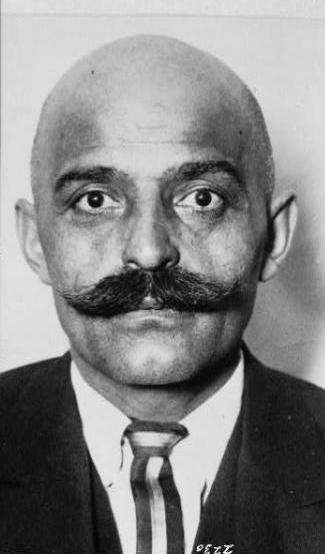


Life and travels
Born in the multiethnic Caucasus region, Gurdjieff traveled extensively through Central Asia, the Middle East and parts of Europe in search of esoteric knowledge and practical methods preserved in various traditions. He reported encounters with Sufi, Orthodox Christian, Buddhist and other schools and incorporated elements from many sources into his teaching. During his later years he established study groups and schools in several countries, most notably an institute in France where pupils lived and practiced together. Many of the stories of his journeys appear in his semi‑autobiographical work Meetings with Remarkable Men, and his major doctrinal text is the allegorical trilogy often referred to collectively as All and Everything.
Core teachings and concepts
At the heart of Gurdjieff's teaching was the claim that ordinary people function by habit and identification rather than conscious choice. He described a psychological model of three centers—intellectual, emotional and moving/instinctive—and emphasized the need to develop a harmonious balance among them. Key ideas include the notion of "self‑remembering" (a practice of divided attention and inner presence), the possibility of higher levels of being, and the use of deliberate shocks and exercises to interrupt automatic patterns.
Practical methods
- Self‑observation and self‑remembering: noticing impulses, thoughts and feelings without immediate reaction.
- Work on centers: exercises to awaken and coordinate intellectual, emotional and physical faculties.
- Conscious labor and intentional suffering: purposeful tasks and endurance practiced to build inner freedom.
- Movements and dances: precise physical exercises and sacred choreography used as tools for attention and group work.
These methods were sometimes taught within communal settings and combined with musical pieces and rhythmical practices composed or arranged for the groups.
Influences and distinctions
Gurdjieff acknowledged influences from Sufi circles and other eastern forms such as Sufi, Zen and Yoga traditions, but he insisted his approach was distinct. He contrasted the Fourth Way with paths he labeled the fakir, the monk and the yogi—each of which emphasizes primarily the physical, emotional or intellectual center respectively—and proposed a method that trained all centers simultaneously. Readers and scholars note continuities with earlier esoteric systems while also highlighting his original synthesis and pragmatic, often idiosyncratic, presentation.
Institutions, writings and students
Gurdjieff established study groups, gave public lectures and gathered devoted pupils. Some of the best known early students recorded their experiences in memoirs and introductions to his ideas; among these writers, P. D. Ouspensky played a major role in transmitting Gurdjieff's teaching to English‑speaking audiences. Gurdjieff also produced dramatic and dense writings intended as both teaching and provocation, and collaborated with artists and musicians to develop exercises. His method attracted artists, intellectuals and seekers, and it has been transmitted in several organizational lineages and informal groups.
Reception and legacy
Gurdjieff's work has been praised for its practical emphasis on inner vigilance and criticized for its authoritarian structures and secretive elements. Some have described his groups in cultic terms, while others value his psychological insights and practical exercises. Today his influence persists among students of modern spirituality, psychology, performing arts and movement studies, and many contemporary teachers continue to adapt elements of the Fourth Way in secular and religious contexts. His ideas remain a subject of study, interpretation and debate, with ongoing publications, archival research and practice communities keeping the conversation alive.
For further introductory material, see accounts of his travels and key concepts such as spiritual teaching, historical summaries of how he was influenced by other traditions, and comparative discussions comparing the fakir, the monk and the yogi.
Questions and answers
Q: Who was George Ivanovich Gurdjieff?
A: George Ivanovich Gurdjieff was an Armenian guru and writer who was influential in the spiritual teachings of the first half of the 20th century.
Q: What did Gurdjieff believe about most people?
A: Gurdjieff believed that most people live their entire lives in a state of hypnotic "waking sleep". He said that contemporary man is nothing more than merely a clockwork mechanism, though of a very complex construction.
Q: What did Gurdjieff develop to help people reach higher states of consciousness?
A: Gurdjieff developed a method for working towards a higher state of consciousness and achieving full human potential. He called this "The Work" or "The Method".
Q: How did his discipline differ from other spiritual practices?
A: His discipline differed from other spiritual practices such as fakir, monk or yogi, so it was originally called "The Fourth Way".
Q: Where did the teachings come from that he brought to the West?
A: The teachings that he brought to the West came from his own experiences and early travels. They were wisdom teachings relating to self-awareness in people's daily lives, and humanity's place in the universe.
Q: Did these teachings express truth found in ancient religions?
A: Yes, these teachings expressed truth found in ancient religions.
Q: What schools did he start and close around the world to teach his work?
A: At different times in his life, Gurdjieff started and closed various schools around the world to teach his work.
Related articles
Author
AlegsaOnline.com G. I. Gurdjieff: life, teachings and the Fourth Way Leandro Alegsa
URL: https://en.alegsaonline.com/art/120123
Sources
- gurdjieff.org : Gurdjieff International Review