
Gotabaya Rajapaksa: military officer and former President of Sri Lanka
Profile of Gotabaya Rajapaksa (born 1949), Sri Lankan military officer, defence secretary and president (2019–2022); his role in ending the civil war, policies, and the 2022 protests and resignation.
Overview
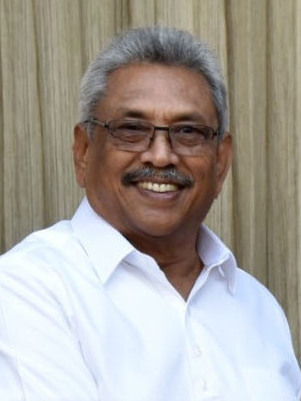
Lieutenant Colonel Nandasena Gotabaya Rajapaksa (born 20 June 1949) is a Sri Lankan military officer and politician who served as the eighth President of Sri Lanka from November 2019 until his resignation in July 2022. Known for a career that combined defence administration and public-sector management, he became a prominent national figure as Secretary to the Ministry of Defence and Urban Development from 2005 to 2015. His name appears in Sinhala as ගෝඨාභය රාජපක්ෂ and in Tamil as கோட்டாபய ராஜபக்ஸ.
Image gallery
8 Images



Early life and military career
Rajapaksa trained and served in the Sri Lanka Army, attaining the rank of Lieutenant Colonel. During his military service and later administrative roles he received several service decorations. After leaving active duty he entered the civil administration, applying military-style management to urban development and security planning. His background shaped his reputation as a security-focused technocrat and influenced his approach to governance during his later political career.
Role in the civil war and public service
As Defence Secretary from 2005 to 2015, Rajapaksa was a senior figure during the final stages of the Sri Lankan Civil War. The government forces defeated the Liberation Tigers of Tamil Eelam (LTTE), ending decades of armed conflict; this outcome is widely associated with the period of his tenure, though it remains the subject of international attention and debate concerning conduct during the closing phases of the war. In office he oversaw defence policy and large-scale infrastructure and urban projects.
Presidency (2019–2022)
Elected president in late 2019, Rajapaksa pursued policies emphasizing national security, economic development, and a strong central administration. His government prioritized infrastructure, digital initiatives, and a law-and-order approach to internal challenges. Critics and supporters debated the balance between rapid decision-making and institutional checks; supporters credited decisive action on security and development, while critics pointed to concerns about centralized power and civil liberties.
2022 economic crisis, protests and resignation
From early 2022 Sri Lanka faced a severe economic and foreign-exchange crisis that produced shortages of fuel, medicine and essential goods. Mass public protests erupted in mid-2022, focusing on government economic management and demanding political accountability. On 9 July 2022 protesters entered the presidential residence in Colombo, prompting the president to vacate the site. He subsequently departed Sri Lanka by military aircraft to the Maldives and later to Singapore. He formally tendered his resignation on 14 July 2022, ending his presidency amidst ongoing domestic and international scrutiny.
Legacy and notable facts
Gotabaya Rajapaksa's public life intersects military service, civil administration and elected office; he is also part of the larger Rajapaksa family that has been influential in Sri Lankan politics. His legacy is mixed: he is credited by many for contributing to the end of the armed conflict and for infrastructure initiatives, while others criticize aspects of governance, human-rights concerns tied to wartime conduct, and economic policies that preceded the 2022 crisis. Assessment of his impact continues in public debate and scholarly analysis.
Further reading and resources
Related articles
Author
AlegsaOnline.com Gotabaya Rajapaksa: military officer and former President of Sri Lanka Leandro Alegsa
URL: https://en.alegsaonline.com/art/119983
Sources
- ft.lk : "Police to probe Gota's citizenship, passports"
- island.lk : "Gota's Lanka citizenship in doubt, candidacy under cloud"
- sundayobserver.lk : "Gota's citizenship challenged in Court of Appeal"
- dailymirror.lk : "People want non-traditional politicians - Gotabhaya Rajapaksa"
- ceylontoday.lk : "CT finds Gota's true U.S. renunciation certificate"