
Sri Lankan Civil War (1983–2009)
A prolonged armed conflict between the Sri Lankan state and the Liberation Tigers of Tamil Eelam (LTTE) that began in 1983, ended in 2009, and left deep political, social and humanitarian consequences.
Overview
The Sri Lankan Civil War was a multi-decade armed conflict on the island of Sri Lanka. It began in the wake of intercommunal tensions and political disputes and formally escalated on 23 July 1983. The principal parties were the Government of Sri Lanka and the separatist group known as the Liberation Tigers of Tamil Eelam, commonly abbreviated LTTE. The LTTE sought to create an independent state called Tamil Eelam in the northern and eastern provinces for the island's Tamil people. The fighting continued for more than a quarter century, producing widespread displacement, disruption of everyday life, and heavy casualties.
Image gallery
10 Images


Background and causes
The conflict grew from a mix of historical, political and social factors: colonial-era population movements, competing nationalist movements, and post-independence policies affecting language, employment and political representation. Grievances among minority communities led some Tamil activists to pursue greater autonomy and, for some, full separation. Tensions intensified into armed struggle as political avenues closed for many militants.
Course of the conflict
The war involved conventional operations, guerrilla warfare, terrorism, naval and air engagements, and periods of uneasy truce. The insurgency mounted by the LTTE against the government included battlefield confrontations, suicide attacks, and the organization of civilian administration in areas it controlled. Efforts at negotiated settlement produced intermittent agreements and international mediation; for example, a negotiated 2002 ceasefire paused large-scale hostilities for a time but later collapsed. The Sri Lankan military ultimately launched a major offensive in the late 2000s that concluded with the defeat of the LTTE in May 2009.
Characteristics and notable features
- The LTTE was unique among insurgent groups for its naval and air arms and for centralized command structure; see more on the Liberation Tigers of Tamil Eelam.
- Fighting occurred across diverse terrain on the island, from jungle and coastline to urban areas.
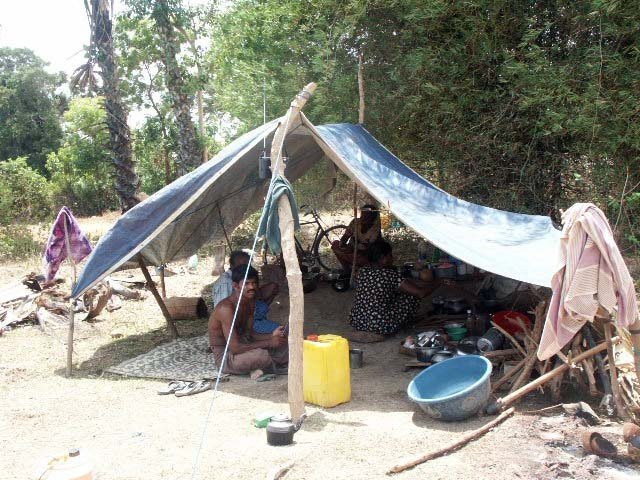
- Civilians were deeply affected by sieges, displacement, and restrictions on humanitarian access.
Humanitarian impact and allegations
Estimates of casualties and displacement vary and are contested; independent observers and governments have described the toll as numbering in the tens of thousands with many more injured or uprooted. Human rights organizations and international bodies have alleged that both state forces and the LTTE committed actions that may amount to war crimes, including attacks on civilians, forced recruitment, and use of human shields. These allegations prompted domestic inquiries and international calls for independent investigations and accountability.
Aftermath and legacy
The end of large-scale fighting did not erase the conflict's consequences. Reconstruction, resettlement of displaced people, economic recovery, and political reconciliation have been long-term challenges. Debates over devolution of power, minority rights, military presence in the north and east, and transitional justice remain central to Sri Lanka's politics. The conflict also catalyzed a Tamil diaspora that continues to influence international advocacy and remittances. For further contextual reading about the late 20th-century violence and its actors, see references to the broader conflict, the island's modern history and the roles of international mediators in the 1990s and 2000s, including discussion of ceasefire efforts and postwar policies.
Because assessments differ and investigations continue to shape understanding, the Sri Lankan Civil War is studied as both a case of protracted internal conflict and as an example of the complex processes of post-conflict recovery. For background on the belligerent organizations and diplomatic efforts, consult overviews of the LTTE, the evolving policies of the government, and analyses of the proposed Tamil Eelam concept. Historical timelines and records of ceasefires and negotiations can provide detailed chronology, such as the 1983 escalation and subsequent pauses in hostilities attributed to external mediation and internal exhaustion of resources.
Further reading and archival material are available through academic works and organizations that documented the conflict, including narrative histories, legal reviews, and humanitarian reports addressing displacement, reparations and reconciliation. These sources illuminate why the conflict had deep social, cultural and economic effects on communities across the island of Sri Lanka and why its legacy remains central to the nation's present-day governance and society.
For specific treaty texts, timelines and reports on ceasefires, peace talks and legal findings, consult dedicated compilations and repositories maintained by scholars and institutions that track post-conflict processes and accountability mechanisms related to the war.
Related topics include the role of regional actors in mediation, the experience of the Tamil diaspora, and the broader international law questions prompted by allegations of abuses during the conflict. Contemporary policy debates focus on reconciliation measures, land rights, and how best to integrate affected communities into national life following decades of violence.
See also detailed entries on the main parties and milestones: LTTE, the 2002 ceasefire efforts, the political history of Sri Lanka's government, and proposed models for resolving claims for an independent state vs. power-sharing arrangements for minority communities.
Related articles
Author
AlegsaOnline.com Sri Lankan Civil War (1983–2009) Leandro Alegsa
URL: https://en.alegsaonline.com/art/92980