
Black widow (Latrodectus): identification, venom, behavior, and safety
Black widow spiders (genus Latrodectus) are small, glossy spiders notable for the female's red hourglass mark and a neurotoxic bite. This article explains identification, distribution, behavior, medical effects, and safety.
Black widows are members of the genus Latrodectus, a group of spiders recognized for their glossy dark bodies and, in many species, a distinctive red hourglass marking on the underside of the abdomen. They are found in temperate and tropical regions around the world and have attracted attention because the venom of some species can produce significant symptoms in humans. Despite their reputation, fatalities are uncommon where modern medical care is available.
Image gallery
10 Images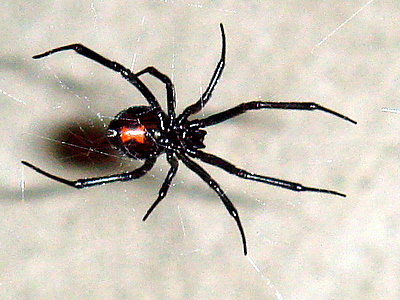


Appearance and identification
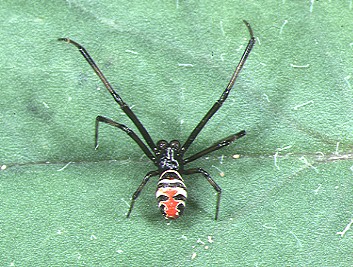
Adult female black widows are typically larger and more robust than males. Females often have a rounded abdomen with a smooth, shiny black surface and red or orange markings that may take the form of an hourglass, spots, or stripes. Male widows tend to be smaller, slimmer, and may show lighter coloration or patterned markings. Juveniles are usually mottled and lack the clear adult markings, which can complicate identification.
Distribution, habitat, and web structure
Species of Latrodectus occur on most continents. They prefer sheltered, dry locations near ground level where they can anchor irregular, tangled webs. Common habitats include woodpiles, sheds, basements, garages, fence posts, hollow stumps, and undisturbed vegetation. Their webs are not the neat orb patterns seen in many spiders; instead they form messy three-dimensional structures adapted to catching crawling insects.
Venom and medical significance
Black widow venom contains neurotoxic components that act on the nervous system of prey and, in some cases, cause symptoms in people. A bite may be very small and go unnoticed at first. Local pain, muscle rigidity, and regional sweating are common signs. In sensitive individuals, the elderly, or young children, symptoms can be more severe and include generalized muscle cramps, abdominal pain, nausea, and elevated blood pressure. Deaths are rare with modern medical treatment; antivenom and supportive care are available and used when clinical severity warrants it. If a bite is suspected, seek medical evaluation promptly.
Behavior, diet, and reproduction
Black widows are primarily nocturnal predators that feed on insects and other arthropods captured in their webs. They are generally nonaggressive and bite humans only in self-defense, such as when trapped against the skin. Reproductive behavior varies among species; females sometimes display cannibalistic tendencies and may consume the male after mating, which contributed to the common name "widow." Egg sacs contain dozens to hundreds of eggs, and spiderlings disperse by crawling or by ballooning on silk threads.
Distinctions and commonly confused species
Spiders in the related genus Steatoda are often called "false widows" because they resemble Latrodectus but typically possess less potent venom and generally cause milder reactions. Correct identification relies on body shape, coloration patterns, and sometimes microscopic features. Several Latrodectus species are well known by region, and local field guides or expert sources can help distinguish species.
Prevention and first aid
- Reduce clutter and seal gaps in buildings to limit sheltering sites.
- Wear gloves and use caution when handling wood, rocks, or stored items.
- If bitten, remain calm, clean the wound with soap and water, and seek medical attention especially for children, older adults, or severe symptoms.
- When possible, safely photograph or capture the specimen for identification to aid clinicians.
For more detailed, region-specific information on black widows and their medical management, consult reputable local health resources or arachnology guides such as those linked at trusted institutions and databases.
Questions and answers
Q: What are black widows?
A: Black widows are spiders that belong to the genus Latrodectus.
Q: What is the scientific name of black widows?
A: The scientific name of black widows is Latrodectus mactans.
Q: What do black widow spiders look like?
A: Female black widow spiders are shiny black and have a round abdomen with a red hourglass pattern on its underside. Male black widow spiders are smaller than females.
Q: What is the difference between widow spiders and false widow spiders?
A: Widow spiders, including black widows, are all dangerous to humans and can cause harm with their bites. False widow spiders, on the other hand, are not harmful to humans.
Q: What is the body length of a female widow spider?
A: The body length of a female widow spider is approximately 0.5 inches.
Q: Why are widow spiders considered dangerous to humans?
A: Widow spiders can give bites that are harmful to human beings and may kill children or people who are not in good health.
Q: What group do widow spiders and false widow spiders belong to?
A: Both widow spiders and false widow spiders belong to a larger group that includes many kinds of spiders that make similar kinds of webs and have the same general body shape.
Related articles
Author
AlegsaOnline.com Black widow (Latrodectus): identification, venom, behavior, and safety Leandro Alegsa
URL: https://en.alegsaonline.com/art/11981
Sources
- commons.wikimedia.org : Latrodectus