
Galo Plaza — Ecuadorian statesman, President (1948–1952) and OAS Secretary General
Galo Plaza (1906–1987) was an Ecuadorian political leader, president from 1948–1952 and Secretary General of the OAS (1968–1975), known for promoting institutional stability and international diplomacy.
Overview
Galo Plaza Lasso was a prominent Ecuadorian statesman who combined national leadership with international diplomacy. Born in 1906 and passing in 1987, he served as President of Ecuador from 1948 to 1952 and later as Secretary General of the Organization of American States from 1968 to 1975. Plaza is widely remembered for his efforts to strengthen democratic institutions, foster economic modernization, and represent Latin American interests in hemispheric forums. He was the son of former president Leónidas Plaza, which linked him to an established political family in Ecuador.
Image gallery
1 Image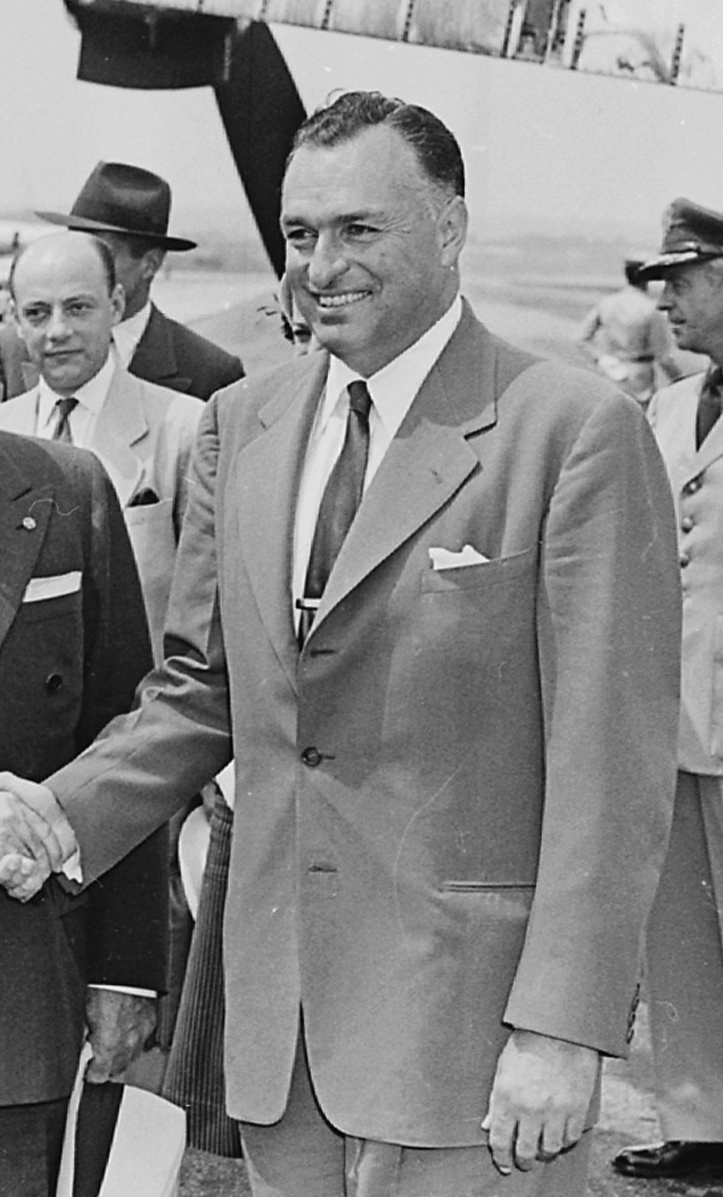
Early life and education
Galo Plaza was born on February 17, 1906, in New York City, in the state of New York, where his family was residing temporarily. He received a broad, international education that combined studies in the United States and Ecuador. His academic path included attendance at the University of Maryland, the University of California, Berkeley, and the Edmund A. Walsh School of Foreign Service at Georgetown University. This cosmopolitan background shaped his outlook as a leader comfortable operating in both domestic politics and international diplomacy.
Political career and main offices
Plaza's public life balanced national reform with regional engagement. Major positions he held included:
- President of Ecuador (1948–1952) — a period focused on political stabilization and government efficiency.
- Secretary General of the Organization of American States (1968–1975) — representing Western Hemisphere interests in a turbulent international context.
- Various diplomatic and public service roles that connected Ecuador to international financial and political institutions.
Presidency (1948–1952)
During his four-year term as president, Plaza pursued policies intended to modernize public administration and encourage private investment alongside selective public works. He sought to preserve constitutional rule at a time when many countries in the region experienced political upheaval. Rather than a single ideological program, his administration emphasized pragmatic governance, efforts to reduce partisan violence, and gradual economic development so that institutions could gain legitimacy and public confidence.
Later career, diplomacy and the OAS
After his presidency, Plaza continued to act on the international stage. His tenure as head of the Organization of American States placed him at the center of hemispheric dialogue on democracy, development, and conflict resolution. In that role he worked with member states on cooperative programs and represented collective concerns at a time of Cold War tensions. His experience as both a national leader and an international civil servant made him a bridge figure between domestic reformers and multilateral institutions.
Personal life and legacy
Plaza married Rosario Pallares and they raised six children. His lineage as the son of Leónidas Plaza connected him to an established political tradition in Ecuador, yet his own career is often judged by his efforts to professionalize public life and to engage constructively in regional affairs. Galo Plaza died of a heart attack on January 28, 1987, in Quito, Ecuador. He is remembered as a moderate, reform-minded statesman who sought stability through institutions, and as a diplomat who advanced hemispheric cooperation in the mid-20th century.
For further general reference on his roles and context, see materials relating to the Organization of American States, the office of the President of Ecuador, and historical accounts of Ecuadorian politics in the mid-1900s.
Related articles
Author
AlegsaOnline.com Galo Plaza — Ecuadorian statesman, President (1948–1952) and OAS Secretary General Leandro Alegsa
URL: https://en.alegsaonline.com/art/119376