
Black mangrove (Avicennia germinans): appearance, habitat, and importance
Black mangrove (Avicennia germinans) is a salt-tolerant coastal tree found in tropical and subtropical wetlands. It stabilizes shorelines, supports wildlife, and has distinctive aerial roots and salt adaptations.
Overview
The black mangrove, Avicennia germinans, is a widespread coastal tree that forms part of many mangrove forests. It is one of several mangrove species found along sheltered shorelines, tidal creeks and estuaries. Black mangroves are notable for their dark bark, dense canopy and the vertical root structures that help them cope with waterlogged, oxygen-poor soils.

Image gallery
6 Images



Description and adaptations
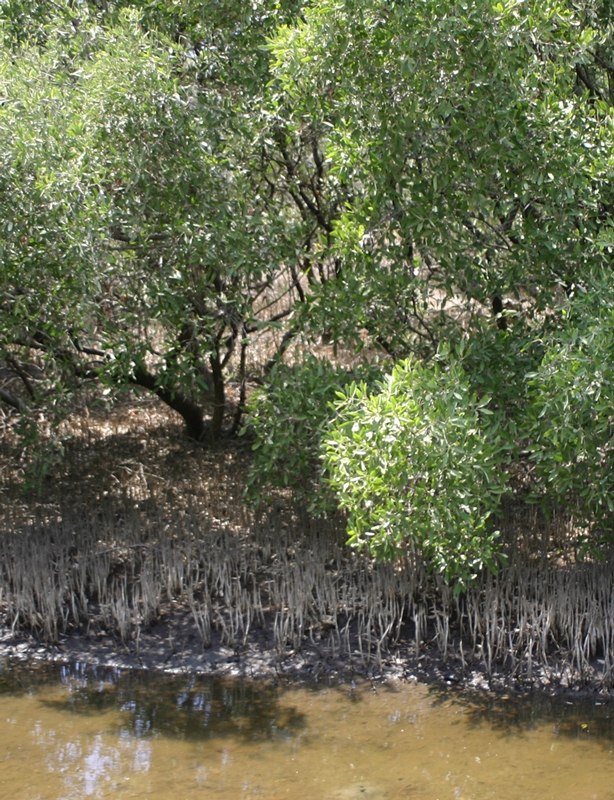
Black mangroves develop specialized aerial roots (commonly called pneumatophores) that protrude above the mud to provide gas exchange. Their leaves are typically thick and glossy with a paler underside; they can excrete or sequester salt to tolerate saline conditions. Flowers are small and allow insect pollination, and propagules or seedlings are dispersed by tides, enabling colonization of new mudflats.
Distribution and habitat
This species occurs throughout tropical and subtropical coastlines, including parts of West Africa and the Americas. In many regions it forms belts behind red mangroves and occupies higher-elevation tidal zones where soil salinity and inundation patterns differ. It tolerates a range of substrates from silty mud to sandy soils, provided tidal influence supplies water and nutrients.
Ecological and human importance
Black mangroves play multiple ecological roles: they stabilize shorelines against erosion, trap sediment, provide nursery habitat for fish and invertebrates, and store carbon in their biomass and soils. Local communities may use wood for fuel or charcoal and the trees contribute to coastal fisheries and biodiversity. Their presence often indicates a functioning intertidal ecosystem.
Conservation, threats and distinctions
Threats to black mangroves include coastal development, pollution, altered freshwater flows and sea level rise. Conservation focuses on protecting remaining stands, restoring degraded areas and maintaining natural tidal regimes. Distinguishing features versus other mangroves include the vertical pneumatophores, darker bark, and leaf salt glands; it is usually found slightly inland of red mangrove zones where prop roots dominate.
- Adaptations: pneumatophores, salt handling, buoyant dispersal.
- Values: shoreline protection, habitat, carbon storage.
- Concerns: habitat loss, climate change impacts.
Related articles
Author
AlegsaOnline.com Black mangrove (Avicennia germinans): appearance, habitat, and importance Leandro Alegsa
URL: https://en.alegsaonline.com/art/11936