
Blephilia: wood mints of eastern North America
Blephilia is a small genus of three perennial herbaceous plants in the mint family native to eastern North America, known for tubular, two-lipped flowers, aromatic foliage, pollinator value and local conservation concerns.
Overview
Blephilia is a small genus of perennial, herbaceous flowering plants in the family Lamiaceae. Species in this genus are commonly called wood mints or downy pagoda plants. They are native to eastern North America and most often occur in woodland settings, rocky slopes, and calcareous or acidic thin soils where sunlight is dappled rather than full.
Image gallery
1 Image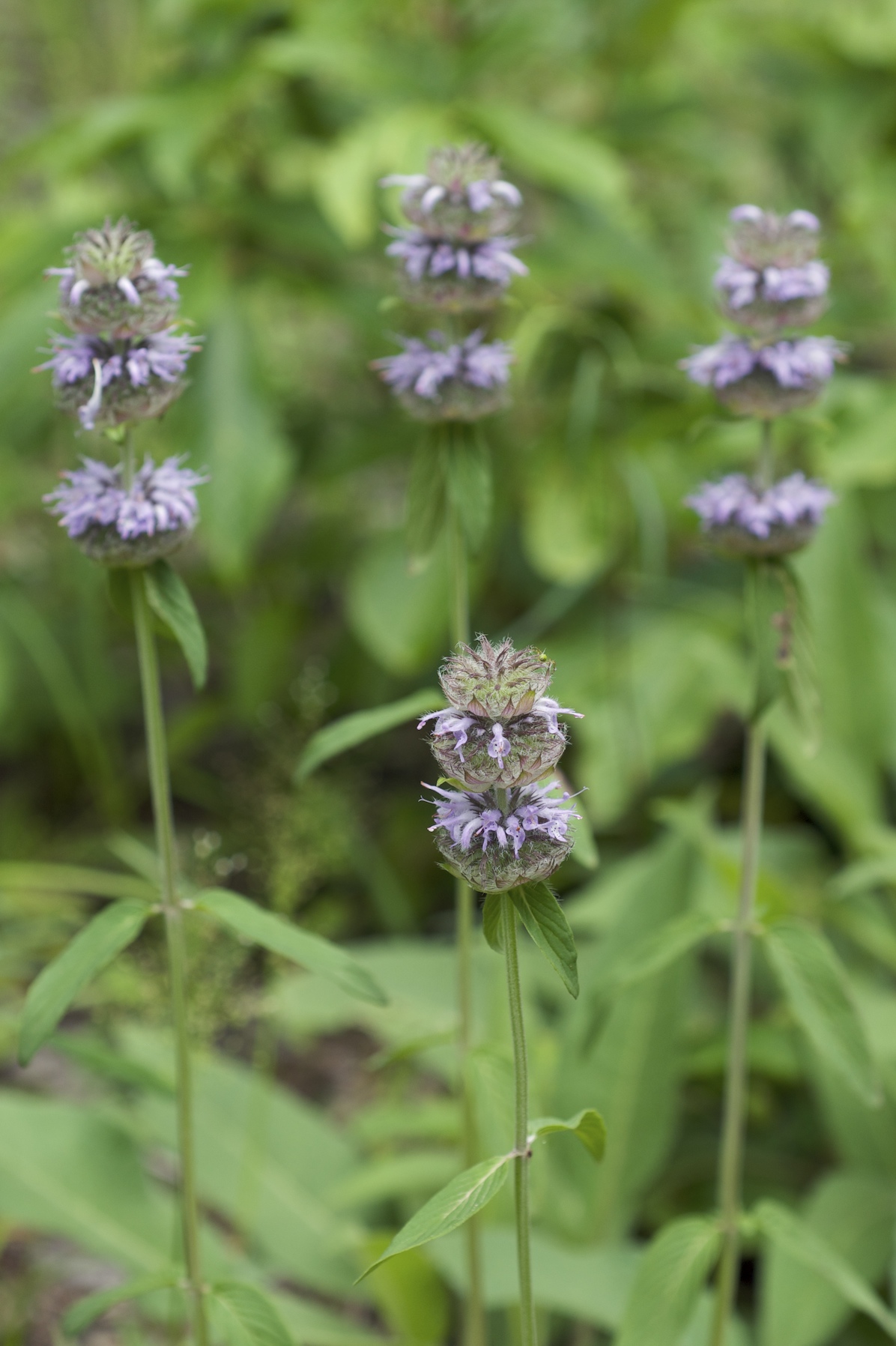
Taxonomy and species
The genus contains three recognized species. Two species—Blephilia hirsuta and Blephilia ciliata—are the most frequently noted in regional floras and conservation lists; a third species has a more restricted distribution. Taxonomic placement within the mint family reflects typical floral structure and leaf arrangement shared with related genera.
Description and identification
Blephilia plants share several features common to the mint family but adapted to a woodland habit. Key identifying characters include:
- Square stems and opposite leaves; foliage often aromatic when crushed.
- Terminal clusters of tubular, two-lipped (bilabiate) flowers arranged in whorls or compact inflorescences.
- Flower colours that range from white to pale pink or purple, and often marked with subtle spots or lines.
- Variable hairiness—some species or populations are noticeably downy or hairy on stems and leaves, a trait that contributes to common names such as "downy pagoda plant."
Distribution, habitat and ecology
Members of Blephilia are distributed through parts of eastern North America and prefer partially shaded to open woodland edges, limestone or granite-influenced soils, and other well-drained, thin soils. They occupy the herb layer of forests, frequently in communities where leaf litter is moderate and canopy cover allows periodic sunlight. Flowers open in late spring to early summer and provide nectar and pollen to a range of insect visitors.
Pollinators and ecological role
Blephilia species are visited by bees, including solitary and small social species, and by other nectar-seeking insects. The tubular flowers are shaped to accommodate bees that can enter to reach nectar, and the plants can be valuable components of native-plant assemblages that support pollinator diversity. As woodland natives, they also contribute to understory biodiversity and seasonal nectar availability.
Cultivation and uses
Native-plant gardeners may cultivate Blephilia in shaded or partially shaded borders, rock gardens, or naturalistic woodland plantings. Best results come from sites with good drainage and part shade; plants can be propagated by seed or by division where colonies form. Their modest size and pollinator value make them suitable for native gardens that aim to support local insects and to reflect natural woodland communities.
Conservation
Although the genus as a whole is not globally rare, individual species have limited ranges and are considered vulnerable or of conservation concern in parts of their distribution. Blephilia hirsuta and Blephilia ciliata are cited as threatened or imperilled in some U.S. states because of habitat loss, fragmentation, competition from invasive plants, and other pressures. Conservation measures include protecting woodland habitats, managing invasive species, and promoting native-plant restoration and appropriate horticultural use to preserve local genetic stocks.
Further reading
For regional treatments, identification keys, and conservation status, consult local floras and conservation lists, and follow specialized resources on the genus Blephilia, the family Lamiaceae, and distributions in eastern North America.
Questions and answers
Q: What is Blephilia?
A: Blephilia is a genus of three species of flowering plants in the family Lamiaceae.
Q: Where are Blephilia plants found?
A: Blephilia plants are native to eastern North America and can be found in thin woods and granite and limestone soils.
Q: Are all Blephilia species herbaceous plants?
A: Yes, all Blephilia species are herbaceous plants.
Q: Which Blephilia species are considered threatened or endangered in some states?
A: Blephilia hirsuta and Blephilia ciliata are considered threatened or endangered in some states.
Q: What is another common name for Blephilia?
A: Another common name for Blephilia is Downy Pagoda Plant or Wood Mint.
Q: What family of plants does Blephilia belong to?
A: Blephilia belongs to the family Lamiaceae.
Q: How many species of Blephilia are there?
A: There are three species of Blephilia.
Tags
Related articles
Author
AlegsaOnline.com Blephilia: wood mints of eastern North America Leandro Alegsa
URL: https://en.alegsaonline.com/art/12161