
Günter Blobel — German‑American biochemist and Nobel laureate
Günter Blobel (1936–2018) was a German-born American biochemist awarded the 1999 Nobel Prize for discovering how proteins are directed to their proper cellular locations.
Overview
Günter Blobel was a German‑born American biochemist best known for discoveries about how proteins reach their correct destinations inside cells. His work established the concept that many proteins carry short signal sequences that act as postal codes, directing them across membranes to organelles such as the endoplasmic reticulum. He received the Nobel Prize in Physiology or Medicine in 1999 for these advances.
Image gallery
2 Images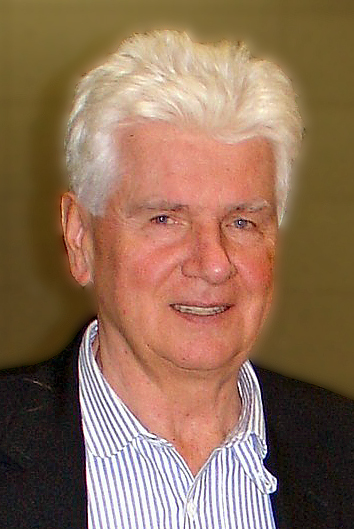

Scientific contributions
Blobel proposed and provided experimental support for the "signal hypothesis," explaining that nascent proteins contain intrinsic targeting information. This led to identification of signal peptides and to a mechanistic understanding of protein translocation across membranes. His research clarified steps of recognition, docking and transport that are central to cellular organization and secretion.
Career and honors
After training in Europe, Blobel built his laboratory career in the United States, where he carried out much of the work that defined modern cell biology. He held a prominent research and teaching position at Rockefeller University, and his discoveries earned numerous honors culminating in the Nobel Prize. His scientific papers and reviews remain widely cited.
Origins and personal background
Born in 1936 in Waltersdorf (an area that later became part of Poland), Blobel experienced the upheavals of mid‑20th century Europe before establishing his scientific life abroad. He became a U.S. citizen and continued to lead a productive research program for decades. Blobel died in New York City in 2018 from prostate cancer at age 81.
Importance and applications
Understanding protein targeting has broad implications: it underpins biotechnology methods for expressing and secreting recombinant proteins, informs study of genetic and metabolic diseases caused by mislocalized proteins, and guides drug development that affects intracellular trafficking. Blobel's findings remain fundamental to molecular and cellular biology curricula.
Further reading
- Biographical overview and timeline
- Summary of the signal hypothesis and experiments
- Context on his birthplace and early life
- Reports of his death and legacy
- Scientific citation of his Nobel Prize work
Notable distinction: Blobel’s work is frequently cited as a turning point in understanding intracellular organization because it shifted attention from where proteins were made to how and where they are delivered. For introductory and advanced readers alike, his experiments provide clear examples of how biochemical evidence can reveal cellular mechanisms.
Related articles
Author
AlegsaOnline.com Günter Blobel — German‑American biochemist and Nobel laureate Leandro Alegsa
URL: https://en.alegsaonline.com/art/119321
Sources
- nobelprize.org : nobelprize.org
- derstandard.at : Medizin-Nobelpreisträger Günter Blobel gestorben
- wikidata.orgQ60108.html : wikidata.orgq60108.html
- dblp.org : 203/8456
- d-nb.info : 123830753
- isni.org : 0000 0001 1460 3943
- id.loc.gov : n87119983
- aleph.nkp.cz : xx0132404
- idref.fr : 082120269
- viaf.org : 28581365
- worldcat.org : lccn-n87119983