
Günter Schabowski (1929–2015): East German official linked to the opening of the Berlin Wall
East German journalist and SED official who, during a November 1989 press briefing, unintentionally accelerated the opening of the Berlin Wall; later faced legal proceedings and remained a controversial figure.
Günter Schabowski was a prominent East German journalist and political functionary whose public role and a single, improvised statement in November 1989 made him internationally known. He worked within the party apparatus of the Socialist Unity Party and served as a spokesman and central committee official. His career combined journalism, party communications and representation of government positions to domestic and foreign media.
Image gallery
6 Images




Political career and roles
Schabowski rose through journalism and party ranks to become one of the visible faces of the East German regime. He was responsible for conveying official decisions to the press and often appeared at televised briefings. Typical aspects of his role included:
- acting as the public spokesman for central party bodies;
- managing relations between the state press organs and international media;
- interpreting and announcing party policy during a period of intensifying protest and reform across the Eastern Bloc.
The November 1989 press conference
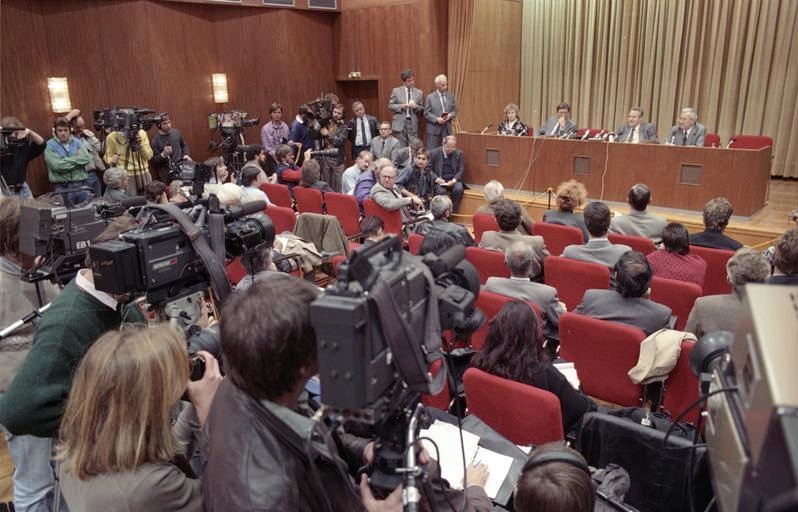
On 9 November 1989, during a press conference that attracted worldwide attention, Schabowski read and commented on newly adopted regulations regarding travel and exit from the German Democratic Republic. When asked about the timing of the changes, he improvised an answer that conveyed they were effective immediately. That response was widely understood by East Berliners and foreign media as an immediate opening of border crossings. Within hours large crowds had gathered at checkpoints along the Berlin Wall, and border guards, overwhelmed by numbers and orders that were unclear, allowed people to pass. The event precipitated a rapid sequence that led to the Wall’s effective opening after nearly three decades.
Legal proceedings and later life
After German reunification, Schabowski became the subject of legal scrutiny for his role in the GDR regime’s border policies. He stood trial with other officials on charges related to deaths at the inner-German border and was convicted in the 1990s; the case was part of broader efforts to hold former officials accountable for human-rights abuses. In later years he published memoirs, gave interviews reflecting on his time in office, and expressed regret for aspects of GDR rule. Schabowski lived in Berlin where he died at age 86 from complications following a stroke. His death was reported in the city of Berlin.
Legacy and significance
Schabowski’s place in history rests largely on the unforeseeable consequences of a single public statement and the rapid political changes of 1989. Historians and commentators regard him as both a symbol of the opaque, bureaucratic nature of the GDR leadership and an inadvertent agent of its collapse. His story is cited in discussions about media, communication under authoritarian regimes, and how miscommunication can accelerate political transformation.
Related articles
Author
AlegsaOnline.com Günter Schabowski (1929–2015): East German official linked to the opening of the Berlin Wall Leandro Alegsa
URL: https://en.alegsaonline.com/art/119325