
Günter Litfin — early victim of the Berlin Wall
Günter Litfin (1937–1961) was a German tailor and one of the first people to die as a result of the Berlin Wall; he was the first male victim and the first person shot by East German border troops.
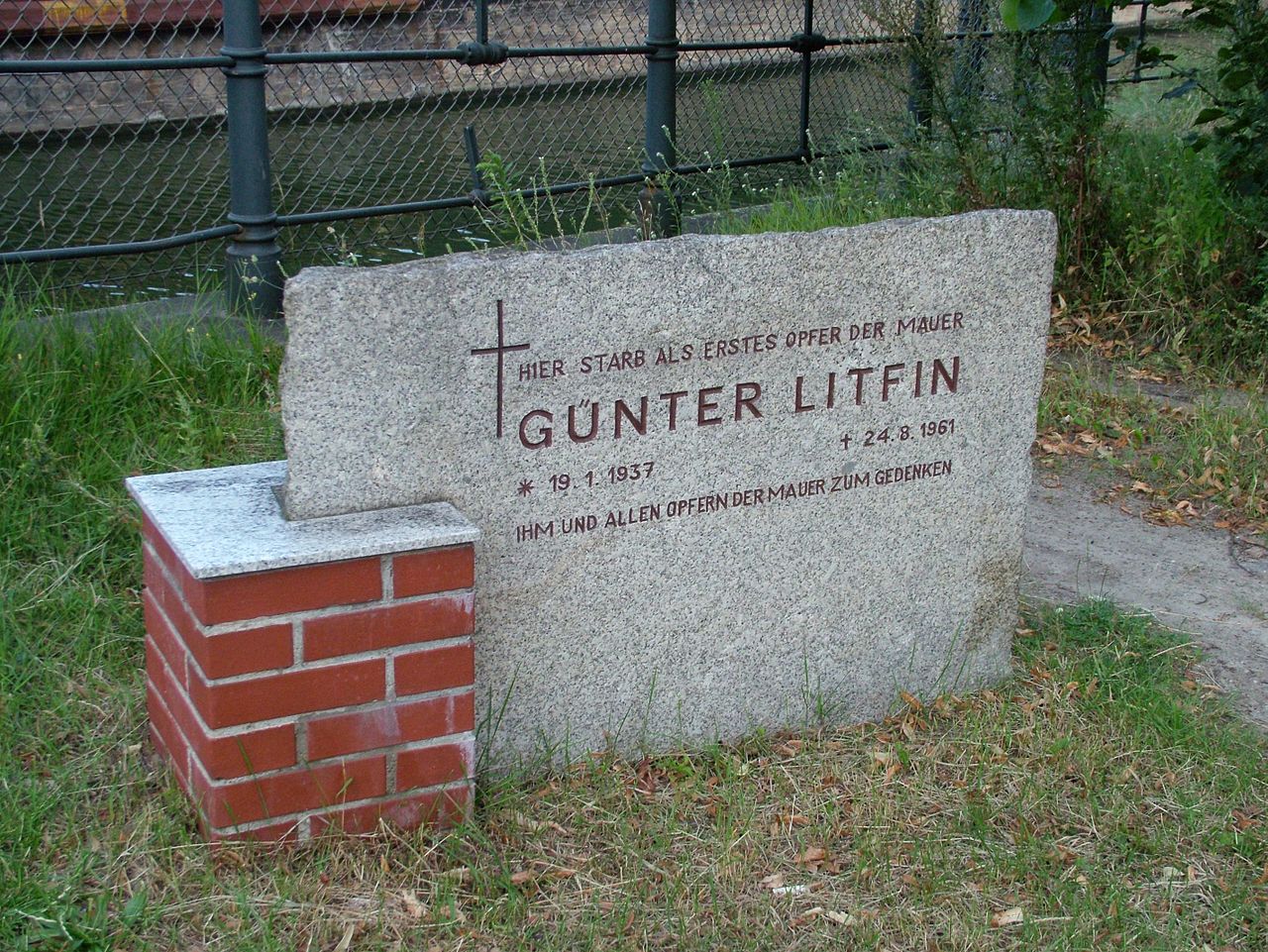
Günter Litfin (19 January 1937 – 24 August 1961) was a German tailor who became one of the earliest victims of the Berlin Wall. In the days following the barrier's construction in August 1961 he attempted to leave the German Democratic Republic for West Berlin and was intercepted and fatally wounded by East German border guards. His death is remembered as a key early example of the lethal measures used to enforce the border.
Image gallery
9 Images





Overview and identity
Litfin worked as a tailor and lived in East Berlin. Contemporary accounts and later historical research identify him as the second known person to die in direct connection with the Berlin Wall. He was the first male victim and the first person to die as the result of being shot by East German border troops, distinguishing his case from other early fatalities that occurred by different means.
Context and circumstances
The Berlin Wall was erected beginning on 13 August 1961, abruptly severing the city and restricting movement from East to West. During the first weeks after its construction many residents attempted to cross or otherwise evade the new fortifications. Litfin's attempt to reach West Berlin and the response by border forces occurred during this chaotic opening phase; he died on 24 August 1961. His death followed that of Ida Siekmann, who is generally recorded as the first known victim after she died earlier in August attempting to cross from an upper-floor window.
Distinctions and significance
- Second known person to die in connection with the Berlin Wall.
- First victim to be killed by East German border troops.
- First to succumb to gunshot wounds on the inner-German border.
- First male victim recorded among those who died attempting to cross the wall.
Legacy and remembrance
Litfin's death became part of the larger narrative about the human cost of the Cold War division of Germany. After German reunification, historians, memorials and public commemorations have documented and remembered those who died attempting to cross the border. His case is often cited in discussions of the border regime because it illustrates how rapidly and decisively lethal force was applied in some incidents. For further context about his life and the early victims of the wall see contemporary reports and historical summaries linked here: biographical notes, history of the Berlin Wall, accounts of border shootings.
Research into the events of 1961 draws on police records, witness statements and later investigations; while some details remain specific to archival reports, the broader facts about Litfin's status as an early, fatal shooting victim are well established and serve as a reminder of the immediate human consequences of the border closure.
Questions and answers
Q: Who was Günter Litfin?
A: Günter Litfin was a German tailor.
Q: How did Günter Litfin die?
A: Günter Litfin was killed by East German border troops at the Berlin Wall.
Q: Was Günter Litfin the first victim to die at the Berlin Wall?
A: No, Günter Litfin was the second known person to die at the Berlin Wall.
Q: What made Günter Litfin's death significant?
A: Günter Litfin was the first victim to be killed by East German border troops, the first to succumb to gunshot wounds, and the first male victim.
Q: What was Günter Litfin's occupation before his death?
A: Günter Litfin was a tailor.
Q: When did Günter Litfin pass away?
A: Günter Litfin passed away on August 24, 1961.
Q: Was Günter Litfin a well-known person in Germany?
A: Günter Litfin is not widely known, but his death marked a pivotal moment in the history of the Berlin Wall.
Related articles
Author
AlegsaOnline.com Günter Litfin — early victim of the Berlin Wall Leandro Alegsa
URL: https://en.alegsaonline.com/art/119323