
Frank Gehry: Architect and Innovator in Contemporary Architecture
Frank Gehry (born 1929) is a Canadian‑American architect known for sculptural, deconstructivist buildings such as the Guggenheim Bilbao and Walt Disney Concert Hall. He won the Pritzker Prize in 1989.
Overview
Frank Owen Gehry (born Frank Owen Goldberg in 1929) is a prominent Canadian‑born architect who established his career in the United States and is frequently described as American in professional contexts. He gained international recognition for a body of work that challenges conventional building forms and prioritizes sculptural expression. Gehry’s designs are often cited as key examples of late‑20th and early‑21st century architecture.
Image gallery
10 Images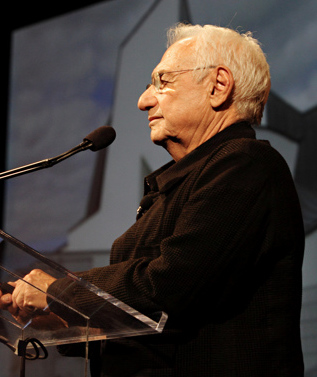


Characteristic approach
Gehry’s architecture is distinguished by fragmented silhouettes, sweeping curves, and unconventional material choices. His projects commonly blend metal cladding—especially titanium and stainless steel—with glass, brick and textured surfaces to produce dynamic façades. He embraced digital design tools early, using computer modeling to realize complex geometries that would have been difficult to document and construct with traditional methods.
Background and development
Born in Toronto and raised in California, Gehry studied architecture after an initial interest in other fields. He trained at the University of Southern California and later undertook additional study in architecture. Over decades he developed a practice that moved from modest residential renovations to large public commissions, experimenting with scale and materials while forming an influential studio practice.
Notable works
- Guggenheim Museum Bilbao — an emblematic project often associated with urban renewal and the "Bilbao effect" for its dramatic titanium forms and cultural impact.
- Walt Disney Concert Hall — a major performing‑arts venue known for its acoustics and flowing stainless steel exterior.
- Jay Pritzker Pavilion — a landmark outdoor stage in Chicago’s Millennium Park that integrates bold structural expression with public programming.
- Other projects include high‑rise residential towers, civic buildings and private homes that showcase his sculptural language across continents.
Recognition and influence
Gehry received the Pritzker Architecture Prize in 1989, and his work has reshaped how architects, clients and cities consider the cultural role of architecture. His buildings frequently spark debate: admirers praise their creativity and urban impact, while critics question cost, maintenance and contextual fit. Regardless, Gehry’s methods helped normalize digital design and encouraged architects to explore expressive, nonrectilinear forms.
Legacy and considerations
Beyond individual buildings, Gehry’s career highlights the interplay between architecture, engineering and fabrication. His studio’s collaborations with fabricators, structural engineers and software developers illustrate a shift toward integrated, technology‑driven design. As a public figure in contemporary architecture, Gehry remains a reference point for discussions about innovation, authorship and the social effects of iconic architecture.
Canadian and American labels, Jay Pritzker Pavilion, Guggenheim Museum Bilbao and Walt Disney Concert Hall are among the names most often associated with his career.
Related articles
Author
AlegsaOnline.com Frank Gehry: Architect and Innovator in Contemporary Architecture Leandro Alegsa
URL: https://en.alegsaonline.com/art/119139
Sources
- salon.com : "Frank Gehry"
- isurvived.org : "In the News: Warsaw Jewish Museum In Poland"
- achievement.org : Biography and Video Interview of Frank Gehry at Academy of Achievement
- pritzkerprize.com : "Frank Gehry, 198 Laureate"