
Rosignano Solvay — Coastal district of Rosignano Marittimo known for its white beaches
Rosignano Solvay is a coastal district of Rosignano Marittimo (Livorno, Tuscany) noted for its pale ‘white beaches’, a marina, and a history shaped by chemical industry, tourism and ongoing environmental study.
Rosignano Solvay (commonly shortened to Rosignano) is a seaside district of the comune Rosignano Marittimo in the region of Tuscany, on the Tyrrhenian coast about 22 km from the city of Livorno. The district includes residential neighbourhoods, a working harbour and industrial facilities that influenced its 20th-century development. The local population is counted in the tens of thousands and the marina can berth a large number of boats, often cited as accommodating around 750 vessels (marina and port).
Image gallery
2 Images
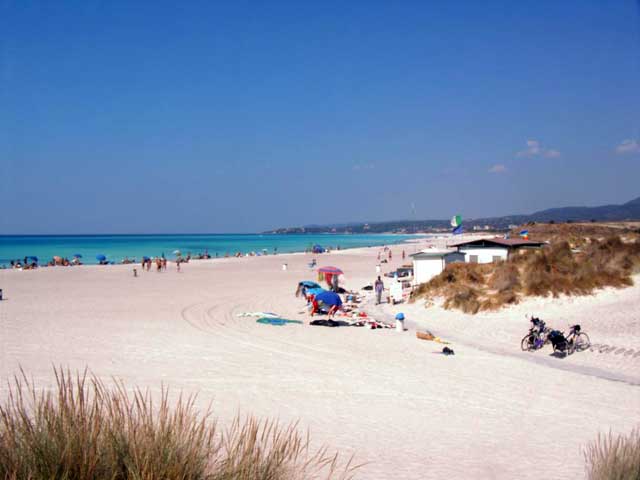
Appearance and the "white beaches"
Rosignano is best known for the so-called Spiagge Bianche or "white beaches", a stretch of very pale sand that contrasts with nearby coastlines. The light colour derives primarily from calcareous material — fine carbonate particles from limestone and shell fragments — together with salts and residues associated with past and present industrial activity, including chloride compounds such as calcium chloride. The distinctive shoreline attracts photographers and visitors and has become a local landmark.
Industry and historical development
The town expanded in the 20th century around chemical manufacturing established in the area. Industrial operations supplying soda ash and related products played a major role in local employment and urban growth. While industry helped shape the community’s infrastructure, it also altered coastal sediment patterns and prompted public attention to environmental effects. For municipal information see local administration and services municipal resources.
Environment, research and public debate
The origin, composition and ecological implications of the white sands have been the subject of scientific study and public debate. Researchers and authorities have monitored coastal sediments, water quality and ecological indicators to assess potential impacts. Results and interpretations vary by study, and the topic remains an example of the complex interactions between industrial activity, coastal processes and conservation priorities. Regional reports and environmental monitoring data are available from provincial and specialised sources (province information) and geological references (geological context).
Tourism, harbour and local life
The shoreline, promenades and marina support a mixture of tourism and everyday community life. Visitors come for swimming, photography and seaside walks while the harbour supports recreational boating and local fisheries. Local businesses combine services for residents and seasonal visitors, making tourism an important but not exclusive part of the economy.
Culture and practical information
- The beaches are often compared visually to tropical sands because of their unusual whiteness.
- Local economic life blends manufacturing, maritime activities and tourism-related services.
- Ongoing monitoring and dialogue between authorities, residents and researchers shape policies on coastal management.
For official documents, environmental reports and visitor information consult municipal and regional resources or specialised portals on geology and coastal management. Useful starting points include municipal services (Rosignano Marittimo), provincial information (Livorno province), geological context pages (carbonate sediments), studies of chemical composition (salts and residues) and harbour or marina details (port).
Related articles
Author
AlegsaOnline.com Rosignano Solvay — Coastal district of Rosignano Marittimo known for its white beaches Leandro Alegsa
URL: https://en.alegsaonline.com/art/84201