
Bitis: African vipers — biology, species, and significance
Bitis is a genus of venomous vipers native to Africa and the southern Arabian Peninsula, known for species like the puff adder and Gaboon viper and for their ambush habits and medical importance.
Overview
Bitis is a genus of stout, venomous snakes in the viper family. Members of this group are often called African adders or African vipers and are notable for containing some of the smallest and largest vipers in the world. Around 14 species are commonly recognized, and they are famed for their heavy bodies, pronounced triangular heads and cryptic color patterns that make them effective ambush predators.
Image gallery
10 Images




Physical characteristics
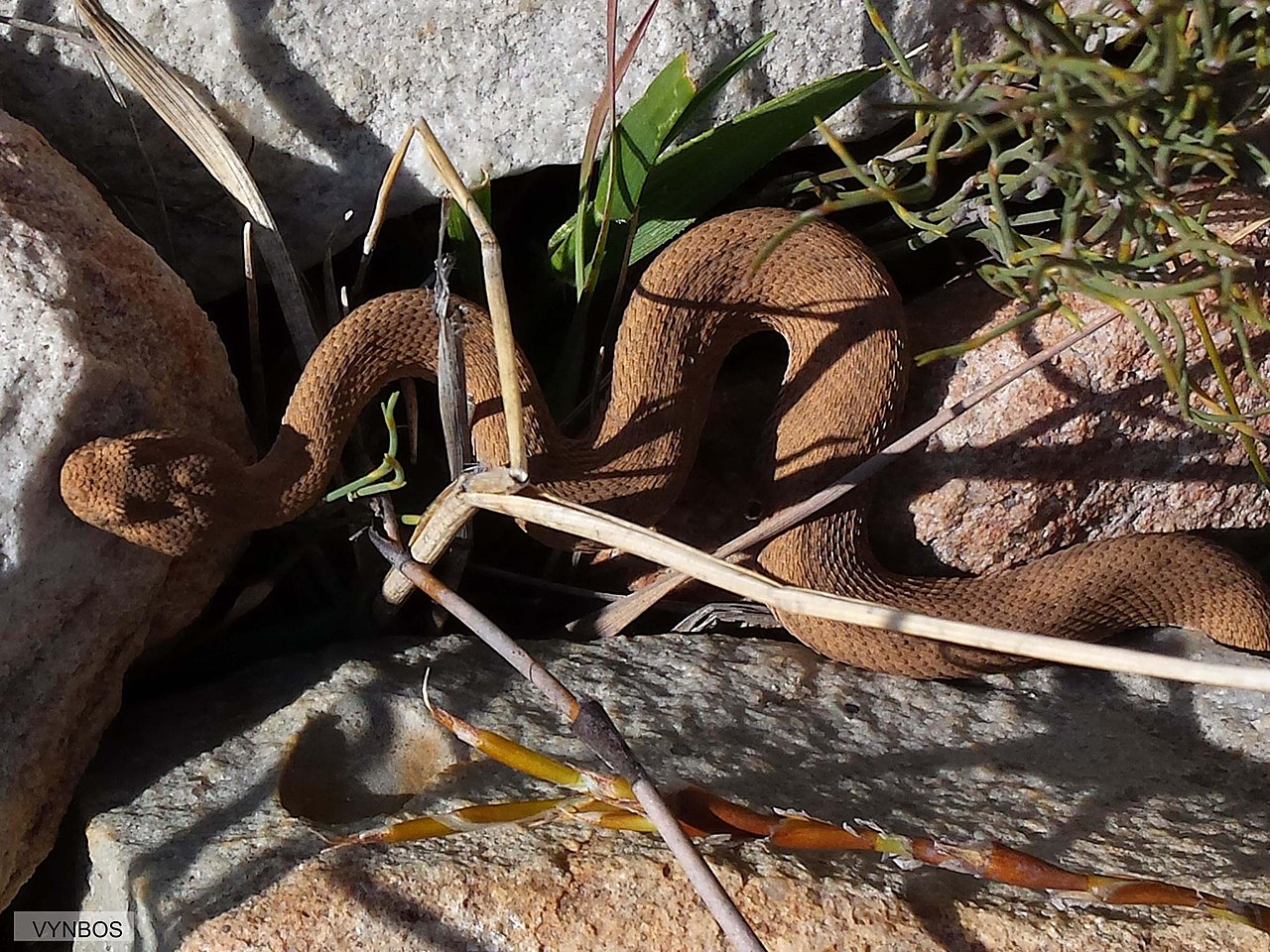
Bitis species share several distinctive traits: thick, keeled scales; broad, flattened heads; vertically elliptical pupils; and robust bodies adapted to a sit-and-wait hunting style. Many species display dramatic patterning—bands, blotches or bold geometrical markings—that provide camouflage in leaf litter or rocky ground. Some have horn-like scale projections on the snout (for example, in the rhinoceros viper), and others are named for characteristic behavior such as the puffing display of the puff adder.
Distribution and habitat
These vipers are native mainly to sub-Saharan Africa, with a few populations extending into the southern Arabian Peninsula. Different species occupy a wide range of habitats, including savanna, grassland, forest floor, marsh edges and arid scrub. Their reliance on camouflage and ambush hunting makes sheltered microhabitats—leaf litter, termite mounds and rock crevices—especially important.
Behavior, diet and reproduction
Bitis snakes are primarily ambush predators that feed on small mammals, birds, amphibians and occasionally larger prey depending on species. Many juveniles and some adults use caudal luring—wiggling the tail tip—to attract prey. Reproductively, most Bitis are viviparous or ovoviviparous, giving birth to live young rather than laying eggs, a trait common among many vipers.
Venom and medical importance
As venomous vipers, Bitis species produce cytotoxic and sometimes hemotoxic venoms that can cause severe local tissue damage and systemic effects. Several species, notably the widespread puff adder, are responsible for a high proportion of snakebite incidents in Africa because of their abundance and tendency to remain motionless when approached. The Gaboon viper is especially notable for having exceptionally long fangs and large venom yields among vipers.
Taxonomy, notable species and conservation
The genus Bitis belongs to the family Viperidae, subfamily Viperinae (the true vipers). Well-known members include the puff adder (Bitis arietans), the Gaboon viper (Bitis gabonica), the rhinoceros viper (Bitis nasicornis) and several smaller species adapted to rocky or desert environments. Conservation status varies by species; habitat loss, persecution and collection for the pet trade affect some populations. For further reading on identification and distribution, consult regional field guides and specialist literature.
- Typical features: heavy body, keeled scales, ambush hunting
- Reproduction: live-bearing (viviparous/ovoviviparous)
- Medical note: medically significant venom; caution advised
For taxonomic details, range maps and species accounts, see authoritative herpetology resources or regional conservation assessments. Additional information can be found through general references and specialist sites: genus overview, venomous snake information, regional guides for Africa and the Arabian Peninsula.
Questions and answers
Q: Where are Bitis vipers found?
A: Bitis vipers are found in Africa and the southern Arabian Peninsula.
Q: What is Bitis?
A: Bitis is a genus of venomous vipers.
Q: How many species of Bitis are currently found?
A: There are currently 14 species of Bitis found.
Q: What is Bitis commonly known as?
A: Bitis is commonly known as the "African Adders" or the "African Viper".
Q: Which genus contains the largest and smallest vipers in the world?
A: The Bitis genus contains the largest and smallest vipers in the world.
Q: Are Bitis vipers venomous?
A: Yes, Bitis vipers are venomous.
Q: In which continent are Bitis vipers found?
A: Bitis vipers are found in Africa.
Tags
Related articles
Author
AlegsaOnline.com Bitis: African vipers — biology, species, and significance Leandro Alegsa
URL: https://en.alegsaonline.com/art/11843