
Angelshark (Squatina): morphology, behavior, habitat and conservation
Angelsharks are flattened, ambush‑predator sharks in the genus Squatina. Found in temperate and tropical seas, many species are rare or threatened and have distinctive adaptations for life on the seabed.
Overview
Angelsharks are a group of cartilaginous fishes in the genus Squatina, the only genus in the family Squatinidae and order Squatiniformes. Often mistaken for rays because of their flattened bodies and broad pectoral fins, these sharks retain a typical shark-like tail and dorsal placement of many features. About 23 species are recognized worldwide, and they occur in temperate and tropical marine waters.
Image gallery
7 Images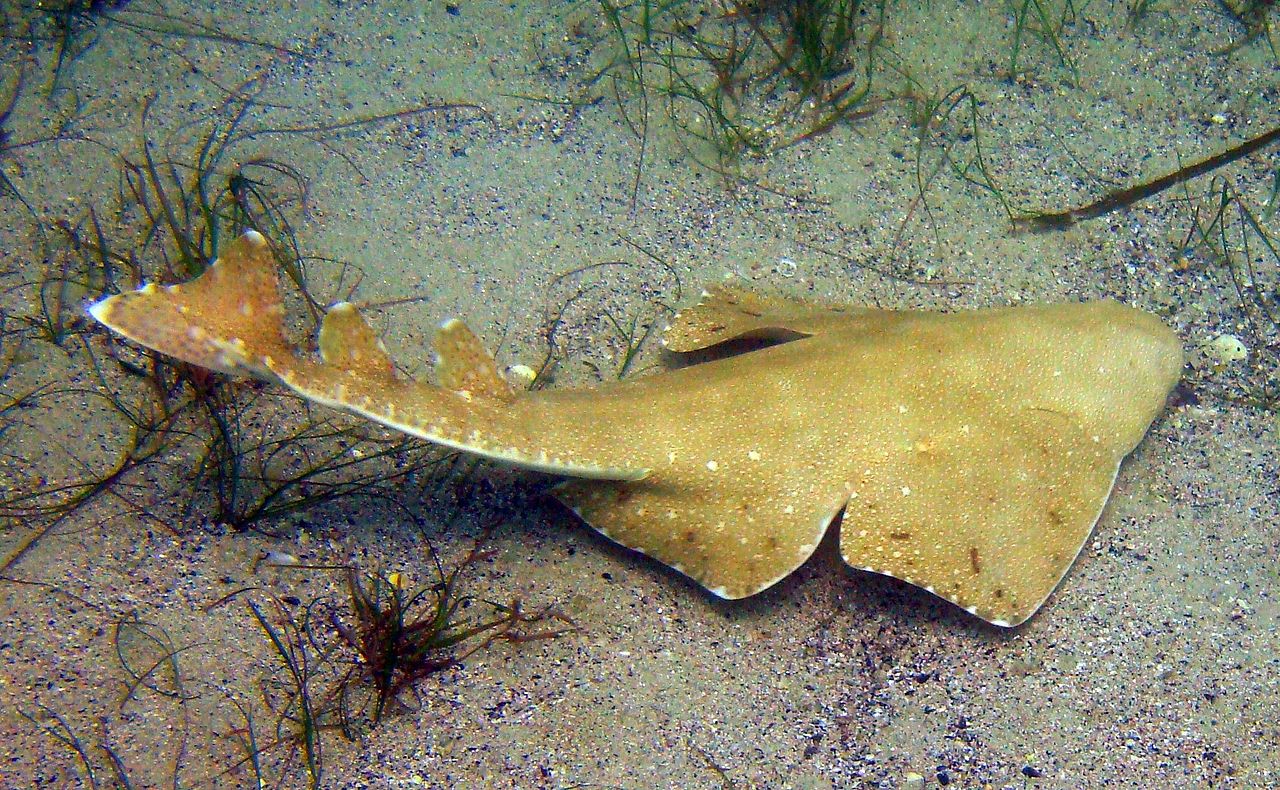



Physical characteristics and feeding
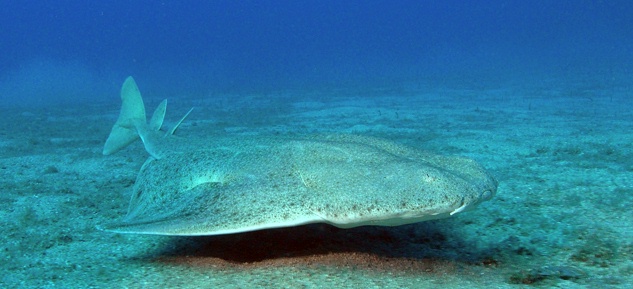
Angelsharks have a dorsoventrally flattened shape that helps them lie close to the seafloor. Their coloration is commonly cryptic — mottled browns, greys or sandy tones — which provides camouflage when they partially bury themselves in sediment. They are specialised ambush predators: while hidden, they detect and rapidly capture passing prey using protrusible jaws tipped with long, pointed teeth. Diets generally include small bony fishes, crustaceans and a variety of mollusks.
Habitat and distribution
Most angelshark species inhabit shallow coastal waters such as continental shelves, bays and estuaries. Some species live in warmer tropical seas while others prefer cooler temperate zones. At least one species is adapted to much deeper water and has been recorded down to about 1,300 metres. Their preference for sandy or muddy substrates is key to their concealment strategy.
Reproduction and life history
Reproductive modes in angelsharks are broadly similar to many other sharks: they are viviparous or ovoviviparous, meaning embryos develop inside the mother and are born as live young. Growth rates tend to be slow and generation times relatively long, which can make populations vulnerable to overfishing and other human pressures.
Conservation and human interactions
Several angelshark species have experienced population declines because of bottom trawling, gillnet bycatch and habitat degradation. Because they spend much of their time on the seafloor, they are particularly susceptible to demersal fishing methods. Conservation measures for some species include protected areas, fishing restrictions and monitoring programs. Researchers and fisheries managers often emphasize the need for better data on distribution, abundance and biology.
Distinctive facts and further resources
Angelsharks represent an evolutionarily distinct lineage of sharks with a morphology convergent with rays but behavior typical of predatory sharks. They illustrate how different body plans can evolve in similar environments and how life on the seabed shapes feeding and camouflage strategies.
- General overview and taxonomy
- Genus Squatina information
- Comparison with rays and other flat-bodied fishes
- Family Squatinidae details
- Order Squatiniformes notes
- Distribution maps and habitat descriptions
- Feeding behavior and predation style
- Jaw mechanics and teeth
- Dietary studies: fishes and invertebrates
- Conservation status and recovery efforts
For identification guides, species lists and region-specific conservation recommendations, consult specialist field guides and regional marine conservation organizations. Scientific names, population assessments and legal protections vary by country and by species, so local sources are important for management and research.
Questions and answers
Q: What is an angelshark?
A: An angelshark is a species of cartilaginous fish in the genus Squatina.
Q: How many species of angelsharks are there?
A: There are twenty-three species of angelsharks known.
Q: In what kind of seas are most angelsharks found?
A: Most species of angelsharks are found in shallow temperate or tropical seas.
Q: What is unusual about how angelsharks hunt their prey?
A: Angelsharks hunt their prey by burying themselves in sand or mud and waiting for it to approach, which is unusual for sharks.
Q: What is the family and order of angelsharks?
A: Angelsharks are the only genus in their family, Squatinidae, and the order Squatiniformes.
Q: What is the depth range of angelsharks?
A: One species of angelshark is found in deeper water, down to 1,300 metres.
Q: What is the prey of angelsharks?
A: Angelsharks feed on fish, crustaceans, and many different types of mollusks.
Tags
Related articles
Author
AlegsaOnline.com Angelshark (Squatina): morphology, behavior, habitat and conservation Leandro Alegsa
URL: https://en.alegsaonline.com/art/4144
Sources
- elasmo.com : Genera from the Fossil Record: Squatina Duméril, 1806
- fishbase.org : "FAMILY Details for Squatinidae-Angel sharks"
- flmnh.ufl.edu : flmnh.ufl.edu