
Barracuda (Sphyraena) — elongated predatory marine fish
Barracuda are fast, elongated predatory ray-finned fish of the genus Sphyraena found in tropical and subtropical seas. Noted for large teeth, ambush hunting, and occasional human interactions.
Overview
Barracudas are long, predatory marine fishes belonging to the genus Sphyraena, the sole genus in the family Sphyraenidae. They are members of the larger group of ray-finned fishes and are widely distributed in tropical and subtropical oceans. Sizes vary by species, with many individuals commonly exceeding one metre and some notable species growing larger. Their streamlined shape and powerful tails make them effective pursuit and ambush predators.
Image gallery
10 Images




Identification and physical characteristics
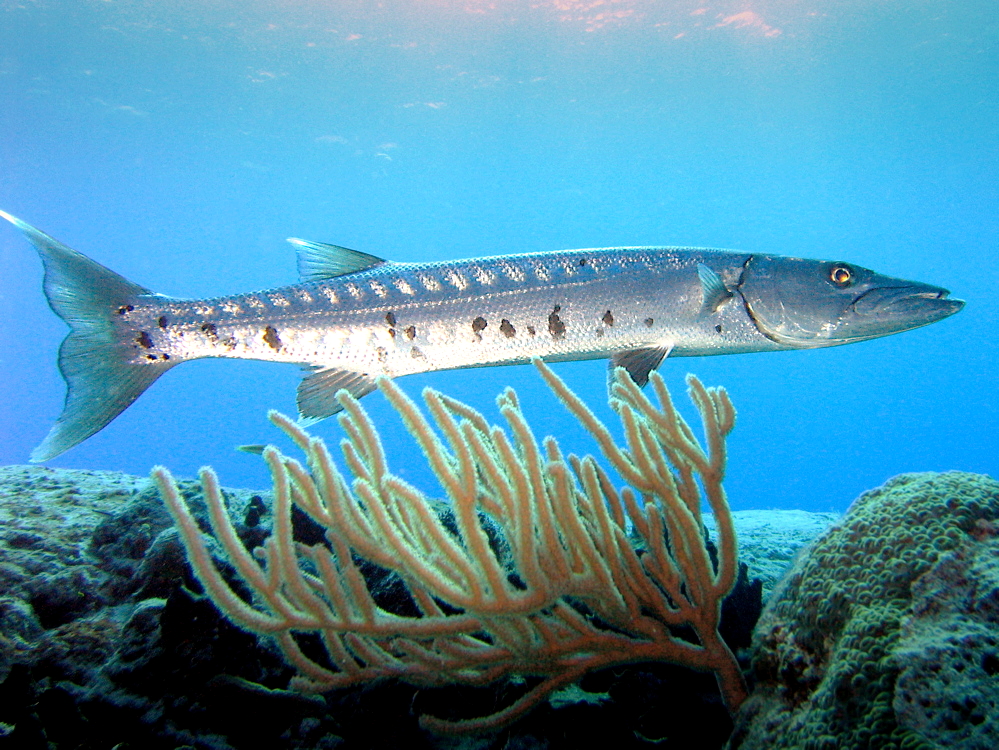
Typical features include an elongated, torpedo-like body, a pointed snout, and a mouth filled with sharp, fang-like teeth. Most species display a silvery or mottled coloration that helps them blend with open water and reef environments. For more about variation in size and form across species, see size and species information.
Behavior, diet and ecology
Barracudas feed primarily on smaller fishes, using short bursts of speed to capture prey. They may hunt alone or in loose groups; juveniles sometimes school for protection. Their diet typically includes schooling fishes such as jacks, grunts and mullet. Barracudas often patrol near the surface, around seagrass beds, reefs and drop-offs where prey is abundant.
Human interactions and safety
Although they have formidable teeth and an intimidating appearance, barracuda attacks on people are uncommon. Divers are often advised to avoid wearing shiny jewellery because quick reflections can attract the fish, though such incidents are rare and context-dependent. Another concern is ciguatera: large predatory reef fish, including big barracudas, can accumulate toxins, so some populations are considered unsafe to eat. Practical precautions are summarized below:
- Do not dangle brightly reflective objects in water.
- Avoid handling or swimming near large, solitary barracudas acting erratically.
- Respect local advisories about fish consumption and ciguatera risk.
Distribution, species and notable facts
Members of Sphyraena occur in warm seas worldwide, frequenting coasts, reefs and open water. The great barracuda (Sphyraena barracuda) is the best-known species and exemplifies the family’s size and predatory habits. For regional distribution details consult resources on marine fish ranges and identification: distribution guides and taxonomic summaries at genus Sphyraena.
Conservation and importance
Barracudas are valued in sport and subsistence fisheries and play a role as apex or mesopredators on reefs. Their conservation status varies by species and region, influenced by overfishing and habitat change. For conservation status and management approaches see conservation resources. Understanding their biology helps balance fishery use with healthy marine ecosystems.
Tags
Related articles
Author
AlegsaOnline.com Barracuda (Sphyraena) — elongated predatory marine fish Leandro Alegsa
URL: https://en.alegsaonline.com/art/9081