
Duncan II of Scotland (Donnchad mac Maíl Coluim)
King of Scots in 1094; son of Malcolm III and Ingibiorg Finnsdottir. Brief reign marked by return from exile, Anglo-Norman support, assassination, and a contested succession in late 11th-century Scotland.
Overview: Duncan II (Old Gaelic: Donnchad mac Maíl Coluim) was a late 11th-century claimant who briefly held the Scottish kingship in 1094. Born before around 1060, he was a son of Malcolm III and Malcolm's earlier consort Ingibiorg Finnsdottir. His short rule took place amid dynastic rivalry, Norse-Gaelic ties and growing Anglo-Norman influence in the British Isles.
Family background and early life: Duncan's mother, Ingibiorg, had ties to the Norse earldom of Orkney, which linked him to both Gaelic and Scandinavian aristocracies. His father Malcolm III had later married Margaret of Wessex; several of Malcolm's children by Margaret also became central figures in the succession disputes that followed Malcolm's death. Duncan appears to have spent part of his life in exile on the Anglo-Norman or English side of the border before attempting to claim his father’s throne.
Accession and brief reign: After Malcolm III's death in 1093, his brother Donald III (Domnall Bán) seized the kingship, sidelining Malcolm's sons. In 1094 Duncan returned with military support from outside Scotland — often described in sources as Anglo-Norman knights or mercenaries — and managed to displace Donald, gaining recognition as king. Contemporary accounts emphasize the fragile nature of his authority: his control was limited and contested by factions loyal to Donald and other regional magnates.
Death and immediate aftermath: Duncan's hold on power was short-lived. He was killed on 12 November 1094 during a counter-move by his opponents, after only a few months as king. Donald III regained the throne for a time, and the years that followed saw continuing struggles among Malcolm's sons and their rivals. The turmoil ultimately opened the way for further intervention from the English crown and reshaped the senior succession in Scotland.
Image gallery
2 Images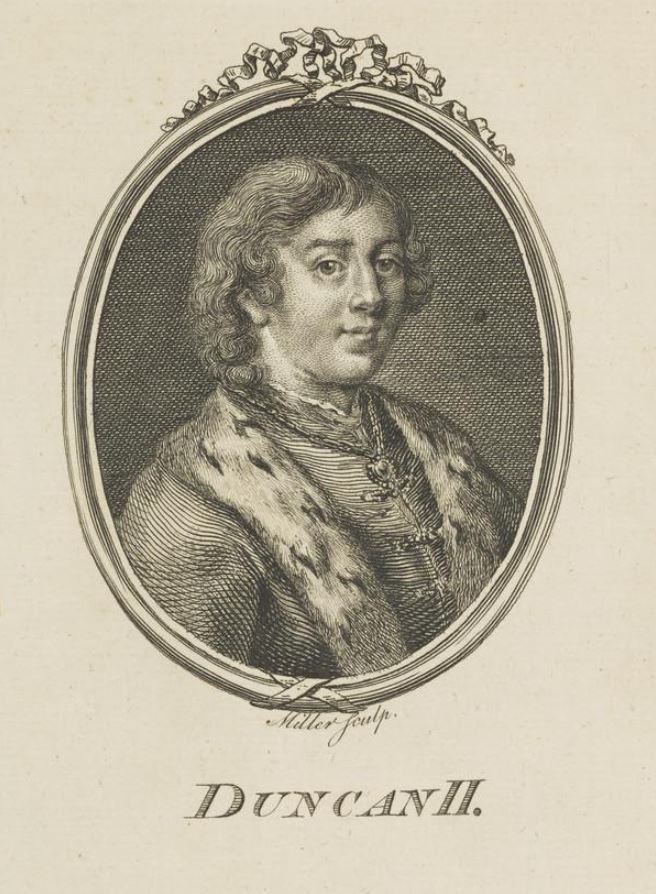

Legacy and notable facts
- Duncan is often identified as the father of William fitz Duncan, a later magnate who became important in northern Britain; details of Duncan's marriage are uncertain.
- His mixed Norse-Gaelic heritage reflected broader cultural links between Scotland and the Scandinavian world in the 11th century.
- Although brief, his reign illustrates the increasing role of external military forces and continental-style knights in Scottish succession disputes during this period.
Contextual significance: Duncan II's rise and fall exemplify the volatile transition in medieval Scotland from primarily Gaelic regional power structures toward a realm increasingly affected by Anglo-Norman politics and cross-channel dynamics. His life and death are part of the sequence of events that produced later rulers from Malcolm III's line and shaped the kingdom's medieval development.
Related articles
Author
AlegsaOnline.com Duncan II of Scotland (Donnchad mac Maíl Coluim) Leandro Alegsa
URL: https://en.alegsaonline.com/art/117968