
Dunga — Brazilian midfielder and national team coach
Carlos Caetano Bledorn Verri, known as Dunga, is a former Brazilian defensive midfielder and two-time coach of Brazil, best known for captaining the 1994 World Cup winners and for a pragmatic managerial style.
Carlos Caetano Bledorn Verri (born 31 October 1963), widely known by his nickname Dunga, is a Brazilian former professional footballer and manager. As a player he was noted for his role as a defensive midfielder: a combative, organized presence who combined tackling and positional discipline with the ability to pass and lead. Later he became the head coach of the Brazil national team in two separate spells, achieving notable international trophies but also generating debate about tactics and selection.
Image gallery
4 Images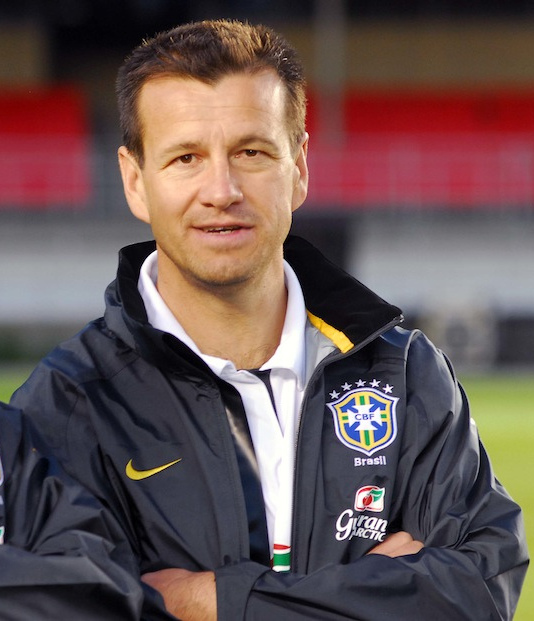


Playing profile and career
Dunga built his reputation as a hard-working central midfielder who prioritized balance and control in front of the defense. He was valued for leadership on the pitch, calm under pressure, and a straightforward, team-first approach rather than individual flair. Though known principally for his defensive duties, he could distribute the ball efficiently and contributed goals from set pieces and penalties.
At club level Dunga played for teams in his native Brazil and had spells in Europe. Internationally he earned wide recognition for his long service with the Brazilian national team across the late 1980s and 1990s. He was captain when Brazil won the 1994 FIFA World Cup, an achievement that remains central to his legacy as a player. His international career is remembered for steady reliability and leadership during a successful period for Brazil.
Managerial career and style
After retiring as a player, Dunga moved into coaching and football administration. He was appointed head coach of the Brazilian national team in 2006 and returned for a second spell beginning in 2014. As a manager he favored organization, tactical discipline and physical preparation, seeking to make Brazil harder to beat rather than relying solely on individual attacking brilliance.
During his first spell as coach, Brazil won major continental and intercontinental trophies and qualified for the 2010 World Cup. The side's more pragmatic approach drew praise for results and criticism from those who preferred Brazil's traditional attacking identity. His second tenure followed the 2014 World Cup and ended after mixed results in a period of transition for the national team.
Reputation and legacy
Dunga remains a prominent figure in Brazilian football history. As a player he is remembered primarily for captaining a World Cup-winning team and for embodying a combative, team-oriented midfield role. As a coach he is associated with restoring structure and competitiveness to Brazil at times, while also polarizing opinion because of his conservative tactics and personnel choices. His career illustrates contrasting but connected contributions to the same national football culture: first as an on-field leader, then as a manager charged with shaping a modern national side.
Key characteristics and notable facts
- Role: Defensive midfielder as player; national team coach in two periods.
- Style: Emphasis on discipline, tactical balance and leadership rather than flamboyant technique.
- Major player achievement: Captain of Brazil's 1994 FIFA World Cup-winning team.
- Managerial highlights: Led Brazil to international trophies and managed the squad through World Cup qualification and finals campaigns.
For an overview of his playing record and time as coach, see a dedicated profile: Dunga career overview.
Related articles
Author
AlegsaOnline.com Dunga — Brazilian midfielder and national team coach Leandro Alegsa
URL: https://en.alegsaonline.com/art/117971
Sources
- national-football-teams.com : "Dunga"