
Douglas Mawson: Australian Antarctic explorer and geologist
Overview of Sir Douglas Mawson (1882–1958), his Antarctic leadership, scientific work, expeditions, and lasting legacy in polar research and Australian science.
Douglas Mawson (1882–1958) was an Australian geologist, field scientist and one of the principal leaders of the Heroic Age of Antarctic Exploration. He combined systematic geological investigation with long, often perilous, polar journeys. His work helped establish Antarctic geology as a modern scientific discipline and secured his reputation as a pioneer of southern polar research.
Image gallery
10 Images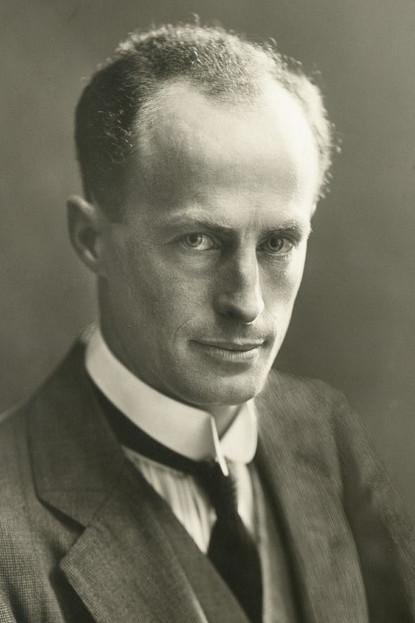


Early life and training
Mawson was born in Shipley, West Yorkshire, and emigrated with his family to New South Wales when he was a child. He was educated at local schools and completed tertiary study at the University of Sydney, where he trained in engineering and geology. Early in his career he undertook field mapping and coal surveys that developed the practical skills he later applied in polar conditions.
Antarctic expeditions and achievements
He is best known as leader of the Australasian Antarctic Expedition of 1911–1914, which established a main base at Cape Denison and carried out extensive coastal and inland geological, biological and meteorological studies. The expedition combined scientific teams with sledging parties that charted previously unknown sectors of the Antarctic coastline. The enterprise produced a large body of scientific observations and collections that remained important for decades. For more on the expedition, see Australasian Antarctic Expedition.
During field work Mawson survived one of the era's most famous solo endurance stories: after the loss of companions on a long sledging journey he completed a harrowing return alone, bringing back samples and records despite extreme exhaustion and injury. The base at Cape Denison and the survival story are frequently highlighted in accounts of early Antarctic exploration; the site and its remaining structures are sometimes referred to as Mawson's Hut.
Later career and scientific contributions
After returning from Antarctica, Mawson pursued an academic career that included a long association with the University of Adelaide, where he lectured and directed geological research. He combined teaching with national survey work and further polar administration and advised on Australian involvement in Antarctic science. His publications provided baseline geological interpretations for parts of East Antarctica and helped shape subsequent mapping and research.
Legacy, honors and recognition
Mawson received many honors during and after his life, including national and scientific awards, fellowship of learned societies, and a knighthood. His name has been given to geographic features and institutions: an Australian Antarctic research station bears his name and continues the research tradition he helped found (Mawson Station). His career is often contrasted with other leaders of the same era — for example Roald Amundsen, Robert Falcon Scott and Ernest Shackleton — while remaining distinctive for its scientific emphasis and long-term influence.
Notable facts and context
- Mawson combined engineering training with professional geology to lead scientifically rigorous polar work.
- His expeditions produced collections and meteorological records that supported later Antarctic science.
- The main base of his 1911–1914 expedition was at Cape Denison / Commonwealth Bay, a site known for extreme katabatic winds and challenging conditions.
- Stories of his sledging journeys and survival have become part of the broader narrative of early 20th-century polar exploration.
Today Mawson is remembered both as a field scientist who expanded knowledge of Antarctica's geology and as a national figure in Australian scientific history. His work laid practical and institutional foundations for later research programs and for Australia's long-term presence on the Antarctic continent.
Related articles
Author
AlegsaOnline.com Douglas Mawson: Australian Antarctic explorer and geologist Leandro Alegsa
URL: https://en.alegsaonline.com/art/117913