
Doug Anthony: Australian National Party Leader and Deputy Prime Minister
Overview of John Douglas "Doug" Anthony (1930–2020), leader of the National Party (1971–1984), long-serving Deputy Prime Minister, his career, honours and legacy.

John Douglas "Doug" Anthony (1 January 1930 – 20 December 2020) was an Australian politician best known for leading the Country/National Party and serving as Deputy Prime Minister in coalition governments. He led the party from 1971 until 1984 and held the deputy prime ministership in two periods, 1971–1972 and 1975–1983. His long public career made him a prominent voice for rural and regional Australia.
Image gallery
6 Images


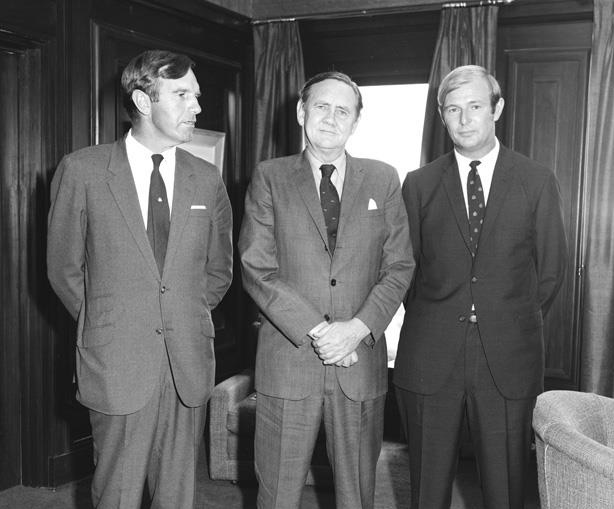


Early life and background
Anthony was born in Murwillumbah in northern New South Wales, where he grew up with close ties to farming and country communities. That background shaped his political perspective and provided the base for his later parliamentary work representing rural interests. He became widely identified with the concerns of farmers, graziers and regional towns.
Political career and roles
Anthony led his party through more than a decade of coalition government, working closely with Liberal colleagues. He served in senior ministerial roles relating to agricultural and trade matters and was a key negotiator within the coalition. His leadership saw the party adapt to economic and structural changes affecting Australia's primary industries.
Career highlights
- Leader of the National/Country Party: 1971–1984 (National Party).
- Deputy Prime Minister in two terms, bridging governments and transitions (Deputy Prime Minister).
- Held senior portfolios related to primary industry and trade during coalition administrations.
He served alongside Liberal prime ministers of the era and was respected as a pragmatic negotiator who balanced party identity with the practicalities of coalition government. While controversial at times, Anthony's steadiness and focus on rural policy won him enduring support among many constituents.
Honours and legacy
Anthony's public service was recognised with high honours: he was appointed a Companion of Honour in 1981 and later a Companion of the Order of Australia in 2003. These awards acknowledged his long contribution to national politics and advocacy for regional Australia. Historians and commentators note his lengthy tenure as party leader as a defining feature of his impact on Australian political life.
He died on 20 December 2020 in Murwillumbah, leaving a legacy tied to the evolution of the Nationals and the representation of rural voices within Australia's federal system.
Related articles
Author
AlegsaOnline.com Doug Anthony: Australian National Party Leader and Deputy Prime Minister Leandro Alegsa
URL: https://en.alegsaonline.com/art/117920
Sources
- itsanhonour.gov.au : "Anthony, John Douglas, Companion of Honour"
- abc.net.au : "John Douglas Anthony (1929– )"