
Dirk Stikker — Dutch politician, diplomat and industrialist
Dirk Stikker (1897–1979) was a Dutch banker and industrialist who shaped postwar labour relations, served as foreign minister, ambassador to the United States and as NATO Secretary General.
Overview
Dirk Uipko Stikker (5 February 1897 – 23 December 1979) was a prominent Dutch businessman and statesman. After a career in banking and industry, he entered public life in the immediate post‑World War II era and became known for his role in rebuilding Dutch economic and diplomatic institutions. His public service included senior national and international offices during the early Cold War.
Image gallery
3 Images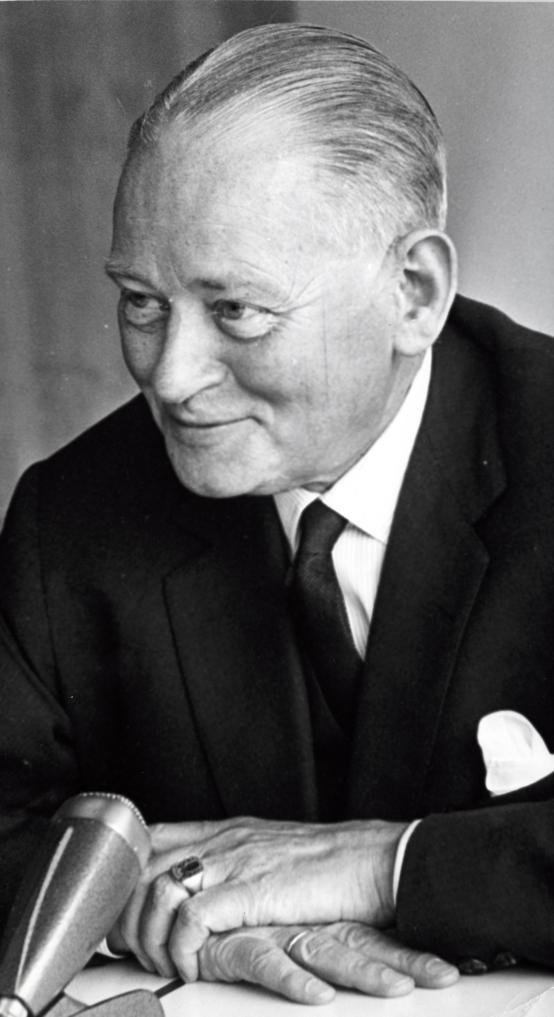


Career and public offices
Stikker combined private‑sector experience with political leadership. In 1945 he helped establish the Stichting van de Arbeid, an organization that promoted coordinated labour relations and collective bargaining in the Netherlands; this initiative is often credited with contributing to social consensus in Dutch postwar reconstruction (Stichting van de Arbeid). He served as the Dutch Minister of Foreign Affairs from 1948 to 1952, overseeing foreign policy during a period of European recovery and Atlantic cooperation (biography).
Following his ministerial term Stikker represented the Netherlands abroad, serving as ambassador to the United States before taking a leading role in transatlantic security. He was appointed Secretary General of NATO and held that position from 1961 to 1964, guiding the alliance through part of a tense phase of the Cold War (NATO).
Contributions and significance
Stikker is remembered for bridging business and public policy: his background in banking and industry informed a pragmatic approach to economic and labour matters, while his diplomatic roles emphasized multilateral cooperation. The postwar labour framework he helped craft encouraged structured negotiation between employers and trade unions, which contributed to social stability during economic reconstruction.
Timeline and notable facts
- 1897: Born in the Netherlands.
- 1945: Co‑organizer of the Stichting van de Arbeid (labour foundation).
- 1948–1952: Minister of Foreign Affairs (career summary).
- 1950s: Dutch ambassador to the United States.
- 1961–1964: Secretary General of NATO (NATO tenure).
Honors, later life and legacy
Stikker received several honors during and after his career, including British distinctions noted by the postnominals GBE and GCVO, and an honorary doctorate from Brown University in 1964 (Brown honorary degree). He retired from public life in the 1960s and died in Wassenaar in December 1979; local and international obituaries reflected on his contributions to Dutch diplomacy and European cooperation (Wassenaar).
For readers seeking more detail, archival materials and dedicated biographies provide fuller accounts of Stikker's business activities, political affiliations and diplomatic initiatives during a critical era for the Netherlands and NATO. His career illustrates how private‑sector leaders moved into public roles to shape mid‑20th century international institutions.
Related articles
Author
AlegsaOnline.com Dirk Stikker — Dutch politician, diplomat and industrialist Leandro Alegsa
URL: https://en.alegsaonline.com/art/117723