
Birmingham Town Hall: history, architecture and uses
Neoclassical concert hall in Victoria Square, Birmingham. Built for the Birmingham Triennial Music Festival, Grade I listed and restored in the early 21st century; now hosts concerts, ceremonies and recitals.
Birmingham Town Hall stands in Victoria Square at the heart of Birmingham, England. Recognised as a Grade I listed building, it was originally erected as a purpose-built venue for the Birmingham Triennial Music Festival and civic gatherings. Executed in a Neoclassical idiom, the hall has long been a focus for the city’s musical, cultural and ceremonial life.
Image gallery
10 Images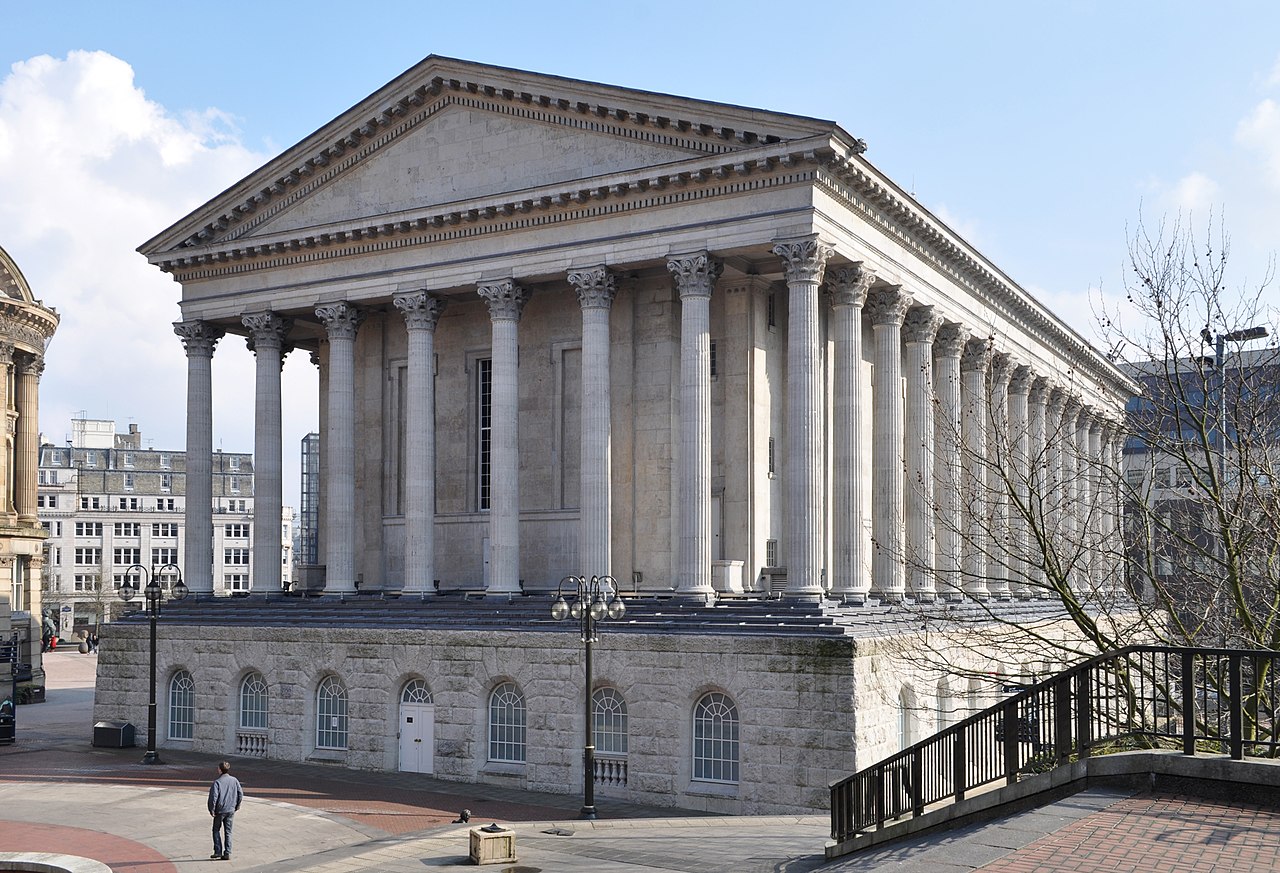


Overview and origins
The idea for a permanent concert hall grew from the success of the Birmingham Triennial Music Festival, a charity event begun in 1784 to raise funds for local hospitals. Architects Joseph Hansom and Edward Welch produced a design inspired by classical temple architecture; construction was completed in the early 1830s to provide a large, formal auditorium for performances and public meetings. The festival remained a central reason for the hall’s existence and development for many decades (Birmingham Triennial Music Festival).
Architecture and notable features
The exterior is characterised by a monumental portico and classical columns, giving the building a temple-like presence in the square. Inside, the main auditorium is intended for acoustics and sightlines suitable for orchestral and choral music. One of the hall’s most celebrated instruments is its large pipe organ, notable for its size and tonal variety; the organ is often highlighted in discussions of the building’s musical heritage (the town hall organ).
Restoration and modern use
During the early 21st century the hall underwent an extensive conservation and refurbishment programme (carried out over several years in the 2000s) to repair historic fabric and introduce contemporary services. The restoration aimed to balance preservation of the original design with the needs of a modern performance venue: improved acoustics, audience facilities and stage technology allow a wide range of events while retaining the building’s character.
Functions, events and significance
Today Birmingham Town Hall hosts organ recitals, classical and popular concerts, community events and civic ceremonies, including university graduations and public meetings. Its Grade I status recognises its architectural and historic importance, and it is regarded as an early and influential example of a large civic concert hall in Britain.
- Primary uses: concerts, recitals, ceremonies, lectures.
- Architectural style: Neoclassical with a temple-like façade.
- Heritage: Grade I listed and restored for contemporary use.
For further information about the building’s designation, history and current programme see local archives and official cultural listings (listing details, city resources, national heritage).
Tags
Related articles
Author
AlegsaOnline.com Birmingham Town Hall: history, architecture and uses Leandro Alegsa
URL: https://en.alegsaonline.com/art/11744