
Daniel Dennett — philosopher of mind, consciousness, and evolution
American philosopher and cognitive scientist known for work on consciousness, free will (compatibilism), the intentional stance, and defense of evolutionary explanations in philosophy and cognitive science.
Overview
Daniel Clement Dennett III (born March 28, 1942) is an American thinker best known for influential work on the philosophy of mind, consciousness, and the implications of evolutionary theory for philosophy. He has spent most of his career at Tufts University and is widely read both in academic circles and by general audiences. He is openly an atheist and has engaged extensively in public debates about religion and science.
Image gallery
6 Images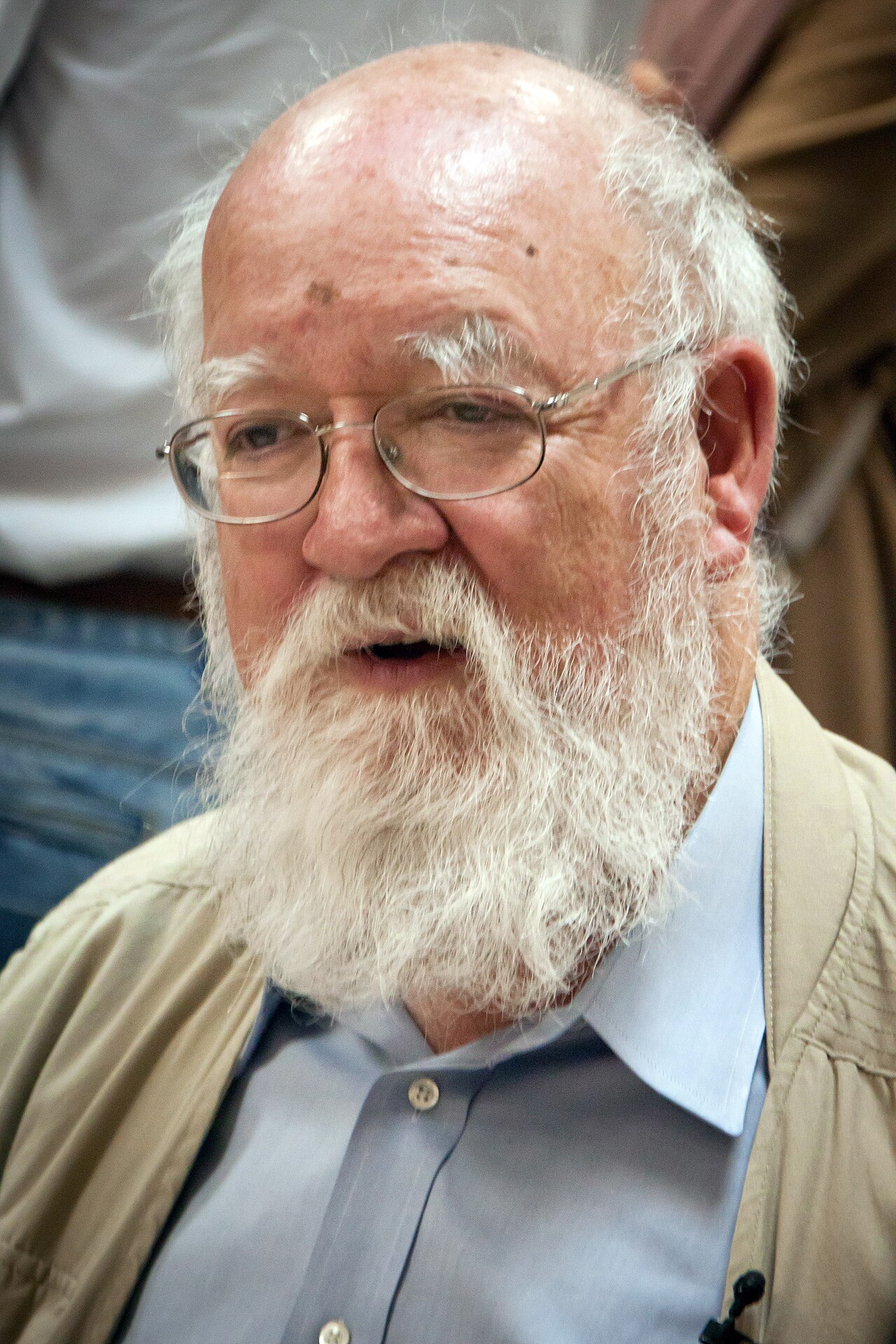



Major ideas and positions
Dennett defends a functionalist and naturalistic approach to mental phenomena. He is associated with the "intentional stance," a strategy for predicting behavior by attributing beliefs and desires, and with the "multiple drafts" model of consciousness that rejects a single centralized theater of awareness. Dennett argues that free will is compatible with a scientifically informed world (compatibilism) and that Darwinian evolution provides a general explanatory framework for apparent design in nature.
Methods and contributions
Dennett advocates rigorous, third‑person methods for studying subjective reports — a program he calls heterophenomenology — and emphasizes clear conceptual tools for thinking about complex systems. His writing aims to bridge philosophy, cognitive science, and evolutionary biology, using thought experiments, conceptual analysis, and engagement with empirical results.
Selected works
- Content and Consciousness
- Brainstorms
- Consciousness Explained
- Darwin's Dangerous Idea
- Freedom Evolves
- Intuition Pumps and Other Tools for Thinking
Career, reception, and significance
Dennett studied at Harvard and earned a doctorate at Oxford before joining the faculty at Tufts, where he helped shape interdisciplinary conversations about mind and cognition. His books have provoked debate: praised for clarity and ambition, criticized by some who argue his accounts underplay subjective qualia or social dimensions of mind. Regardless, his influence on contemporary debates about consciousness, AI, evolution, and secularism is substantial.
For biographical data and further reading see sources on his life and work, including his birthplace Boston, his role as a philosopher, and contributions as a cognitive scientist.
Related articles
Author
AlegsaOnline.com Daniel Dennett — philosopher of mind, consciousness, and evolution Leandro Alegsa
URL: https://en.alegsaonline.com/art/117027
Sources
- ted.com : "Dan Dennett - Speaker - TED"